Trump account $1000 payments may take a few days, Treasury says
Treasury says 7 million Trump accounts have been opened, with 1.7 million eligible for the federal $1,000 starter deposit.
By Sal Moretti · Money Reporter
3 min read
Parents waiting on the Trump account $1000 starter money may need to give the federal payment a little breathing room. The Treasury Department says 7 million accounts have been opened since the July 4 launch, including 1.7 million accounts eligible for the government-funded seed deposit.
Nearly $1.5 billion has gone into the accounts since launch, according to the Treasury Department. The accounts opened to contributions from relatives and friends on July 4, and officials said that day that the $1,000 deposits would start appearing, sometimes first as pending or in transit.
MarketWatch reported that some account holders have asked online why the money has not arrived yet, while others have said they received notices that the deposit was still being processed. Financial advisers told MarketWatch that a delay of a few days can be normal.
Who gets the Trump account $1,000 deposit?
The free $1,000 is limited to U.S. newborns born from 2025 through 2028, according to the Treasury Department. Children under 18 with a valid Social Security number can have a Trump account, but not every account qualifies for the federal starter money.
Treasury officials compare the payment timing to an income-tax refund: the transfer has a processing period. The department said the seed-money transfer takes one to two days for nearly all parents who sign up, and said it is watching arrival times.
The Trump account helpline has received calls tied to 0.1% of accounts so far, according to the Treasury Department. The support line listed for the program is 866-872-4547.
Advisers say the deposit is not instant
Jeff Judge of Chesapeake Financial Planners in Forest Hill, Maryland, told MarketWatch that six of his clients opened accounts after the July 4 debut. Their personal contributions arrived quickly, including one that posted the same day, he said.
Judge said several clients thought the federal deposit would appear as soon as an account was opened. One client saw the $1,000 land after two to three days, he told MarketWatch.
Michael DeMassa, founder and principal of Forza Wealth Management in Sarasota, Florida, told MarketWatch he opened a Trump account for his teenage daughter so he could see the process before discussing it with clients. Since his daughter is a teenager, the account would not be eligible for the newborn seed payment under the Treasury rules.
DeMassa said the ID.me identity-verification step was the hardest part. He said he had to complete video verification, waited several days, then spent about 15 minutes before the verification happened. His daughter’s account was activated several days later, he said.
He described connecting a bank account and adding money as straightforward, but said investors should expect several business days for bank verification and transfers to finish.
How do parents sign up?
During tax season, households could enroll children through a form filed with their tax return, according to the report. Outside tax season, families can sign up through the IRS Trump accounts website.
People who do not already have an authenticated IRS account must start with ID.me, a company that verifies identity for government agencies, retailers and healthcare organizations.
The Social Security Administration has said it is working on automatic enrollment, but newborns are not currently enrolled automatically, according to MarketWatch.
Trump accounts are formally known as 530A accounts. They are tax-deferred investment accounts for children, and the law requires the money to be invested in low-cost index funds tracking the U.S. market. For now, MarketWatch reported, the money is going into one fund: the State Street SPDR Portfolio S&P 500 ETF.
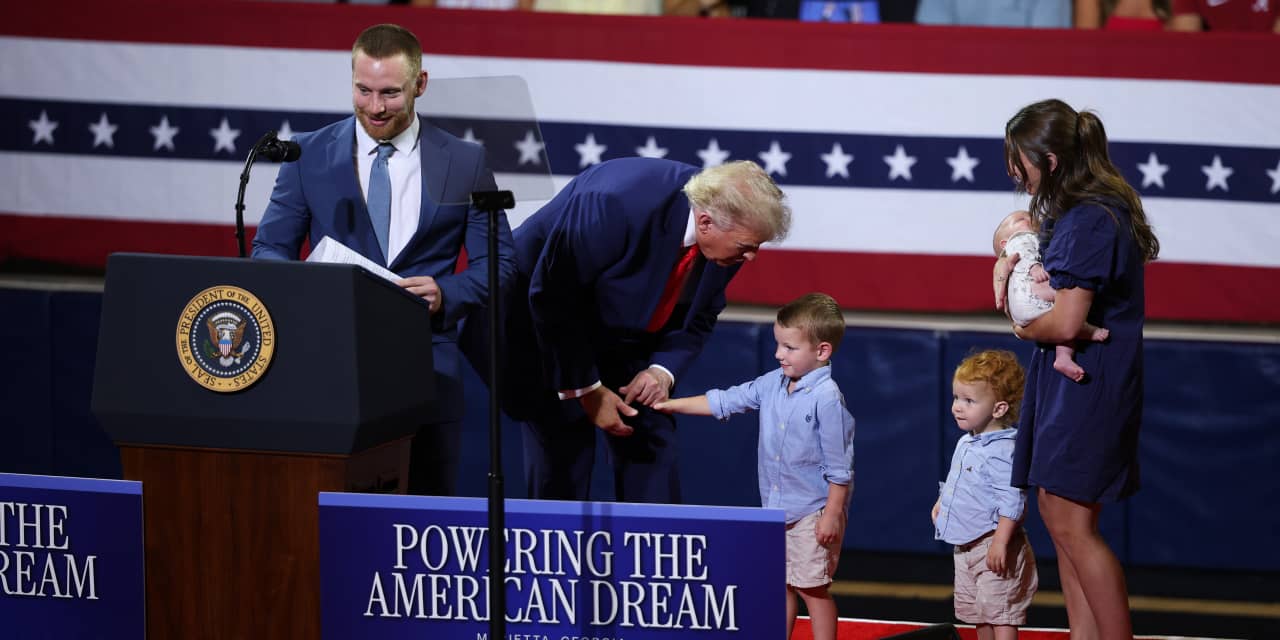
President Donald Trump promoted the accounts at an event in Marietta, Georgia, on Wednesday, calling them “hot as a pistol” and saying the government gives eligible children $1,000 at birth, with employers also able to contribute to employees’ children’s accounts.
This story draws on original reporting from MarketWatch.