Trump White House weighs curbs on Chinese AI models, report says
Axios reports officials are considering how to limit Chinese open-source AI after Moonshot launched its low-cost Kimi K3 model.
By Frankie Delgado · News Reporter
3 min read
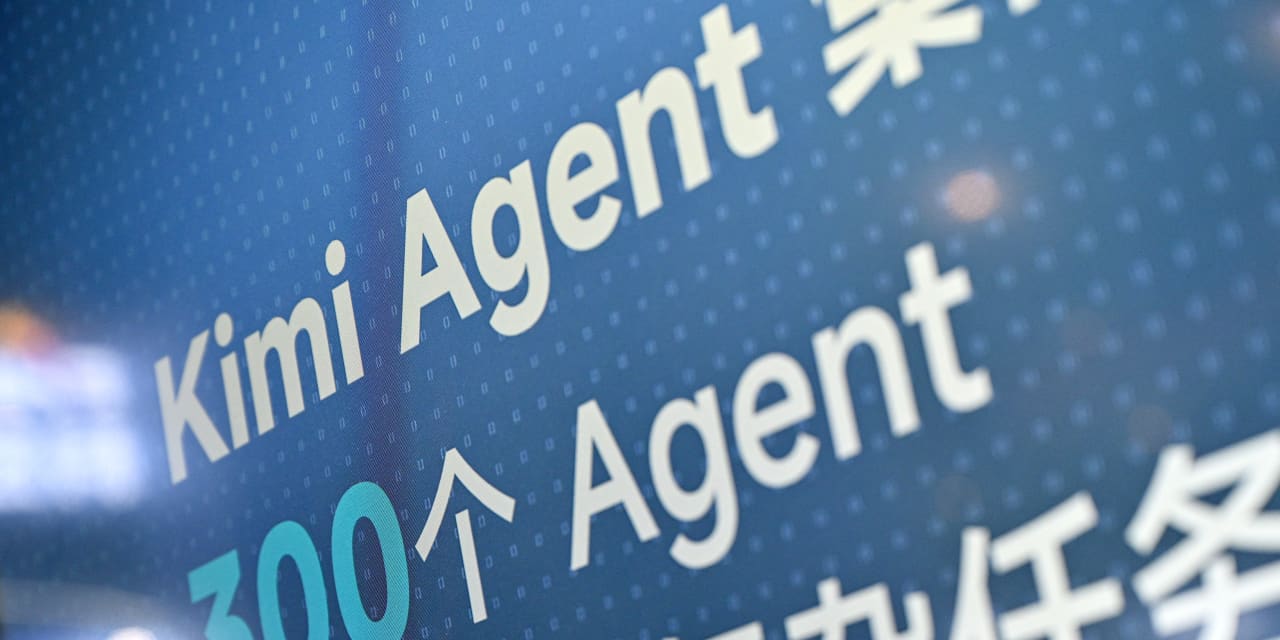
Moonshot’s new Kimi K3 model has put Chinese artificial intelligence back at the center of a Washington fight over price, security and who gets to dominate the next AI boom.
The Trump White House is considering restrictions on Chinese AI models, according to a Monday report by Axios reporter Maria Curi, who cited knowledgeable sources. The report said parts of the administration previously pushed for bans with little success, but Moonshot’s latest release has added urgency to the debate.
Moonshot introduced Kimi K3 on Friday as China’s World Artificial Intelligence Conference opened in Shanghai, according to the report. Its developers say the model can perform at a level similar to Anthropic’s Fable and OpenAI’s ChatGPT while costing much less.
That price gap is the problem for U.S. officials and American AI companies. Axios reported that use of cheaper Chinese open-source models is rising in the U.S., even after efforts over the past year to warn users about possible security risks.
Ban talk meets pushback
Axios reported that officials have argued inside the administration over whether strict limits would protect U.S. companies or hurt innovation. The report said White House adviser Sriram Krishnan, who opposed a ban or government intervention, has left his post, a change Axios framed as a sign that more hawkish voices may now have greater sway.
A full ban may not be the next step. Curi reported that officials appear more likely to pursue measures short of an outright prohibition, including procurement rules, pressure campaigns and further efforts to spotlight security concerns.
Former AI and crypto czar David Sacks, described by Axios as influential in Trump circles, warned Sunday on X that large closed AI labs could benefit from government action against open-source rivals. “We are at a critical inflection point in AI policy. The leading closed labs, already a duopoly in terms of AI model revenue, want the government to eliminate their open source competition,” Sacks wrote.
Axios reported that Sacks has repeatedly warned about regulatory capture, arguing that regulation could weaken competition and help the biggest AI labs. The report said major AI developers have approached the government every few months about the idea of banning open-source models.
Cheap compute, expensive stakes
Academy Securities macro strategist Peter Tchir wrote in a Sunday research note that China may be reaching an AI moment similar to the one it hit in global manufacturing after 2005, when it began to dominate broad categories of trade.
Tchir concluded that China is selling compute at prices five to 10 times lower than the U.S. He wrote that even if Chinese products are weaker, their lower cost gives them an obvious selling point. He also pointed to DeepSeek, whose launch shook U.S. AI companies because of its apparent cost advantage.
Tchir also cited rumors that Chinese models are trained on U.S. models through a process known as distilling, which can cut training time and expense. He said he was unsure whether that practice can be stopped.
The market stakes are getting sharper. OpenAI and Anthropic are planning public listings this year, according to the report, with potential $1 trillion valuations discussed for both. OpenAI’s latest valuation was $852 billion, while Anthropic’s was $965 billion.
Bloomberg has reported that Moonshot is considering an IPO within the next six months, with an alleged target valuation closer to $30 billion. Chinese models including Kimi K3, MiniMaxV2 Pro and DeepSeek’s V4 offer services at far lower prices than Anthropic and ChatGPT, according to the report, raising pressure on U.S. labs that need public-market money to fund their expansion plans.
This story draws on original reporting from MarketWatch.