United beats Wall Street, then flags a $6 billion fuel burn
United topped quarterly estimates, but the airline says pricier jet fuel could add nearly $6 billion to 2026 costs.
By Frankie Delgado · News Reporter
3 min read
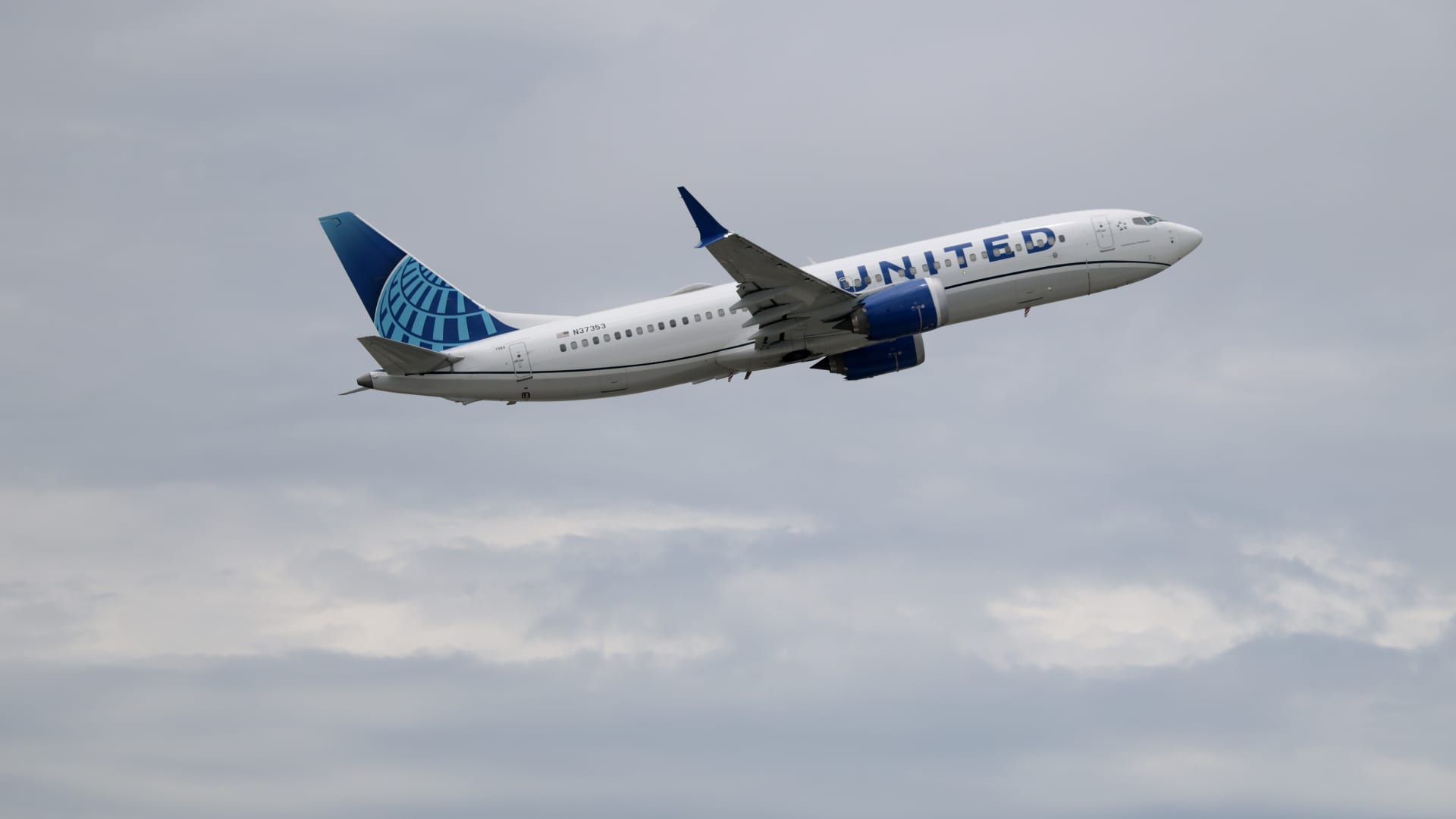
United Airlines cleared Wall Street’s second-quarter bar, then pointed straight at the cost item eating into the party: jet fuel.
The carrier said Wednesday that fuel prices, based on Tuesday’s levels, could add nearly $6 billion to its expenses this year compared with what it expected at the start of 2026. United said second-quarter fuel costs jumped 84% from a year earlier to $2.3 billion.
For the quarter that ended June 30, United reported adjusted earnings of $1.99 a share, ahead of the $1.88 analysts expected, according to LSEG estimates cited by CNBC. Revenue came in at $17.67 billion, just above the $17.61 billion expected.
The airline’s top line had lift. Revenue rose 16% from a year earlier, and total unit revenue climbed 12.1%, the strongest unit revenue growth since early 2023, according to FactSet data cited by CNBC.
Fuel costs clip the outlook
United forecast third-quarter adjusted earnings of $2.50 to $3.50 a share. Analysts had been looking for $3.60 a share, according to CNBC’s report.
For the full year, United now expects adjusted earnings of $9 to $11 a share. That sits at the upper end of the $7 to $11 range it issued in April, when the airline lowered its January forecast after the U.S. and Israel attacked Iran in late February, CNBC reported.
The fuel shock has been sharp. Jet fuel prices at major U.S. airports rose 34% in July through Tuesday, according to Argus data published by Airlines for America and cited by CNBC. The increase came amid escalating and easing conflict between the U.S. and Iran.
United said it is refreshing its forecast to reflect recent fuel prices because costs have been volatile. Since the start of July, fuel prices have reduced its third-quarter adjusted earnings by $1.12 a share, the airline said.
Jet fuel is airlines’ largest expense after labor, CNBC reported.
Higher fares have not stopped bookings
United said customers are still booking trips even as fares rise. Rival Delta Air Lines has also said it is pushing more fuel-related costs onto passengers, according to CNBC, and both airlines said demand has held up.
United said it expects to cover as much as 90% of its higher costs in the current quarter and all of them in the fourth quarter.
The airline also said in a filing that it could further trim capacity plans this year because of higher fuel costs.
United expanded flying by 3.5% in the second quarter. The carrier reported stronger revenue from premium seats, corporate travel and basic economy tickets, along with higher unit revenue on domestic and international routes.
Net income fell more than 17% to $805 million, or $2.46 a share. Excluding one-time items, United reported $649 million in adjusted profit, or $1.99 a share.
United executives are scheduled to discuss the results on an earnings call Thursday at 10:30 a.m. ET.
This story draws on original reporting from CNBC.