Wall Street splits on chip-stock dip after bear-market slide
JPMorgan sees a summer entry point in semiconductors, while Morgan Stanley says the group may bounce without retaking market leadership.
By Sal Moretti · Money Reporter
3 min read
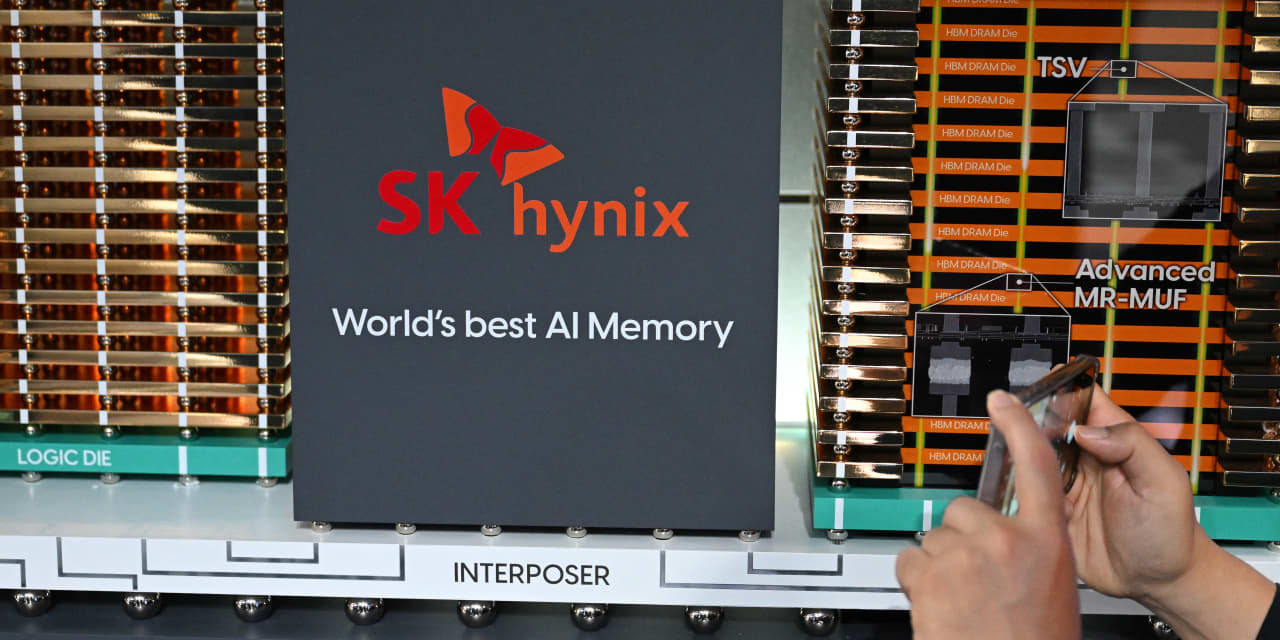
Chip stocks have fallen hard enough to put Wall Street’s dip-buyers on alert, but two major banks are reading the selloff very differently.
The PHLX Semiconductor Index dropped 10% last week, its worst weekly showing since April 2025, according to MarketWatch. That slide left the index 20% below its record closing high from a month earlier, a threshold often used to define a bear market.
Friday’s broader tech selling was helped along by the launch of a new Chinese artificial-intelligence model, MarketWatch reported. The pain has hit a group that had been one of the market’s most closely watched winners during the AI boom.
JPMorgan sees a summer opening
JPMorgan strategists led by Mislav Matejka told clients that semiconductor shares could soon attract buyers again. The team pointed to solid earnings, valuation support and a supply setup that it said remains favorable because large additions to chip capacity are not expected before 2028.
The JPMorgan team also cited technical signals. It said the relative strength index for chip stocks, a measure of market momentum, is moving toward oversold levels as the momentum trade that had pulled investors into the sector has faded.
Memory-chip stocks have been under pressure, but JPMorgan noted that prices for dynamic random-access memory, or DRAM, have stayed high. The bank said that if capital-spending guidance from hyperscalers remains firm, investors should consider returning to chip stocks over the summer.
JPMorgan is still looking for a broader market beyond the biggest winners for the rest of the year, according to the strategists. They warned, however, that rotations away from crowded momentum trades can bring more market turbulence in the early stages.
The bank also kept a note of caution on the AI spending boom. JPMorgan said it remains worried about how hyperscalers will convert heavy capital spending into profits, and it is negative on areas it described as vulnerable to AI cannibalization, including software, business services and media.
Morgan Stanley wants the hyperscalers
Morgan Stanley strategists led by Mike Wilson took a cooler view of the chip group. They said semiconductor shares may rebound after a 20% correction, but they do not expect the sector to reclaim market leadership in the second half of the year.
Wilson’s team said the market’s broadening has staying power and that a wider mix of industry groups could lead stocks higher into year-end once the correction is over. The strategists singled out consumer discretionary goods and transports as areas where earnings revisions appear to be underappreciated.
Morgan Stanley said it prefers hyperscalers to semiconductor stocks for the next several months. The bank also noted that hyperscalers have outperformed chips by 30% over three weeks, making the risk and reward less attractive than before.
Wilson’s team has recently argued that large tech platforms had fallen too far, using the Roundhill Magnificent Seven ETF as a gauge. The strategists said the market has put more focus on capital-spending discipline, but they believe hyperscalers had already begun pricing in that concern, as well as worries about capital-expenditure growth peaking.
Morgan Stanley cited several supports for hyperscalers, including strong core businesses, potential leadership in agentic AI and room to cut costs and improve profits.
For the wider market, Morgan Stanley said the S&P 500’s consolidation over the past two months has been in line with its expectations, and the bank still views its 8,000 year-end target as achievable. The team warned that if the momentum unwind spreads or the Middle East conflict escalates, the index could fall toward 7,000, where it sees durable technical support before the bull market resumes.
U.S. stock futures pointed higher Monday, according to MarketWatch, even as Brent crude moved above $90 a barrel and fighting involving Iran continued to escalate.
This story draws on original reporting from MarketWatch.