Oil prices are not higher despite a record supply shock
Brent briefly topped $100, but China demand, emergency stocks and political bets have kept the 2026 oil shock from spiraling.
By Frankie Delgado · News Reporter
3 min read
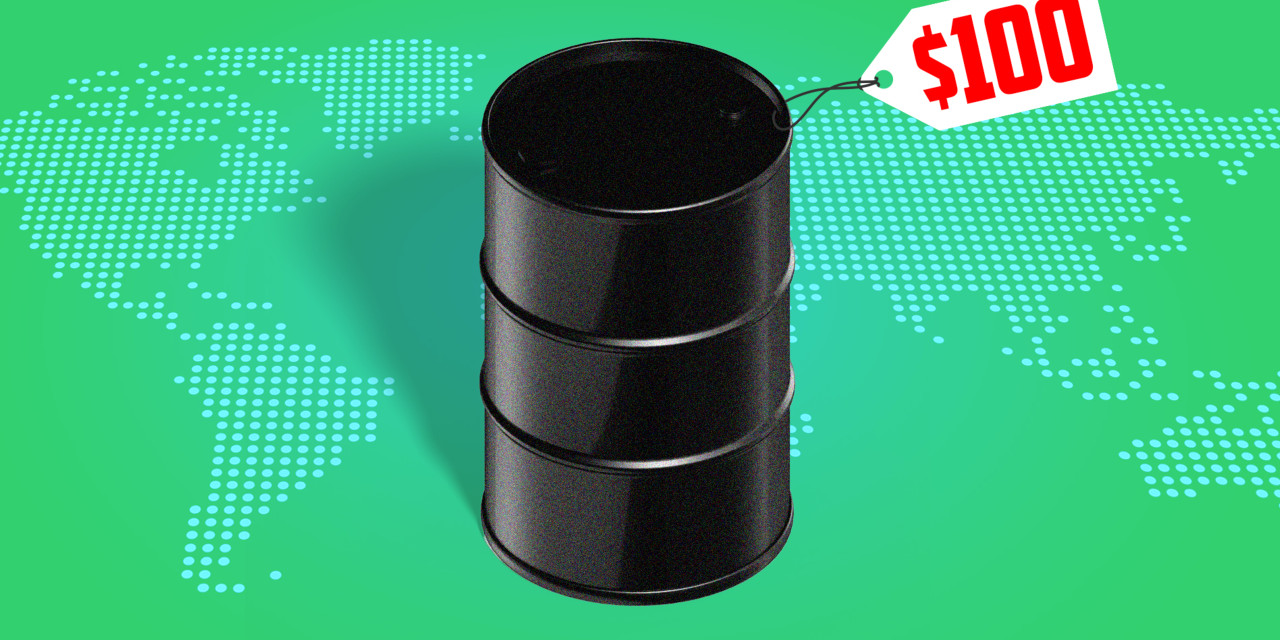
Why oil prices are not higher has become the market’s big energy riddle after Brent crude briefly climbed above $100 a barrel this week, even as analysts described the 2026 supply squeeze as historic.
MarketWatch reported that Brent, the global oil benchmark, reached a two-month high before easing to about $96 on Friday. The September Brent contract settled at $100.69 on Thursday, its strongest finish since May 22, according to Dow Jones Market Data cited by MarketWatch.
The move still left crude far below a level economists flagged earlier this year as dangerous for the world economy. MarketWatch said economists in March put that recession-risk line at $138 a barrel if prices stayed there for three weeks.
Why are oil prices not higher?
Analysts pointed to several shock absorbers: emergency reserves, weaker crude demand from China and China’s use of hidden stockpiles, according to MarketWatch. Those buffers helped limit the price surge even after an estimated 11.1 million barrels of supply were lost since the Iran war began.
A risk premium is the extra amount traders pay for oil because future supply might be interrupted. J.P. Morgan strategists led by Natasha Kaneva estimated Brent’s July fair value at $87, MarketWatch reported, meaning crude near $100 reflected only a modest geopolitical premium.
Jeffrey Baird, founder and portfolio manager of Merritt Point Partners, told MarketWatch that sharp price swings and unpredictable headlines have kept some traders out of the market. He also said the oil market is in a crisis that had been cushioned by large inventories, though those buffers are finite.
The Federal Reserve recently described the current supply loss as twice the size of the 1973 oil-crisis disruption, according to MarketWatch. Baird said the broader shock began with Russia’s 2022 invasion of Ukraine and has worsened as the Iran war and threats to Saudi exports and Red Sea shipping add pressure.
How thin are the oil buffers now?
Global crude inventories fell from just over 3.7 billion barrels in March to nearly 3.45 billion barrels in June, according to Kpler data cited by MarketWatch. That drawdown means the same cushion that helped tame prices is being used up.
Goldman Sachs analysts have warned that oil could return to $120 a barrel if Persian Gulf disruptions continue, MarketWatch reported. Baird said $120 could be the price that forces enough demand destruction to bring supply and demand back into line if inventories are depleted.
Brent had already shown how violent the year has been. MarketWatch reported that prices rose from below $60 earlier in 2026 to a settlement above $118 in late March, then sank toward $70 earlier this month before jumping back toward $100 this week.
What are traders betting happens next?
Oil futures suggest Brent may slip back toward $85 later this year, according to MarketWatch. The report said traders keep leaning on the idea that the Iran war cannot keep disrupting supplies for long because the damage to energy flows would be too severe.
Baird told MarketWatch that the Trump administration appears sensitive to rising oil prices, with each major price jump increasing the chance of Washington seeking de-escalation or stepping back from escalation.
Raymond James investment-strategy analyst Pavel Molchanov told MarketWatch that, as the November midterm elections approach, the White House’s Iran strategy is likely to be influenced more by political pressure. If the conflict is still hitting crude supplies this fall, MarketWatch reported, gasoline prices could become the number watched most closely by U.S. voters.
This story draws on original reporting from MarketWatch.