CBS analyst puts Brock Bowers over Trey McBride in 2026 tight end tiers
Jamey Eisenberg says fantasy managers have rare depth at tight end, with Brock Bowers and Trey McBride leading his 2026 draft plan.
By Georgia Hale · Staff Writer
3 min read
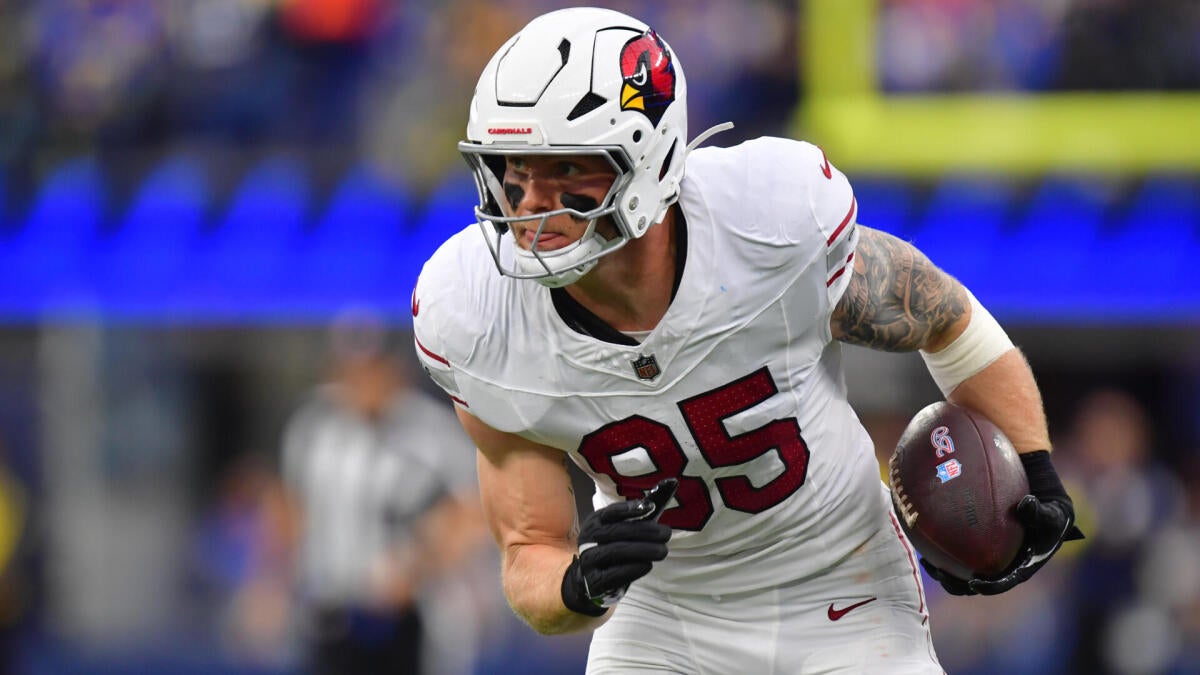
CBS Sports fantasy analyst Jamey Eisenberg is calling tight end a loaded position for 2026, and his board starts with a bold 1-2: Brock Bowers ahead of Trey McBride.
Eisenberg writes that 15 tight ends averaged at least 8.0 half-PPR points per game in 2025, up from 10 in 2024. He says that jump was powered in part by a strong rookie class featuring Harold Fannin Jr., Tyler Warren and Colston Loveland, while veterans such as George Kittle, Travis Kelce, Dallas Goedert and Hunter Henry still delivered useful seasons.
His main message for fantasy managers: do not just scroll rankings on draft day. Use tiers, watch for position runs and know which rounds fit each group.
The early splash: Bowers and McBride
Eisenberg places Bowers and McBride in Tier 1 for Rounds 2 and 3. McBride finished as the top fantasy tight end last season, according to Eisenberg, after averaging 14.4 half-PPR points and leading the position in targets, catches and yards. He also tied Goedert with 11 touchdowns.
Still, Eisenberg prefers Bowers for 2026, citing his target upside and calling him draftable as early as the middle of Round 2. He notes Bowers’ 2025 was slowed by a Week 1 knee injury, uneven quarterback play and a struggling offense after a 2024 rookie season with 112 catches, 1,194 yards and five touchdowns.
The tier most drafters may chase
Tier 2 runs from Rounds 3 through 7 and includes Loveland, Warren, Sam LaPorta, Tucker Kraft, Kyle Pitts and Fannin. Eisenberg calls this the zone many managers will want to hit.
Loveland is the first name in that group, with Eisenberg saying he would rather take him in Round 4, though his upside could push him earlier. He points to Loveland’s late surge, including an average of 16.0 half-PPR points over his final four games.
Warren is also listed as a Round 4 option, with Eisenberg noting his production while Daniel Jones was healthy. LaPorta is tied to a possible rebound under new Detroit offensive coordinator Drew Petzing, who previously worked with McBride in Arizona. Kraft, Pitts and Fannin follow as mid-round targets, with injury recovery, new coaching and target competition shaping their outlooks.
Old stars, new chances and fallback plans
Kittle, Kelce and Isaiah Likely make up Tier 3 for Rounds 8 through 10. Eisenberg flags health and age concerns for Kittle and Kelce but still sees both as usable top-10 options if the draft price falls. Likely, now with the Giants after four seasons in Baltimore, is presented as a Round 9 target with a shot at a bigger role.
Tier 4, covering Rounds 10 through 14, includes Chigoziem Okonkwo, Goedert, Mark Andrews and Dalton Kincaid. Eisenberg says Okonkwo could benefit if Washington does not add another major pass catcher, while Goedert’s touchdown role and Andrews’ bounce-back case keep them in play. Kincaid is listed as another late starter candidate if healthy.
Late darts and streamers
Eisenberg’s late-round fliers are Jake Ferguson, Greg Dulcich, Oronde Gadsden II, Brenton Strange, Gunnar Helm, Dalton Schultz, Juwan Johnson and Kenyon Sadiq. His streaming group for the season includes Henry, David Njoku, T.J. Hockenson, Evan Engram, A.J. Barner, Terrance Ferguson, Michael Mayer, Pat Freiermuth and Cade Otton.
The takeaway from Eisenberg’s tiers is clear: tight end is not a one-player scramble this year. Managers can spend early on Bowers or McBride, attack the middle with upside, or wait for a veteran fallback without punting the position entirely.
This story draws on original reporting from CBS Sports.