ESPN says Messi is still ruling the World Cup at 39
Ryan O'Hanlon's ESPN analysis argues Lionel Messi remains the 2026 World Cup's top player, backed by goals, chance creation and ball progression data.
By Deshawn Carter · Sports Writer
3 min read
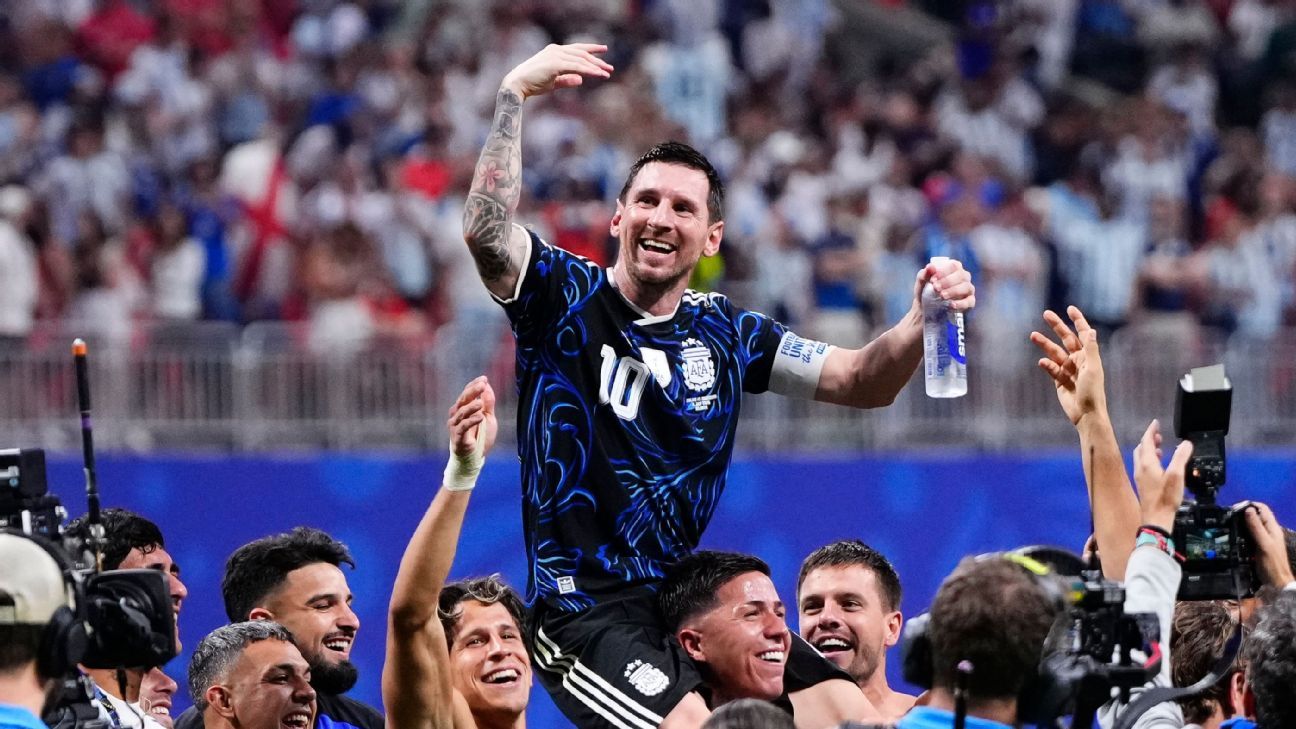
Lionel Messi arrived at the 2026 World Cup at 38, turned 39 during the tournament, and, according to ESPN analyst Ryan O'Hanlon, has still been the best player on the planet's biggest stage.
O'Hanlon's analysis for ESPN argues that Messi has not only remained Argentina's central force, but has strengthened the case that he is the greatest male athlete in sports history. The claim is built around Messi's production in the tournament, his long career at the top, and soccer's reach compared with other major sports.
The timing is part of the drama. Before the tournament, O'Hanlon wrote, Messi no longer seemed certain to tower over every other player. He had spent the previous four years in Major League Soccer, where ESPN said his performance stayed close to his European level despite weaker competition. At the 2024 Copa America, ESPN noted, he scored once, assisted once and left injured during a final Argentina won in extra time without him.
At this World Cup, the numbers have flipped the mood. With Argentina preparing to face Spain in the final, ESPN reported that Messi is level with France forward Kylian Mbappé for the tournament lead with eight goals. Messi also leads all players with 34 shots, according to the analysis.
The numbers behind the Messi case
O'Hanlon pointed to more than finishing. Messi has four assists, second in the competition behind France attacker Michael Olise, according to ESPN. On expected assists, a metric that credits the quality of chances created by completed passes, ESPN said Messi leads the field.
The contrast with other headline attackers is sharp. ESPN reported that Mbappé and Norway striker Erling Haaland have combined for 1.7 expected assists, a little more than half of Messi's individual total.
Messi is also pushing the ball upfield more than anyone else. Citing the stats app Futi, ESPN said Messi has completed 68 progressive passes, 20 more than any other player at the tournament. Futi defines those as passes that move the ball at least 25% of the remaining distance toward the opponent's goal.
Futi's data also credits Messi with 45 progressive carries, three more than Spain's Lamine Yamal, the 19-year-old Barcelona winger Argentina will face in the final.
Futi's possession-value model, which ESPN said measures how each touch changes a team's chances of scoring or conceding, gave Messi a role-adjusted percentile score of 99 among players from the semifinal teams. Mbappé ranked second in that group at 83, according to the analysis.
Why ESPN puts him above other greats
O'Hanlon's broader argument compares Messi's dominance with elite names from other sports. He cited Tom Brady's seven Super Bowl wins, Wayne Gretzky's NHL records, and long-running debates around Michael Jordan, LeBron James, Babe Ruth, Barry Bonds and Shohei Ohtani.
The ESPN analysis says Messi's edge comes from two tests: how far ahead he is of his nearest peers, and how many people worldwide play the sport. O'Hanlon argues soccer's global participation gives Messi's case extra weight compared with sports such as American football, ice hockey, baseball and basketball.
ESPN also cited earlier research saying only about 5% of the global population has the physical capacity usually needed for basketball, while nearly 30% has traits found in soccer players. A separate survey cited by ESPN found that soccer has roughly twice as many global participants as basketball.
For O'Hanlon, Messi's 2026 run closes the argument he had previously left more open after Argentina's 2022 World Cup triumph: at 39, Messi is still scoring, creating and moving the game like nobody else at this tournament.
This story draws on original reporting from ESPN.com.