New NCAA eligibility rule could squeeze 2027 hoops recruits
College coaches told CBS Sports that the five-for-five rule may leave fewer Division I roster openings for the 2027 high school class.
By Deshawn Carter · Sports Writer
3 min read
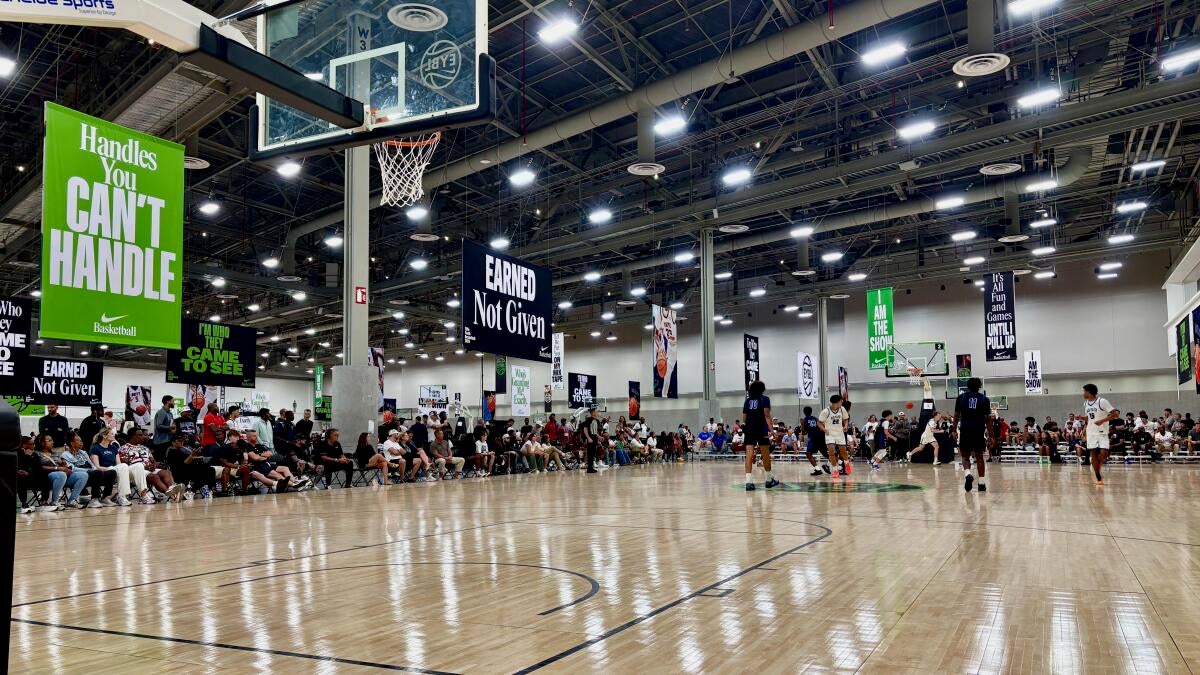
The Class of 2027 is staring at a tighter college basketball doorway, and coaches in Las Vegas are already talking about the squeeze.
Under the NCAA’s new five-for-five eligibility rule, athletes will be able to use five seasons of eligibility across five years, according to CBS Sports. That means many players who would have been at the end of the line after next season may be able to stay in college basketball for another year.
CBS Sports’ Gary Parrish reported from Nike’s final EYBL event before Peach Jam in Las Vegas, where 22 courts were set up under one roof and college coaches watched top high school prospects. The setting had plenty of star power, including retired NBA veteran Eric Dampier coaching one team, former NBA All-Star Ja Morant coaching another, and college coaches such as Dan Hurley and Scott Drew in the building.
The recruiting buzz, though, came with a roster math problem.
Fifth-year seniors will still be gone after next season, CBS Sports reported. But freshmen can become sophomores, sophomores can become juniors, juniors can become seniors, and seniors can become fifth-year players under the new rule. Coaches told CBS Sports that, outside of early NBA Draft entrants and players who lose roster spots, many departures may just be transfers moving from one Division I school to another.
One power-conference coach, speaking anonymously to CBS Sports, said his staff could maybe sign a borderline top-50 prospect now, but was unsure whether it should. The coach said he might be able to bring back his whole team after next season and questioned whether a freshman in that range would be better than older returners or transfer options.
The coach told CBS Sports the staff was waiting to see how the roster shakes out.
Mid-tier stars may feel it first
The pressure could hit hardest for prospects who are good enough to be nationally ranked but not elite locks. CBS Sports pointed to players ranked between No. 50 and No. 150 in the 2027 class as the group most likely to feel the shift.
According to 247Sports rankings cited by CBS Sports, there are 101 players in that 50-to-150 range, and only 12 have already committed to Power-4 programs.
CBS Sports also compared the current market for the No. 75 prospect in 2027 with the No. 75 prospect from 2017. The 2027 player currently lists power-conference offers from Boston College, Florida State, Mississippi State, Oklahoma State, Wake Forest and West Virginia, according to 247Sports. Ten years earlier, CBS Sports reported, the No. 75 player had offers from Florida and Louisville before signing with Auburn.
CBS Sports noted that Florida, Louisville and Auburn have combined for 10 Final Four appearances and four national titles this century, while the six schools tied to the 2027 example have combined for two Final Fours and no national championships in that span.
Coaches see a different market
Alabama coach Nate Oats told CBS Sports he had discussed the issue with assistant Preston Murphy, saying this year’s high school class is “going to get screwed a little bit” because players who normally would leave college basketball are not expected to filter out.
UNLV coach Josh Pastner told CBS Sports that “some really good high school players are going to slip through the cracks.” He said prospects with power-conference options could still be recruited over in the spring when wealthier programs chase transfers, and argued that some players may be better off starting at a school like UNLV before trying to move up later.
Pastner said there remains a market for high school players, but CBS Sports reported that coaches across the sport see it changing fast.
The result, according to CBS Sports, may be a class where only the very top 2027 prospects receive the same types of offers comparable recruits saw in previous years, while others wait longer, choose smaller programs, or struggle to find Division I openings at all.
This story draws on original reporting from CBS Sports.