Amy Sherald portraits put Black Americans face to face with the viewer
Amy Sherald told 60 Minutes how gray skin, direct gazes and a pulled Smithsonian show shape her portraits of Black Americans.
By Georgia Hale · Staff Writer
4 min read
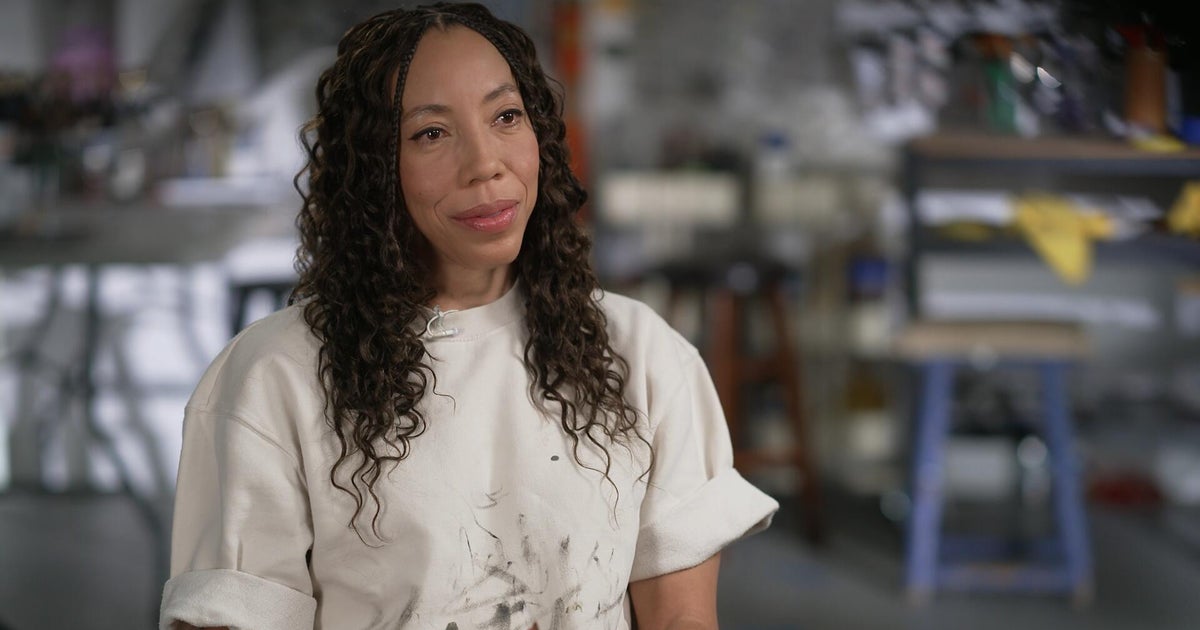
Amy Sherald portraits are now museum draws, auction prizes and cultural flashpoints, but the artist told CBS News' 60 Minutes that the power starts with a direct stare.
In an interview with Anderson Cooper, Sherald described her painted subjects, Black Americans rendered with steady eyes and often set against bold fields of color, as present rather than confrontational. She said the people in the works do not need to speak because the exchange happens when the viewer meets their gaze.
Sherald, 52, was not widely known in the art world when she was chosen nine years ago to paint the official portrait of Michelle Obama, according to 60 Minutes. The 2018 work, titled Michelle LaVaughn Robinson Obama, brought global attention and remains her best-known painting.
The artist told Cooper she did not dwell on the career stakes while making the Obama portrait because doing so might have overwhelmed her. Looking at it now, she said, the dress stands out most, with its red, pink, yellow, black and gray pattern meant to carry symbolism of its own.
Why does Amy Sherald paint skin in gray?
Sherald told 60 Minutes she uses gray tones for skin because it gives viewers a different way into the image before they focus on race. She said the look first appealed to her because it recalled old family photographs, including one of her maternal grandmother.
Her figures are still unmistakably Black, she said, but removing brown skin color helps interrupt the first assumptions people make from features such as eyes, noses and lips. Sherald said she once feared that paintings of Black people would be pushed into a narrow category rather than discussed alongside other American artists.
That fear has faded. 60 Minutes reported that Sherald's paintings have sold at auction for as much as $4 million and that her work is often discussed in relation to American Realist painters including Edward Hopper, Andrew Wyeth and Norman Rockwell.
Sarah Roberts, curator of Sherald's exhibition American Sublime at the San Francisco Museum of Modern Art, told 60 Minutes that Sherald is using familiar American images, including cowboys, beauty queens and white picket fences, to expand who belongs in that visual story. Roberts described the result as giving people “a place on a museum wall.”
What happened with Amy Sherald's Smithsonian show?
Sherald told 60 Minutes she canceled a planned Smithsonian National Portrait Gallery presentation of American Sublime after learning officials had concerns about a painting of a trans person posed as the Statue of Liberty. According to Sherald, museum officials wanted to show the painting with a video they said would contextualize it.
The artist said any added framing around that work would have changed the way the exhibition was intended to be seen. At the time, the Trump administration had been criticizing the Smithsonian as too woke and had promised to review its exhibitions, according to 60 Minutes. After Sherald withdrew the show, the White House praised the move and called the painting “divisive and ideological.”
Sherald said she does see the work as political now because it exists in the world, even if that is not where it begins for her. After the Washington cancellation, the Baltimore Museum of Art offered to exhibit American Sublime, and 60 Minutes reported that the show is now at the High Museum in Atlanta.
The path there was long. Sherald told Cooper that a class trip to the Columbus, Georgia, art museum changed her life when she saw a Black man in a painting by Bo Bartlett, the first Black figure she remembered seeing in any painting. Her parents, Amos and Geraldine Sherald, had hoped she would become a doctor, but she chose art and spent more than a decade painting by day while waiting tables at night.
60 Minutes also reported that Sherald survived a rare heart condition, collapsed in a drug store and received a heart transplant at 39. She said she still marks major moments in honor of her donor, Kristin Lin Smith, and signs her name with a small heart for her.
This story draws on original reporting from CBS News.