Anderson Cooper’s monarch trek came down to one lucky burst of sun
A 60 Minutes trip to Mexico captured millions of monarch butterflies taking flight after days of cold, cloudy weather.
By Sal Moretti · Money Reporter
3 min read
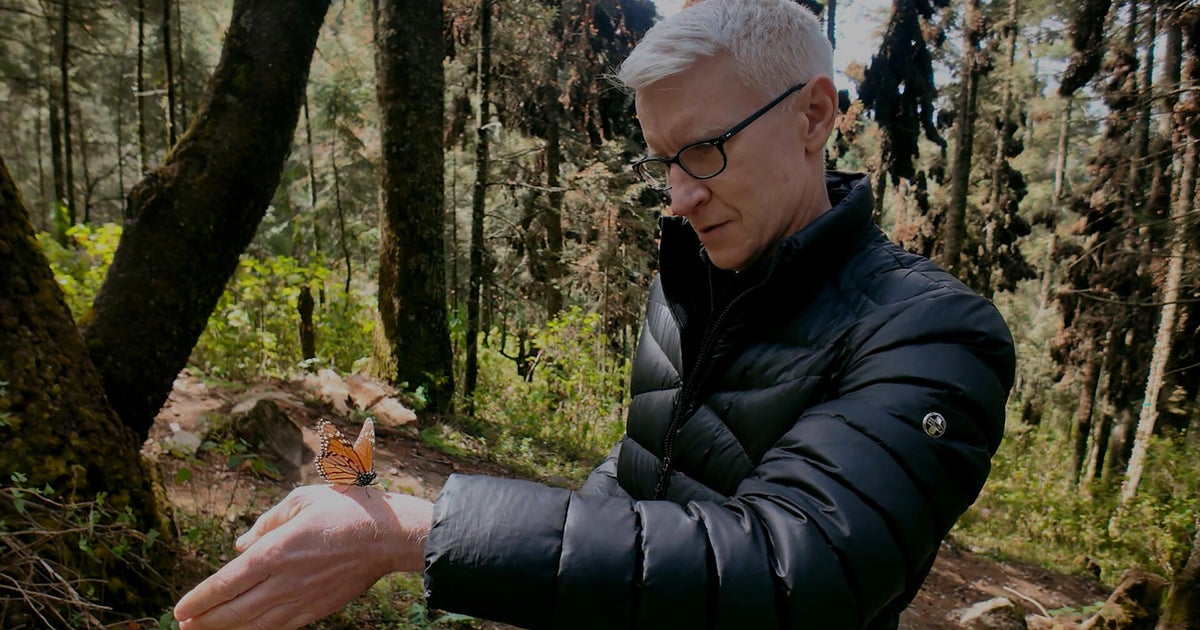
Millions of monarch butterflies were sitting in the cold on a Mexican mountaintop when Anderson Cooper and a 60 Minutes crew arrived, and the whole shoot depended on one thing nobody could order up: sunshine.
CBS News said Cooper’s report for 60 Minutes follows the monarchs’ spring migration, the annual moment when butterflies that spent winter in Mexico begin moving north. Each fall, monarchs travel south from the United States and Canada, and CBS described the cross-border migration as one of science’s major mysteries because the butterflies find the route even though they have not made the full trip before.
Getting the story took far longer than the flight of any one butterfly. According to CBS, the 60 Minutes team spent three years planning the segment, which was filmed in 2025.
The timing was tight. CBS reported that the window when monarchs leave their winter roosts in Mexico’s pine and fir forests is brief and heavily dependent on weather. In the days before filming began, temperatures did not cooperate.
Then came the climb. CBS said more than 60 million monarchs had roosted the previous year in a four-and-a-half-acre section of forest on a mountain at 11,000 feet. Cooper and the crew reached the site by riding horses first, then hiking, while also carrying camera equipment.
Cooper told CBS the trip was risky from a storytelling point of view because the butterflies might not fly if conditions stayed cold or cloudy.
“It's really a gamble,” Cooper said. “You can get there, and if the weather's not cooperative, if the sun doesn't come out from the clouds, if it's too cold all day long, the monarchs aren't going to be flying around. And you really won't have much of a story if you don't see them flying.”
At first, that worry looked very real. CBS said the preserve was cloudy and cold when the team arrived. The fir trees were still, with branches pulled downward by clusters of butterflies. From a distance, the scene looked brown rather than bright orange, because monarchs’ orange coloring is on the upper side of their wings and is hidden when the wings are closed.
On the forest floor, CBS reported, many butterflies were scattered across the ground. Some were dead, while others were too cold to move. The area where the crew filmed was closed to tourists because of the number of butterflies on the ground.
Then the clouds moved. CBS said the sun reached the trees as the morning went on, and orange began appearing across the branches. Soon, monarchs were in the air, with millions of wings beating after months of stillness.
Cooper said the timing could hardly have been better. “When we left, there was going to be rain clouds for the next several days,” he told CBS. “We got incredibly lucky.”
One of Cooper’s guides was Court Whelan, a nature photographer who leads trips to the monarch reserve. CBS said Whelan has traveled widely to see wildlife, including on African safaris and in Papua New Guinea rainforests.
Whelan told Cooper that the monarch migration ranks among the most memorable wildlife spectacles he has witnessed.
“I think when it comes down to, you know, the impressiveness of a single species,” Whelan said, “this takes the cake.”
CBS said the segment’s photos were courtesy of Whelan, and the video was originally published April 20, 2025. The report was produced by Brit McCandless Farmer and edited by Scott Rosann.
This story draws on original reporting from CBS News.