California diaper program records warned of diaper waste risk
State records reviewed by CBS show officials chose Baby2Baby’s two-size diaper plan despite warnings about outgrown supplies.
By Georgia Hale · Staff Writer
3 min read
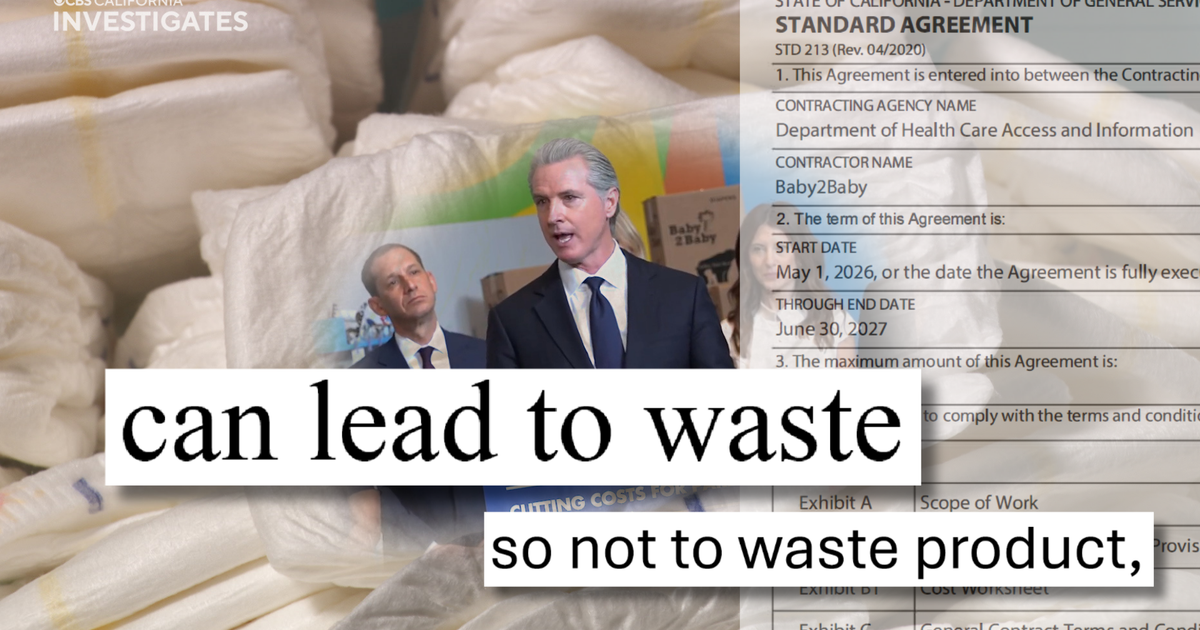
California diaper program waste concerns were flagged before the Newsom administration signed a multimillion-dollar deal with Baby2Baby, according to state records reviewed by CBS California Investigates.
The contract calls for 400 California-branded diapers to be given to each newborn at hospital discharge, split between Newborn and Size 1. The agreement says families have no option to return or exchange them, CBS reported.
Baby2Baby won the contract to make and distribute the diapers. One of its co-CEOs serves on the board of First Partner Jennifer Siebel Newsom’s California Partners Project, according to the nonprofit’s website. CBS reported that the released records do not show illegal conduct, and that a budget exemption made it legal for the administration to bypass ordinary competitive bidding and state contract review.
Why could the California diaper program waste diapers?
State officials and several organizations warned that newborns can outgrow early diaper sizes quickly, leaving families with supplies they cannot use. A waste risk rises when parents receive hundreds of diapers in fixed sizes with no exchange system.
HCAI, the state agency that signed the deal, asked Baby2Baby in 2025 about whether sending 300 to 400 diapers home at once could be too much for families and whether parents might need other sizes to avoid wasted product, CBS reported from the records.
Baby2Baby defended its approach in state records, saying its boxes were not difficult to carry. The nonprofit also argued that adding another size would create more logistical problems and a greater chance of surplus inventory, according to CBS.
Other groups pushed a different model. CalCAPA, which runs a federally funded diaper pilot in California, told the state that 83% of diaper requests in that pilot were for Size 4 and larger, CBS reported. Sacramento Food Bank and Family Services warned that too many diapers in one size can be wasted if infants outgrow them before use. Second Harvest and Help a Mother Out recommended letting families choose sizes to cut waste.
Was the Baby2Baby deal competitively bid?
CBS reported that California used a Request for Information, not a Request for Proposals. An RFI gathers information for planning, while an RFP is the formal competitive process that usually includes scored bids, stated criteria and protest rights for losing bidders.
The records released by the state did not include bid scoring sheets, rankings or evaluation criteria, according to CBS. HCAI said 15 submissions were reviewed using the same process, but CBS reported that the agency did not describe it as a competitive bid in that release.
Gov. Gavin Newsom announced the diaper deal on May 8 and described it as having gone through a competitive bidding process. His office later told CBS he meant the competitive nature of the information-gathering process, not a formal bid process.
What did the state choose instead?
The signed contract buys 40 million diapers in two sizes from Baby2Baby for about $6.1 million, CBS reported. About $3.9 million of the $6.2 million contract goes toward the diapers themselves at a competitive per-diaper price, according to the investigation.
HCAI’s own finalist recommendation showed SupplyBank.org offered more diapers in more sizes for roughly the same per-diaper cost, CBS reported. SupplyBank said it could distribute 49 million diapers with the state’s $7.4 million first-year budget, including four sizes.
The state’s initial plan also included a second phase for lower-cost direct diaper purchases by families. HCAI’s memo said Baby2Baby’s selection would not allow that direct-to-consumer feature, while SupplyBank was marked ready for it, according to CBS.
Baby2Baby is a highly rated charity, CBS noted, and its co-CEOs each earn under $70,000 while celebrity board members are unpaid. The central question raised by the records is why California chose a hospital giveaway built around two small sizes after its own officials and other diaper providers warned the design could leave taxpayer-funded diapers unused.
This story draws on original reporting from CBS News.