Colorado River water cuts loom as Lake Mead and Powell hit record lows
Lake Mead and Lake Powell are at record lows, and federal officials may impose deep Colorado River cuts after state talks stalled.
By Georgia Hale · Staff Writer
3 min read
The fight over Colorado River water cuts has reached a breaking point after Lake Mead and Lake Powell, the nation’s two largest reservoirs, dropped to their lowest levels on record, CBS News reported.
The Colorado River supplies water across a vast stretch of the West, but the seven states that depend on it have not reached a deal on how to share a shrinking supply. CBS News reported that the Trump administration is now prepared to impose broad cuts after years of negotiations failed to produce an agreement.
The river divides the basin into two groups. The upper basin states are Colorado, Wyoming, Utah and New Mexico. The lower basin states are California, Arizona and Nevada.
Kelly Shannon McNeill, managing director of LA Waterkeeper, told CBS News that California and the other lower basin states have reduced their Colorado River use by nearly 20% since 2015. She said the upper basin states have moved in the other direction, increasing use in the past year while saying they cannot afford cuts.
What Colorado River water cuts are being considered?
California, Arizona and Nevada have offered to reduce their use by about 1.6 million acre-feet a year for the next two years, CBS News reported. That equals roughly 500 billion gallons annually.
Federal officials who control the river’s water flow are considering cuts nearly twice that size, according to CBS News. The reductions would likely raise costs for cities seeking water, tighten limits on outdoor water use and force significant changes for farmers, who use most of the river’s supply.
McNeill told CBS News that residents in the affected states should press elected officials and negotiators to reach a deal. She described the dispute as a test of political will.
Why are Lake Mead and Lake Powell so low?
The Colorado River starts as snow in the Rocky Mountains. CBS News reported that a warming climate has meant less snowpack and less spring snowmelt feeding the river.
Population growth across the region has added pressure to the river at the same time. With more people and less water, the old math no longer works for the states, cities and farms that rely on the system.
The reservoir numbers are already flashing red. CBS News reported that Lake Mead and Lake Powell are both less than 30% full.
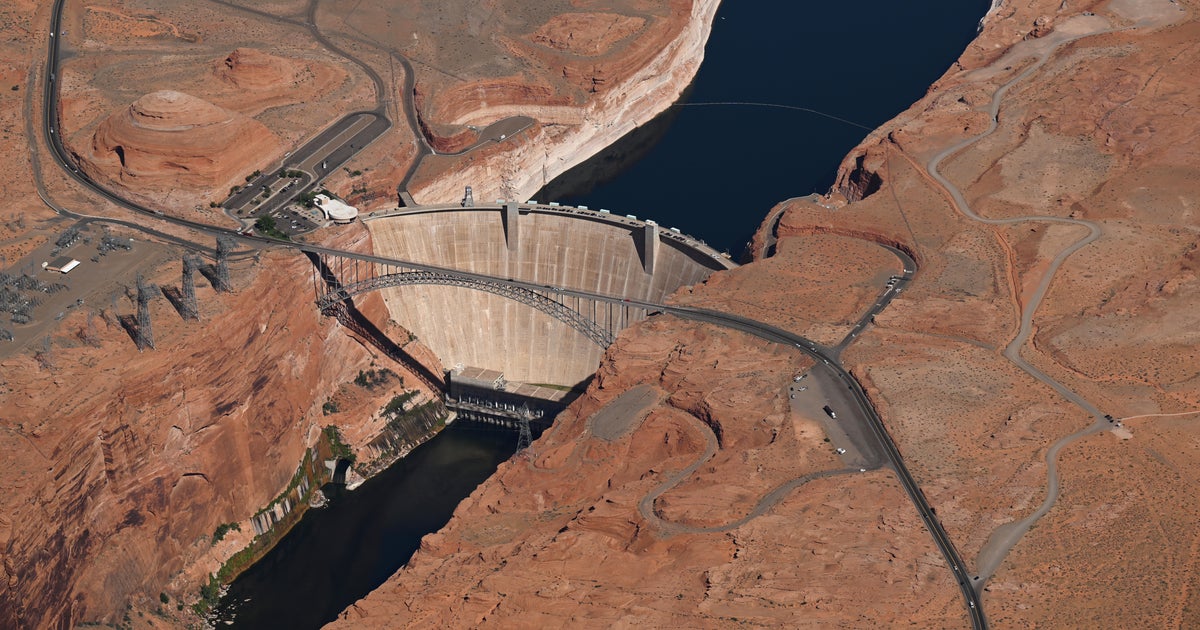
Lake Powell is also close to a critical power threshold. If the reservoir drops another 33 feet, CBS News reported, it will no longer have the water levels needed to generate hydroelectric power, which would also mean water cannot move through the dam into the Colorado River.
The standoff leaves the West waiting on either a state agreement or a federal decision. With the reservoirs at record lows, CBS News reported that officials are running out of time to decide who uses less water and how deep the cuts will go.
This story draws on original reporting from CBS News.