Congress splits on shutdown fix as funding deadline looms
House Republicans and Senate leaders are pursuing different stopgap plans as Oct. 1 approaches and midterm politics tighten the clock.
By Georgia Hale · Staff Writer
3 min read
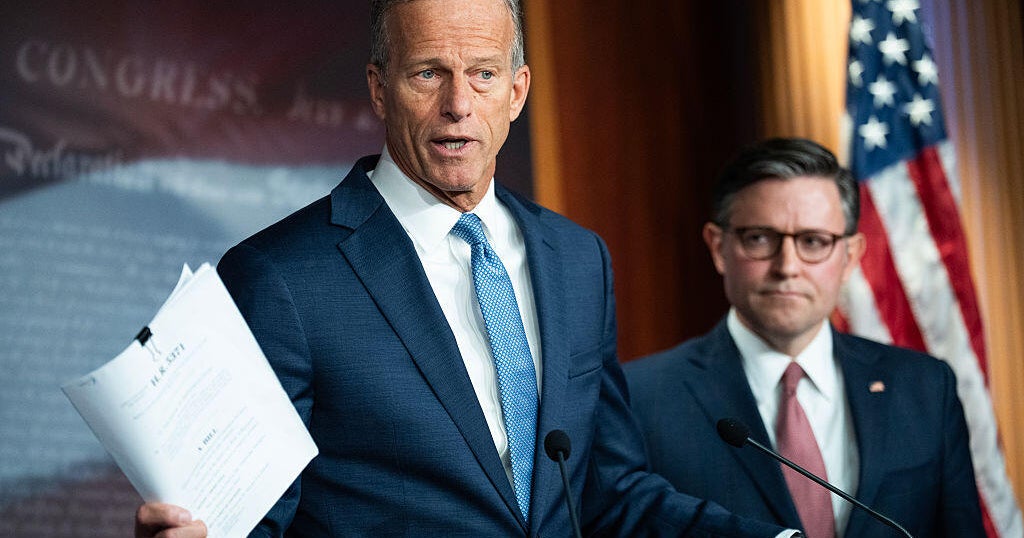
Congress is barreling toward another government funding deadline, and the House and Senate are already taking different routes to avoid a shutdown before the midterm elections.
Federal funding is set to run out on Oct. 1, according to CBS News. After two bruising shutdown battles in the past year, lawmakers in both chambers have said they want to avoid another standoff. They have not yet agreed on how to do it.
The House prepared this week to vote on a short-term funding measure that would keep the government open through the midterms. Speaker Mike Johnson has promoted the GOP-led plan, while House Democratic leaders have criticized the push as premature, saying there is still time to negotiate a bipartisan deal.
Across the Capitol, Senate Majority Leader John Thune is working on a separate track. Thune told CBS News last week that talks were underway and said senators were “working on solutions to fund the government.” This week, he said he wants to bring a different continuing resolution to the Senate floor before the August recess.
Thune said Wednesday that he asked Sen. Susan Collins of Maine, who chairs the Appropriations Committee, to prepare a “bipartisan and clean continuing resolution” that would fund the government until after the midterms. He said the committee is reviewing proposed funding adjustments from the Trump administration so the Senate can move quickly.
The split reflects a basic difference between the chambers. Republicans hold narrow majorities in both, but the Senate usually needs 60 votes to advance legislation, which means Democratic support is required. The House can pass measures on a more party-line basis.
“Everybody’s going the same direction,” Thune, a South Dakota Republican, told CBS News. “It’s just, we have a slightly … different process. We need Democrats over here.”
Collins told CBS News she is “hopeful that we will be able to draft a bipartisan CR,” adding that Democrats have been receptive “so far.”
The Senate was central to a 43-day shutdown last fall, when Democrats used the funding fight to press for action on expiring health care tax credits, according to CBS News. Earlier this year, a partial shutdown lasted more than 70 days as Democrats pushed for changes to the administration’s immigration enforcement agencies.
Those fights have carried into this year’s appropriations work, which has largely stalled in the Senate. Republicans have for months predicted that Democrats could force a shutdown this fall ahead of the midterms.
Speaking on the Senate floor Wednesday, Thune said it had been “not a good year on the government funding front” because of two record-setting shutdowns, but said senators now had a chance to find a different path. He also said he was encouraged that Democratic colleagues had signaled they did not want another shutdown.
The calendar is squeezing both chambers. The House is expected to leave Washington for a five-week August recess later this week, while the Senate is pursuing its own plan. That makes it likely the funding question will stay unsettled until lawmakers return in September.
The fight is also tied to another spending push. House Republicans are seeking extra Pentagon funding and money for several other priorities through budget reconciliation, a process that lets the majority pass certain budget measures without minority-party votes.
Thune has not committed to taking up what would be a third reconciliation bill. He said Tuesday the Senate would “hold that” until it can pass a continuing resolution to keep the government open.
If bipartisan talks collapse, Thune indicated the Senate could use that budget resolution to fund the government without Democratic support. “I hope that’s not necessary,” he said.
This story draws on original reporting from CBS News.