Cyclospora outbreak in Michigan shows signs of slowing after lettuce recall
Michigan officials say cyclospora cases may have peaked, but testing limits and possible other food sources keep the outbreak unresolved.
By Georgia Hale · Staff Writer
4 min read
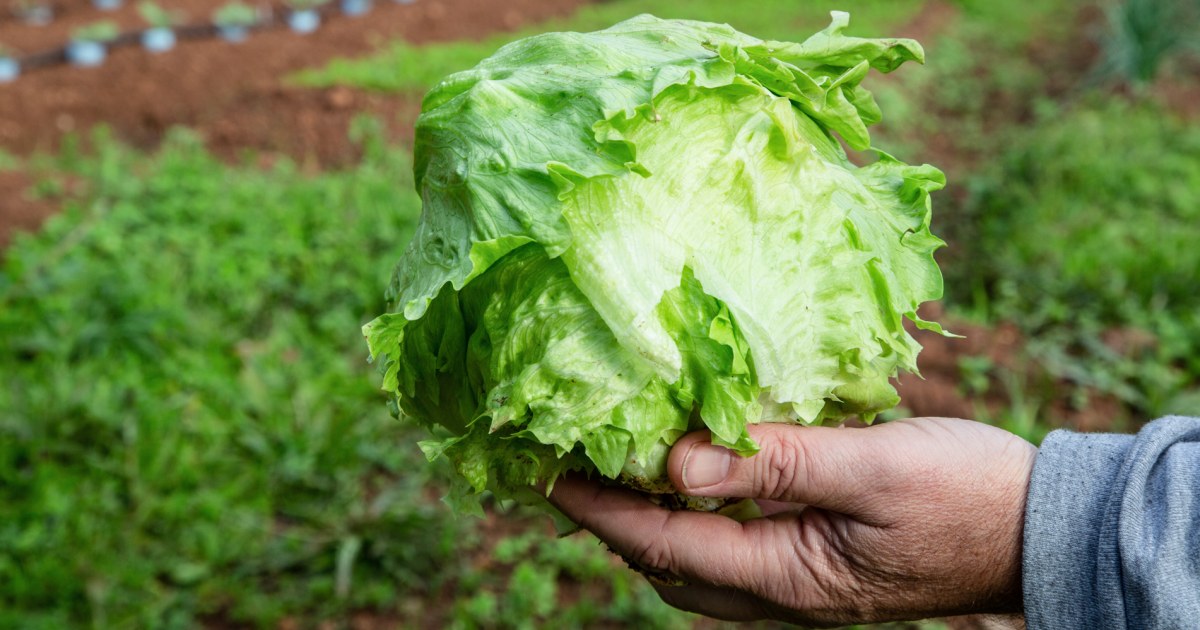
The cyclospora outbreak in Michigan may be easing after a recalled iceberg lettuce product was tied to illnesses across several states, but health officials say the danger has not vanished from the food supply.
The Centers for Disease Control and Prevention reported Tuesday that the U.S. has recorded more than 18,000 confirmed or suspected cases of cyclosporiasis, the illness caused by the cyclospora parasite. In nine states, most cases have been linked to shredded iceberg lettuce sourced from Taylor Farms de Mexico, according to the CDC.
Michigan remains the center of the outbreak. The Michigan Department of Health and Human Services said Tuesday that more than 9,500 people in the state have become sick in the past two months, with about 160 hospitalizations.
Has the cyclospora outbreak peaked in Michigan?
Dr. Natasha Bagdasarian, Michigan’s chief medical executive, said the state is seeing encouraging signals, including a slowdown in the share of emergency department visits where diarrhea is the main complaint. She also said about 475 cases reported since Friday were tied to a reporting delay at one health system, rather than a clear burst of new infections.
Bagdasarian cautioned that the picture is incomplete. Some health systems have told state officials that lab backlogs and limited testing supplies have led them to test mainly people who are severely ill or immunocompromised, she said.
That means milder infections may be missed. It also makes it harder for investigators to know whether cases are fading because of the recall, public health advice or other factors.
Taylor Farms voluntarily recalled iceberg lettuce more than a week ago from some Taco Bell restaurants, grocery outlets and food service suppliers. Bagdasarian said Michigan officials cannot say whether that single recall explains the slowdown, especially because some sick people have not reported eating lettuce or visiting a specific fast-food restaurant.
She also credited public health guidance, including advice to peel, cook and remove outer layers of produce, as a possible factor in the apparent decline.
What is cyclospora and how is it linked to produce?
Cyclospora is a parasite that can cause cyclosporiasis, an intestinal illness. The CDC describes the parasite as being found in human feces, and outbreaks can be linked to contaminated food.
Health officials said tracing the outbreak is difficult because they do not have real-time genetic sequencing that can quickly match a specific contaminated food to a patient’s infection. Jennifer McEntire, founder of the consulting firm Food Safety Strategy, said food products can pass through many distribution centers, brokers and other handlers before reaching consumers.
The Food and Drug Administration did not immediately respond to questions about its progress in tracing the source or sources of the outbreak.
Other produce remains under scrutiny. Health officials have suspected cilantro and parsley in some of this season’s outbreaks, though neither has been confirmed as a source nationwide.
New York officials investigated a smaller April cluster of cyclosporiasis cases and traced it to cilantro served at a Brooklyn restaurant, but they did not definitively confirm cilantro as the source. North Carolina officials, who have reported 561 cyclospora cases, said last week that their preliminary investigation points to cilantro and parsley as possible causes there. Those outbreaks have not been linked to Taylor Farms lettuce.
Dr. Stephen Ostroff, a former acting FDA commissioner, said other illnesses could be tied to contaminated lettuce grown in the same region as Taylor Farms de Mexico and served in the U.S. Frank Yiannas, a former FDA deputy commissioner for food policy and response, said the pattern indicates more than one food product is causing illnesses.
Bagdasarian said Michigan has seen two waves of cyclospora cases this summer, with peaks from June 21 to June 28 and from July 5 to July 12. Barbara Kowalcyk, director of the Institute for Food Safety and Nutrition Security at George Washington University, said that pattern could point to contaminated product arriving in separate batches.
Kowalcyk said ongoing contamination in irrigation water or processing water could keep an outbreak going and spread across crops or product batches. She said the investigation shows the need for better lab methods to detect cyclospora in the environment and more public health capacity.
This story draws on original reporting from NBC News.