Daniel Adongo deported to Kenya after visa overstay, ICE says
ICE says former Colts linebacker Daniel Adongo was removed after a visa overstay, amid questions raised about arrests and mental health.
By Sal Moretti · Money Reporter
3 min read
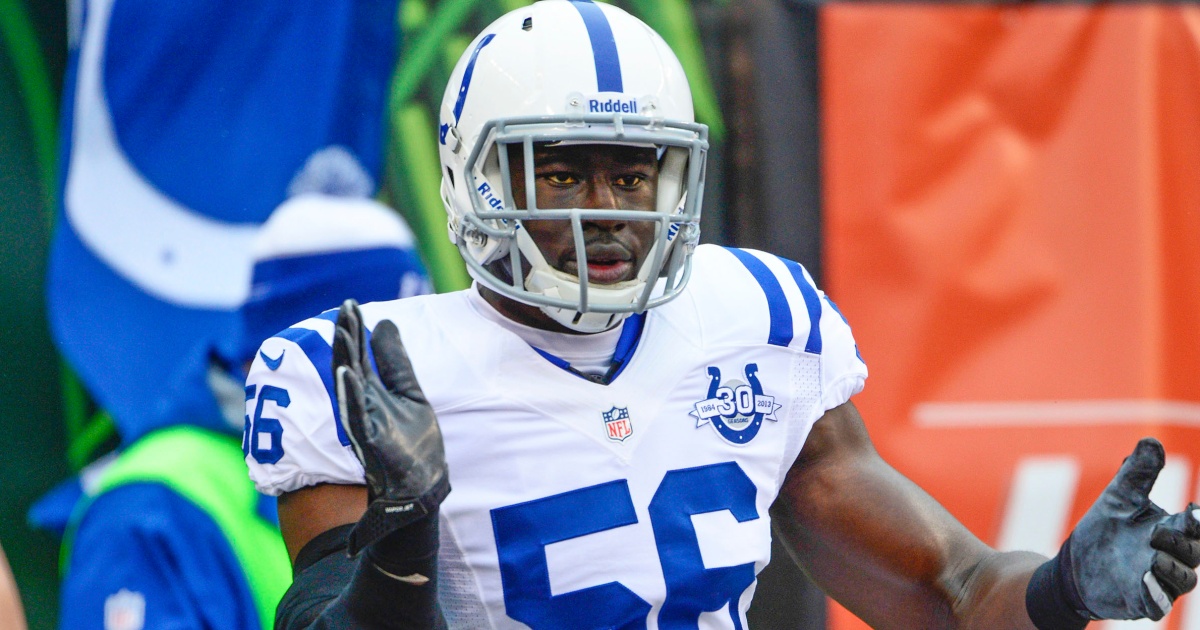
Daniel Adongo was deported to Kenya last month after overstaying a visa, ICE said Saturday, ending a U.S. chapter that once made him the first Kenyan player to appear in the NFL.
The agency said Adongo, 37, was removed from the United States on June 20. According to ICE, an immigration judge had ordered him deported in late March after the former Indianapolis Colts linebacker overstayed a visa in 2016, one year after his NFL career ended.
NBC News reported that lawyers who had previously represented Adongo did not immediately respond to requests for comment. The outlet also said it could not reach Adongo or identify his current legal representatives.
Why was Daniel Adongo deported?
ICE said Adongo was removed because he overstayed his visa and had a record that included arrests and one misdemeanor conviction. The agency pointed to a 2020 conviction for criminal mischief with damage, for which it said he received a 364-day jail sentence.
Court records cited by NBC News showed that, after credit for time served, Adongo was ultimately ordered to serve six months in county jail.
ICE also cited other charges Adongo had faced, including felony intimidation, battery and disorderly conduct. Court records showed those cases were dismissed and did not end in convictions, according to NBC News.
Douglas Thompson, assistant field office director for ICE Chicago, said in the agency’s statement that Adongo’s removal made the community safer and that immigration law applies to former professional athletes as well as others.
Who is Daniel Adongo?
Adongo was a rugby player before the Indianapolis Colts signed him in 2013. His move to the NFL drew attention because he became the first Kenyan to play in the league.
The Indianapolis Star reported that court records showed Adongo had legal troubles during and after his stint with the Colts. The Star also reported that he was at times found incompetent to stand trial.
According to the Indianapolis Star, Adongo’s attorney and others have raised the possibility that he suffered a traumatic brain injury during his years playing football and rugby. His lawyers had previously linked his arrests to mental illness, the Star reported.
The Star cited a 2020 medical report in which a doctor who examined Adongo at St. Joseph Regional Medical Center described him as acutely psychotic and having traumatic brain injury. The newspaper also reported that a mental health social worker who treated Adongo for years wrote that he had an undisclosed mental illness believed by some to be chronic traumatic encephalopathy, known as CTE.
What is CTE?
CTE is a brain disease associated with repeated head impacts over a long period. It cannot be confirmed in a living person and can only be diagnosed after death through an autopsy.
NBC News reported that about one-third of former NFL players said in a 2024 survey that they suspected they had CTE. The NFL first acknowledged a link between football and CTE in 2016, according to NBC News.
ICE said Adongo’s most recent charges came under the Laken Riley Act, a law requiring the agency to detain undocumented immigrants who are arrested on suspicion of, charged with or convicted of burglary, theft, larceny or shoplifting. NBC News noted that critics say the law undercuts due process for immigrants accused of certain crimes before any conviction.
ICE did not identify which of Adongo’s charges it believed triggered the law. NBC News reported that the Department of Homeland Security did not immediately respond to questions about concerns raised by Adongo’s family and attorneys over his mental state and possible brain injury.
This story draws on original reporting from NBC News.