Democrats press DOJ over opinion narrowing disability care rights
A group of 100 congressional Democrats is asking the Justice Department to withdraw a June legal opinion on institutional care for people with disabilities.
By Sal Moretti · Money Reporter
3 min read
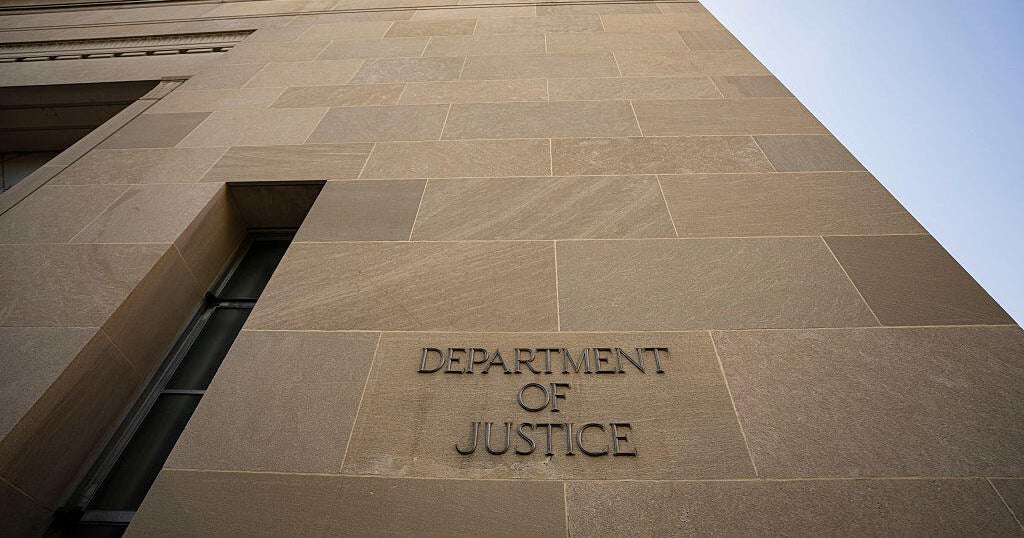
A bloc of 100 Senate and House Democrats is demanding answers from the Justice Department over a June legal opinion that could make it easier for states to keep people with mental illness in institutions instead of funding care at home or in the community.
In a Wednesday letter to Acting Deputy Attorney General Todd Blanche, the lawmakers asked the department to rescind the Office of Legal Counsel opinion and disclose who helped initiate, write, review or approve it. The opinion was authored by Principal Deputy Assistant Attorney General Lanora Pettit, according to the lawmakers.
The Democrats wrote that federal civil rights law has treated needless segregation and institutionalization as discrimination for more than five decades. They warned that weakening what is known as the integration mandate would affect millions of disabled Americans who use home and community-based services to live with family, work, study and take part in public life.
The letter was signed by prominent Democrats including Sens. Dick Durbin, Tammy Duckworth, Bernie Sanders, Ron Wyden, Chuck Schumer, Sheldon Whitehouse, Elizabeth Warren and Chris Van Hollen. Democratic Reps. Mary Gay Scanlon, Debbie Dingell and Lateefah Simon also signed.
What the DOJ opinion says
The Office of Legal Counsel concluded in June that states are not legally required to integrate mentally disabled patients with their peers by providing home-based or community-based care, according to CBS News.
Civil rights experts told CBS News that the opinion conflicts with long-established legal precedent and could lead to more institutionalization of people with disabilities.
The opinion revisits the Supreme Court’s 1999 decision in Olmstead v. L.C., a major disability rights ruling. In that case, the court held that people with disabilities are entitled to receive services in their communities rather than in institutions when appropriate.
The case was brought by two women with mental and intellectual disabilities in Georgia who had repeatedly been placed in institutions because they could not obtain coverage for support that would allow them to live independently at home, according to CBS News.
The Office of Legal Counsel opinion does not bind courts and does not create legal precedent. Still, CBS News reported that it could guide federal agencies, including the Justice Department and the Department of Health and Human Services, in how they enforce discrimination complaints involving patients who receive state-funded care.
Questions about who shaped the memo
The Democrats asked DOJ to identify all department officials, political appointees and outside individuals, including anyone from the White House, who had a role in starting, drafting, reviewing, approving or advising on the opinion.
They also asked whether outside companies or organizations, including groups that advocate criminalizing homeless people, provided legal analysis or briefing materials that the Office of Legal Counsel reviewed in connection with the memo.
Bloomberg Law reported that White House adviser Stephen Miller largely drove the legal opinion and had expressed frustration with Civil Rights Division settlements that required states to move people with mental illnesses out of institutions. According to Bloomberg Law, Miller believed those settlements would increase homelessness.
The White House and Justice Department denied to Bloomberg Law that Miller had any role in the memo.
As recently as December, the Justice Department was still pursuing enforcement tied to the Olmstead decision. In a news release announcing a settlement with South Carolina, Assistant Attorney General Harmeet Dhillon said the department and the state were working to ensure that people with serious mental illnesses could be served in the community when they wanted that care.
CBS News said it asked the Justice Department for comment. Because Republicans control both chambers of Congress, Democrats can request the information but cannot compel a response through a congressional subpoena.
This story draws on original reporting from CBS News.