Experts say vinegar and water can help clean strawberries safely
NBC Select spoke with food and infectious disease experts about washing strawberries as cyclosporiasis cases rise in the U.S.
By Deshawn Carter · Sports Writer
3 min read
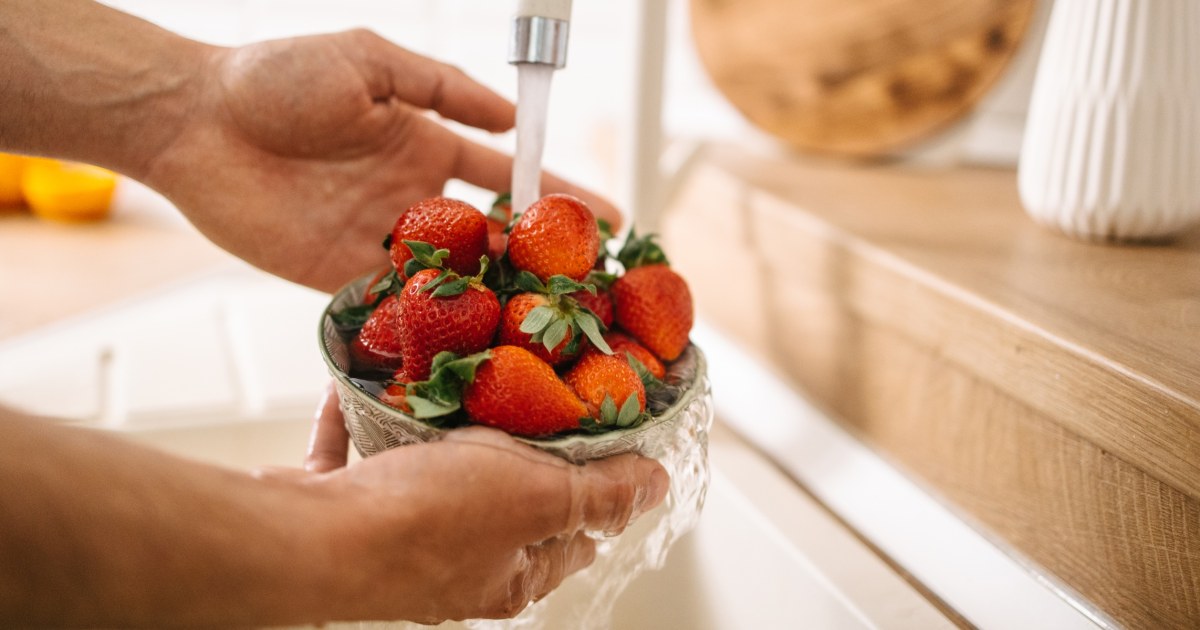
A quick vinegar bath may be the strawberry step your summer snack has been missing.
With cyclosporiasis cases rising in the United States, NBC Select asked food and infectious disease experts how shoppers should clean strawberries before eating them. The illness is caused by the cyclospora parasite and can be contracted through contaminated produce, including lettuce, apples and strawberries, according to NBC Select.
The main advice: wash berries before eating or cooking with them, use cool water and distilled white vinegar for a stronger clean, then dry them well enough that moisture does not speed up spoilage.
Why strawberries need a wash
Michael Handal, a chef and instructor at the Institute of Culinary Education in New York City, told NBC Select that berries and other produce can carry dirt, bacteria, fungi and other microbes even when they look clean. He also said commercial produce may have trace amounts of chemicals and pesticides.
Handal said washing fresh produce before eating or preparing food is necessary, though the best method can vary depending on the produce.
Dr. Sharon Nachman, a professor and chief of pediatric infectious diseases at Stony Brook University’s Renaissance School of Medicine, told NBC Select that vinegar can help loosen unwanted material from strawberries because it is acidic. She said bacteria do not like acid, and that vinegar helps release bugs and bacteria from the fruit’s surface.
Nachman also said vinegar does not kill pathogens, bacteria or parasites linked to cyclospora. Instead, she said its acidity can help detach bacteria and parasites from fruits and vegetables, which is why experts recommend using it with running water to remove debris.
The expert-backed cleaning method
NBC Select outlined a simple process based on its expert interviews. Start by checking unwashed strawberries and throwing away any berries that are visibly bruised, spoiled or moldy.
If the berries are not being eaten right away, keep them unwashed in the ventilated container they came in, or place them in a produce storage container designed to keep fruit fresh.
When it is time to eat or use them, place the strawberries in a colander or fine-mesh sieve set inside a large bowl. Add one part distilled white vinegar and three parts cool water, such as 1 cup vinegar to 3 cups tap water.
Gently move the strawberries around by hand to loosen debris. Handal told NBC Select to let them sit for up to one minute, but no longer, because a longer soak can change their texture.
Lift the colander or sieve out of the bowl and let the liquid drain. If you do not have a sieve or colander, fill a bowl with the vinegar-water mixture, soak the berries briefly and drain them afterward.
Next comes the part many people rush: drying. NBC Select recommends spreading the strawberries in a single layer on paper towels set on a cutting board or baking sheet, then gently pressing another paper towel on top. The drier they are, the better, because leftover moisture can make strawberries spoil faster.
For extra drying, NBC Select suggests using a salad spinner, then storing the berries in a ventilated food container in the refrigerator.
Wash now or later?
Handal told NBC Select that strawberries are generally better washed as they are eaten or prepared, rather than washed all at once and stored. He said unwashed strawberries should be stored in the plastic clamshell containers they were sold in, or in a loose plastic bag.
If shoppers do wash the whole batch, NBC Select said they should dry the berries thoroughly and use a ventilated container. Handal also said visibly spoiled or bruised berries should be removed before refrigeration because they can contribute to the rest of the batch going bad.
This story draws on original reporting from NBC News.