Fauci invokes Fifth Amendment at Rand Paul COVID origins hearing
Anthony Fauci appeared under subpoena before Rand Paul’s Senate panel after diary entries revived the COVID origins fight.
By Deshawn Carter · Sports Writer
3 min read
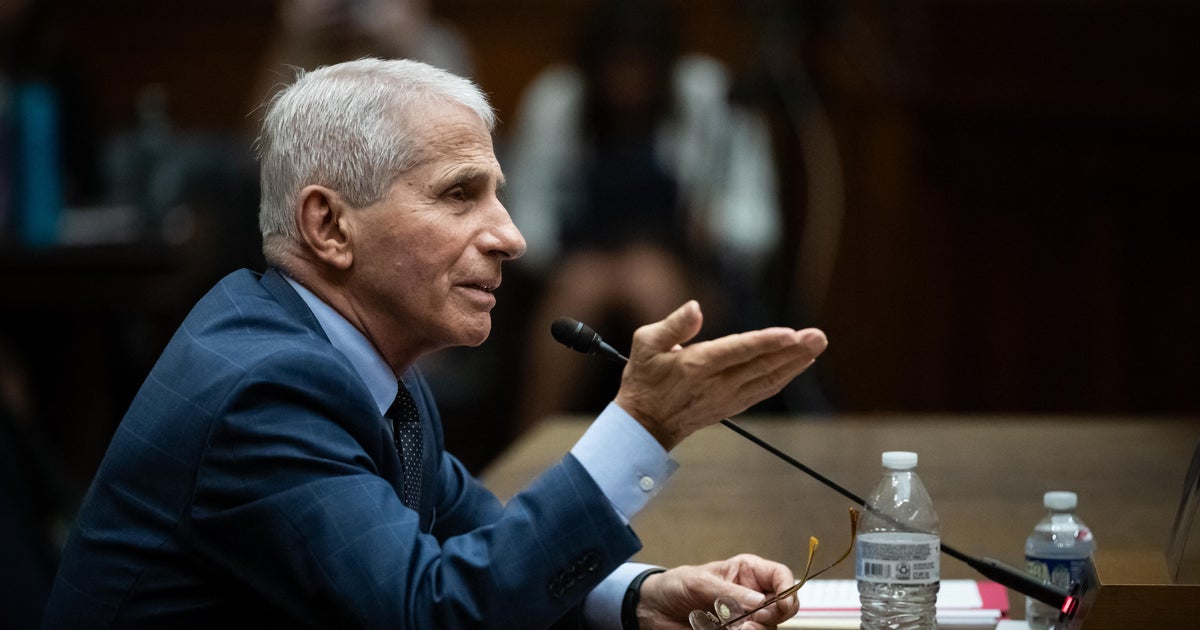
Anthony Fauci invoked the Fifth Amendment during Senate testimony Wednesday, according to CBS News, as the former top federal infectious disease official faced Republican Sen. Rand Paul in a hearing tied to COVID-19 origins and Fauci’s newly released diaries.
Fauci appeared before the Senate Homeland Security Committee under subpoena, CBS News reported. Paul, the Kentucky Republican who chairs the panel, has spent years pressing Fauci over the origins of the coronavirus and whether U.S.-backed research in China played any role in the pandemic.
The hearing followed the release by Paul’s office of more than 1,000 pages of Fauci journal entries from his time helping lead the Trump and Biden administrations’ pandemic response, according to CBS News. Health and Human Services Secretary Robert F. Kennedy Jr. told Fox News the entries were recovered in recent months from government computer servers.
Why did Fauci invoke the Fifth Amendment?
CBS News reported that Fauci invoked the Fifth Amendment while citing Paul’s “unhinged obsession.” The Fifth Amendment allows a witness to decline to answer questions when the response could be self-incriminating.
The hearing put Fauci back across from one of his fiercest Capitol Hill antagonists. Paul has accused Fauci of misleading Congress about whether the National Institutes of Health funded gain-of-function research at the Wuhan Institute of Virology, CBS News reported. Fauci has denied that charge and has argued the research Paul cited did not meet federal definitions for gain-of-function work.
Paul has urged the Justice Department to prosecute Fauci over the dispute, according to CBS News. Former President Joe Biden preemptively pardoned Fauci shortly before leaving office last year, CBS News reported.
What is in the Fauci diaries?
The diary entries cover roughly three years, from December 2019 through Fauci’s departure as director of the National Institute of Allergy and Infectious Diseases in December 2022, according to CBS News.
Some entries describe the confused early hunt for the virus’s origin. In January 2020, Fauci wrote that the market in Wuhan was not the original source but acted as an “amplifier,” while also writing that the virus had jumped from animals to people somewhere, CBS News reported.
About a week later, Fauci described a call with infectious disease experts where there was no full agreement over whether mutations in the virus could have been inserted by humans, according to CBS News. Paul has argued the entries show Fauci and other officials privately considered origin theories they publicly dismissed. Fauci has long said he remained open to a lab-leak possibility and did not mislead the public, CBS News reported.
The entries also touch on pandemic restrictions. CBS News reported that Fauci described telling then-New York City Mayor Bill de Blasio in March 2020 to close schools, while later writing in August 2020 that reopening schools should be the default position, depending on local infection levels.
What do officials say about COVID origins?
The origin of the virus that caused COVID-19 remains unresolved, according to CBS News. Many scientists believe the available evidence points to a natural spillover from animals to humans, while others believe the virus may have leaked from a Wuhan laboratory.
A World Health Organization expert panel could not reach a final conclusion, CBS News reported, saying the available evidence leaned toward animal-to-human transmission but that a lab leak could not be ruled out because China had not provided records.
The U.S. intelligence community has also split on the question, CBS News reported. The National Intelligence Council and four agencies leaned toward natural exposure to an infected animal, while the FBI and Department of Energy favored a lab incident. The CIA was unable to decide at the time, though CBS News reported it later issued a low-confidence assessment favoring a lab origin.
This story draws on original reporting from CBS News.