FDA peptides restrictions could ease after panel vote
An FDA advisory committee backed compounding four peptides despite agency scientists’ concerns over evidence, safety and chemical identity.
By Sal Moretti · Money Reporter
3 min read
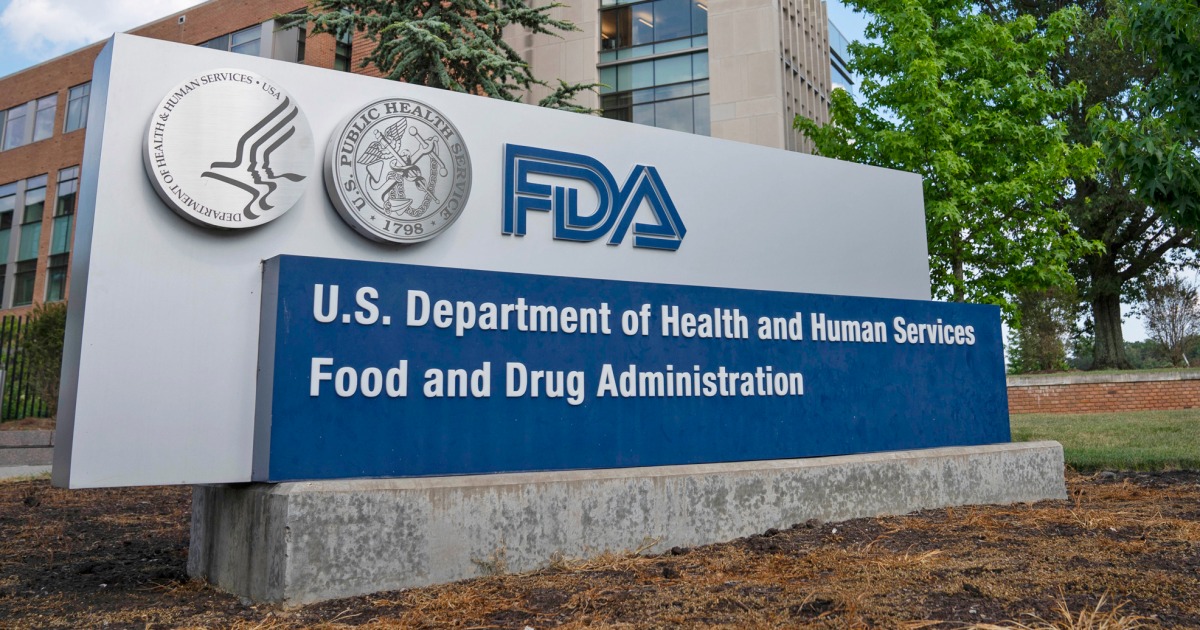
FDA peptides restrictions could be loosened after a federal advisory committee voted Thursday to recommend that four compounds be added to the list of drugs compounding pharmacies may make.
The Food and Drug Administration’s Pharmacy Compounding Advisory Committee backed BPC-157, KPV, TB-500 and MOTS-c after agency scientists raised repeated concerns about limited evidence, possible safety issues and uncertainty over the compounds’ chemical identities.
The votes do not mean the peptides are FDA-approved medicines. The committee’s role is advisory, and the FDA would still have to issue a rule proposal before any change takes effect.
What did the FDA panel decide on peptides?
The panel recommended easing compounding restrictions for BPC-157, KPV, TB-500 and MOTS-c. It was scheduled to consider three more peptides, emideltide, epitalon and semax, on Friday.
For BPC-157, KPV and TB-500, eight committee members voted in favor, six voted against and one abstained. For MOTS-c, seven voted yes, five voted no and two abstained.
FDA scientists reviewed BPC-157 for ulcerative colitis, KPV for wound healing and inflammatory conditions, TB-500 for wound healing, and MOTS-c for obesity and osteoporosis.
During the meeting, FDA officials said a central problem was that there was no universally accepted chemical formula for each peptide, making it difficult for the agency to evaluate them. Russell Wesdyk, an FDA official, told the committee, “We’ve never faced a problem of, ‘What is it?’”
Peptides have become popular in wellness circles and are promoted for uses including anti-aging, sleep and healing. NBC News reported that high-profile figures including Health Secretary Robert F. Kennedy Jr. and podcaster Joe Rogan have helped bring attention to the compounds.
The compounds often sit in what NBC News described as a gray market: they are not FDA-approved drugs, but they can be bought online from vendors that label them “for research use only.” Kennedy has argued that allowing compounding would shift people toward safer products and away from that gray market.
Why were FDA scientists concerned?
Agency scientists said the evidence for the peptides was limited and, in some cases, there was no data for them to assess. They also raised safety concerns during the daylong meeting.
Some committee members objected that data offered by peptide supporters during public comment had not always appeared in FDA scientists’ presentations. Wesdyk said the agency reviewed material submitted by the deadline and would keep evaluating new information, saying, “There’s no attempt to conceal anything or not use something.”
Josh Mailman, president of the Neuroendocrine Tumor Research Foundation board of directors, voted no on KPV and said he did not know clearly what he was being asked to evaluate, calling it “kind of like a black box.”
Other members supported the recommendations despite the thin record. Dr. Gabriel Alizaidy, a clinical researcher at online clinic Maximus, which NBC News reported offers peptides, said he voted yes on BPC-157 because he was “frankly disappointed at how incomplete the data was.”
Dr. Haleem Mohammed, chief medical officer at Gameday Men’s Health, which NBC News reported offers peptides, said his yes vote on BPC-157 was for “patient safety” and “medical freedom.” David Pope, chief pharmacy officer at Xifin Pharmacy Solutions in Georgia, said his yes vote put the decision “back into the hands of the patient, the physician and the pharmacist.”
Dr. Brian Lee, an associate professor of medicine at Keck School of Medicine of USC, voted no and warned that the public could see the vote and any FDA sign-off as an endorsement. Dr. Elizabeth Rebello, an anesthesiologist at the University of Texas MD Anderson Cancer Center, said she was concerned the committee was responding to demand created by the market rather than “solid science.”
NBC News reported that eight members of the panel were appointed under Kennedy, including six who run clinics that offer peptides.
This story draws on original reporting from NBC News.