Gas climbs back to $4 as oil markets jolt over Iran and Russia
The U.S. average for regular gas reached $4 Monday after crude jumped more than 15% in a week amid fighting tied to Iran and Russia.
By Sal Moretti · Money Reporter
3 min read
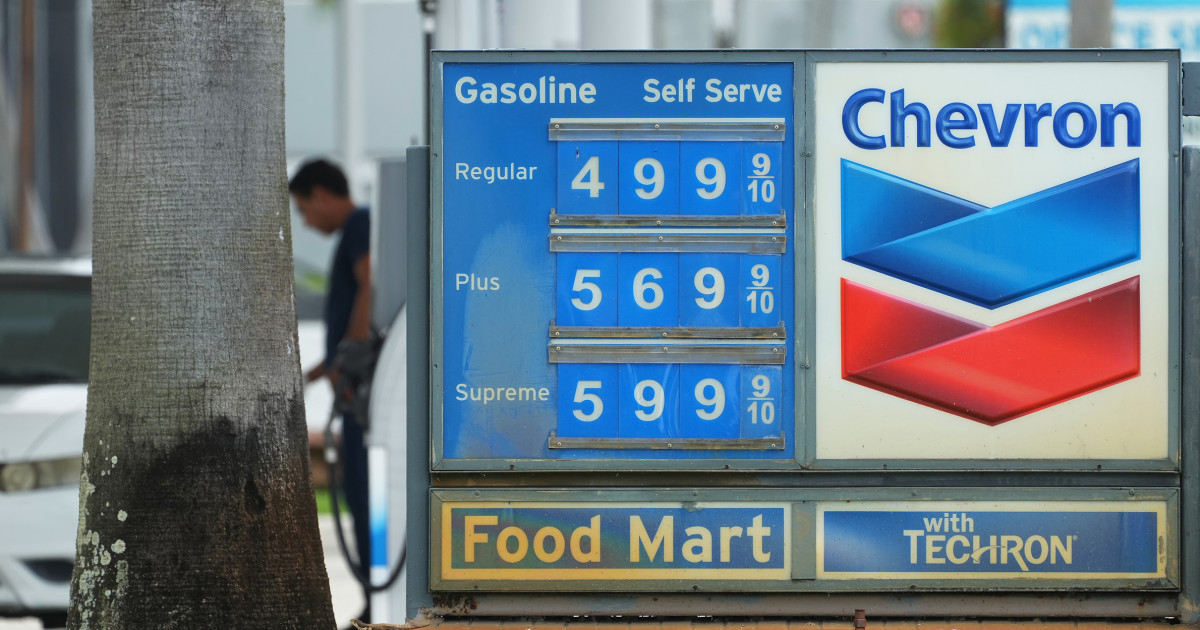
The national average price for regular gasoline was back at $4 a gallon Monday, according to NBC News, as oil markets absorbed fresh pressure from the Iran conflict and attacks tied to the Russia-Ukraine war.
It was the first time the U.S. average had reached $4 or more since June 17, NBC News reported. Prices had recently cooled to $3.79 on July 7 and July 8 before rising again over the past two weeks.
Crude has been moving fast. U.S. oil finished Friday at $82.49 a barrel, while international benchmark Brent closed at $88.10, according to NBC News. Both gained more than 15% last week and more than 20% over the past two weeks.
Hormuz tensions hit the pump
The pressure began building again after the U.S. revoked a sanctions waiver on Iranian oil on July 7, NBC News reported. The next day, President Donald Trump said the ceasefire with Iran was “over.”
Oil later rose after Trump said he was “reinstating the Iranian blockade” in the Strait of Hormuz. The U.S. military said this week that the blockade applies to vessels traveling to or from Iranian ports and coastal areas.
Trump also said last week that the U.S. would seek payment “at the rate of 20% on all cargo shipped,” according to NBC News. Shipping companies and international maritime groups rejected that plan, calling it a breach of international law. Trump later said he would drop the fee, but oil prices kept climbing as U.S. strikes on Iran and Iranian retaliation continued, NBC News reported.
The fight is centered on the Strait of Hormuz, the narrow waterway that usually carries 20% of the world’s energy supplies to global markets.
JPMorgan Chase commodities analyst Natasha Kaneva wrote Thursday that Tehran appeared to be trying to control how ships move through the strait through required transit rules and fees, rather than closing it outright. She added that the confrontation had slowed the rebound in ship traffic that began in early June.
Data from MarineTraffic and Kpler showed crossings in the strait fell last week to a three-week low, NBC News reported. On Thursday, only eight ships crossed, compared with an average of 130 a day before the war began.
Russia adds another squeeze
HSBC commodities analysts said the Russia-Ukraine war has also become a bigger factor in energy prices.
According to HSBC, Russia, the world’s second-largest diesel exporter after the U.S., banned exports of key refined products on July 8 through the end of July. The analysts linked the move to Ukrainian attacks that have knocked out a growing share of Russian refining capacity.
HSBC said those new limits come on top of existing restrictions on most gasoline and jet fuel shipments. The analysts also said Russia is now seeking to import diesel, leaving the global market with tighter supply and greater demand.
U.S. crude and Brent prices are now up about 45% since the start of the year, NBC News reported.
Jet fuel is rising too. Before the Iran war, it averaged $2.50 a gallon. By Friday, it was at $3.57, up nearly 43%, according to the Argus US Jet Fuel Index.
This story draws on original reporting from NBC News.