Inside a three-day retreat for survivors of justice system failures
60 Minutes followed Healing Justice, a nonprofit bringing crime survivors and exonerees together for three days of painful, careful repair.
By Deshawn Carter · Sports Writer
4 min read
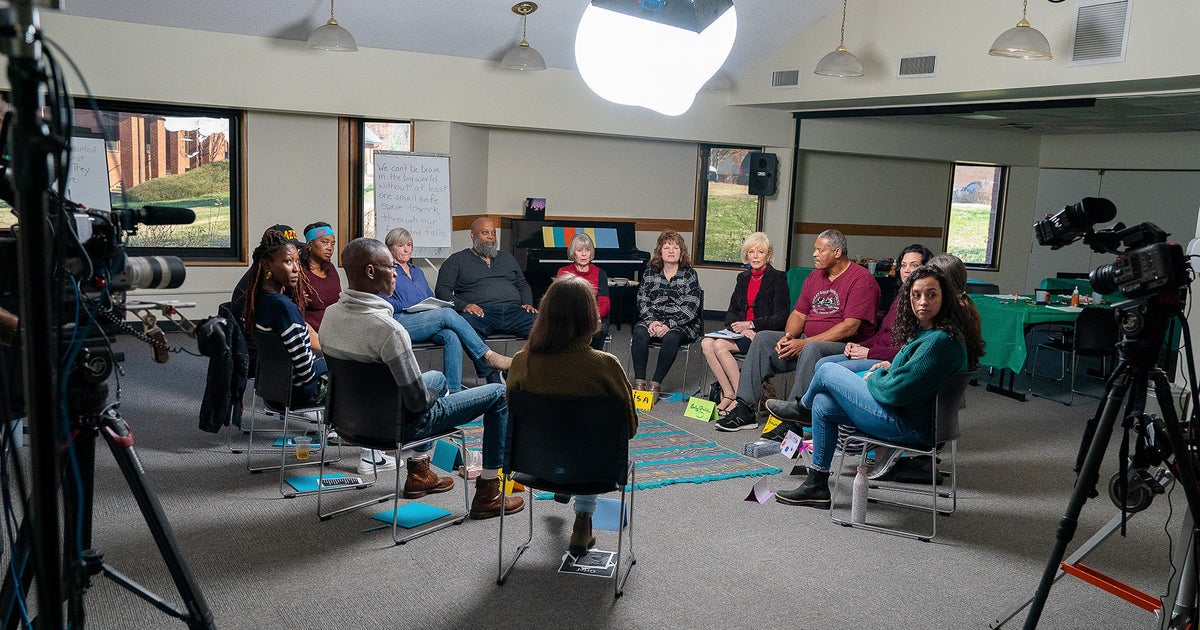
A rape survivor who helped send an innocent man to prison now runs a retreat where people on opposite sides of justice system failures sit in the same room and try to heal.
That is the center of Healing Justice, the nonprofit founded by Jennifer Thompson, whose own case became a landmark example of how eyewitness identification can go wrong. CBS News’ 60 Minutes reported that the organization brings together crime survivors, wrongfully convicted people and family members from separate cases for a three-day retreat.
According to 60 Minutes, the program uses writing, group discussion and art therapy to help participants talk about pain, guilt and loss, while also hearing from others whose lives were damaged when the courts got the wrong person.
Correspondent Lesley Stahl told 60 Minutes Overtime that participants arrived carrying emotions including anger, guilt and sadness. She said the weekend did not offer an instant cure, but that the CBS team watched the start of change take place.
The case that started it
Thompson was 22 and in college when she was raped in her apartment on July 28, 1984, according to 60 Minutes. She told Stahl in a previous CBS report that a man broke in after shattering a bulb near her back door and cutting the phone line.
During the assault, Thompson said she tried to memorize the attacker’s features so police could find him. Three days later, police showed her a photo lineup. She selected Ronald Cotton, then identified him again in a physical lineup, CBS reported.
Thompson later testified against Cotton. He was sentenced to life in prison plus 50 years. After Cotton spent 11 years behind bars, DNA testing cleared him and identified Bobby Poole as the man who raped Thompson, according to 60 Minutes.
CBS producer Shari Finkelstein said research has shown that if the real attacker is absent from a lineup, witnesses often choose the person who most resembles their memory of the perpetrator. CBS reported that Poole was not included in either lineup shown to Thompson.
Thompson later asked Cotton to meet her. She apologized, and Cotton forgave her, according to 60 Minutes. Thompson told Stahl that forgiveness helped her begin to heal.
Cameras inside the retreat
Finkelstein said she remained in contact with Thompson over the years and learned about Healing Justice as the program developed. She told 60 Minutes Overtime that filming inside a retreat required careful planning because the participants were dealing with intensely personal trauma.
With permission from Healing Justice and the people taking part, Stahl interviewed all nine participants before and after the retreat. CBS said its team filmed the weekend’s group sessions and activities because producers did not know which moments would prove meaningful.
Photographers Don Lee and Tom Fahey placed four cameras around the group circle, according to CBS. One camera moved quietly on tracks, another covered the opposite side of the circle, and two fixed cameras recorded the full group and Thompson. Editor Dan Glucksman later arranged footage into a four-camera grid so producers could watch speakers and reactions at the same time.
One participant, Loretta Zilinger White, was raped at 15 and had been part of a wrongful conviction case in which the real perpetrator was never caught, 60 Minutes reported. Stahl said Zilinger White knew DNA had exonerated the man once accused, but still struggled to stop seeing his face as connected to the crime.
Another participant, Raymond Towler, was wrongfully convicted of the rape and assault of two children, according to CBS. DNA evidence cleared him after 29 years in prison, but 60 Minutes reported that he still feared people would view him as guilty.
Finkelstein said Fahey captured a late-night conversation between Zilinger White and Towler after checking whether they were comfortable being filmed. She described the exchange as one of the key moments of their retreat experience.
By the final interviews, Stahl said Zilinger White appeared transformed, with much of the pain she had shown earlier lifted. Finkelstein added that Thompson does not present the retreat as a quick fix, saying Thompson herself has told Stahl that she will continue healing.
This story draws on original reporting from CBS News.