Hegseth and Caine face Senate grilling as Iran war costs climb
The Pentagon is seeking $67 billion as U.S. casualties rise and senators in both parties question the path ahead in Iran.
By Deshawn Carter · Sports Writer
3 min read
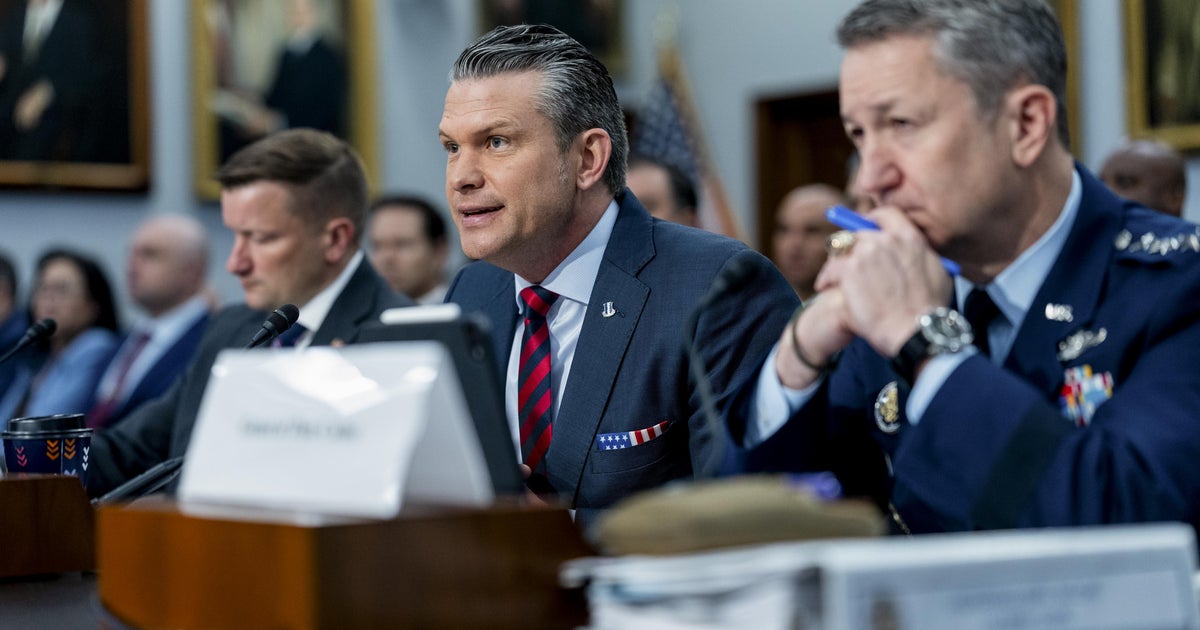
Defense Secretary Pete Hegseth and Gen. Dan Caine are set to appear before a Senate panel Tuesday with the Iran war growing deadlier, costlier and harder for the Trump administration to sell on Capitol Hill.
The hearing is scheduled for 2:30 p.m. and will center on the administration’s supplemental funding request, CBS News reported. The Pentagon is asking for $67 billion to help pay for the conflict.
The testimony comes after two U.S. soldiers were killed Friday in an Iranian attack, according to CBS News. Another service member died in Iraq during a controlled explosion to destroy an Iranian drone.
Those deaths raised the number of U.S. service members killed since the war began in February to 17, CBS News reported. Officials told CBS News that nearly 100 American troops have been injured in Iranian strikes on bases across the Middle East this month.
The battlefield has not cooled. CBS News reported that the U.S. launched a 10th straight night of strikes on Iranian military infrastructure Monday after a ceasefire between Washington and Tehran fell apart.
Billions on the table
Hegseth and Caine last testified publicly about the war in May, shortly after their most recent public briefing to reporters, according to CBS News. On Tuesday, they are expected to defend the Pentagon’s request for war funding before senators weighing both the price tag and the strategy.
The Trump administration asked Congress last month for $88 billion in supplemental funding, CBS News reported. Most of that request was tied to the war, including $21 billion for munitions, $17.3 billion for operations and $12.1 billion for classified programs.
The package also included money for efforts to fight an Ebola outbreak in African countries and $11.1 billion in farm aid. Agriculture Secretary Brooke Rollins is scheduled to testify alongside Hegseth and Caine as the administration makes its case for the broader funding plan.
The Pentagon’s war costs have already drawn scrutiny. In late April, a defense official testified with Hegseth that the conflict had cost about $25 billion, according to CBS News. Hegseth and Caine also appeared before House and Senate Appropriations subcommittees in May as the Pentagon sought $1.5 trillion in the fiscal year 2027 budget proposal.
Pressure from both parties
Sen. Patty Murray of Washington, the committee’s top Democrat, plans to focus on the cost of the war, a Democratic committee aide told CBS News. She is also expected to point to Pentagon money already provided in the GOP’s “one big, beautiful bill” last year.
“The American people want to see a quick and strategic end to this war, not $70 billion of their tax dollars sent to keep it going,” Murray will say in her opening remarks, according to the aide.
Republican skepticism could also complicate the push. Sen. Susan Collins of Maine, who chairs the committee, has supported resolutions aimed at limiting President Trump’s war powers in Iran, CBS News reported. Sen. Lisa Murkowski of Alaska, another committee member, has also voted with Democrats on war powers measures.
House Republicans have pursued Pentagon funding through budget reconciliation, a process that can let the party in power pass measures with direct budget effects without Democratic votes. But CBS News reported that several key GOP senators, including Collins and Murkowski, have questioned whether a third reconciliation bill can succeed in the Senate.
Senate Majority Leader John Thune has not committed to that route. The South Dakota Republican said last week that reconciliation is “very different in the House than it is in the Senate,” and said GOP senators would want input.
Thune cited the overall Defense and Agriculture Department numbers, possible ways to offset the cost and Senate limits on what can be included in a reconciliation package as obstacles.
“I’ve said all along … that it’s an option,” Thune said. “But it’s not, certainly, the only option.”
This story draws on original reporting from CBS News.