India Cockroach protests spread as Sonam Wangchuk ends hunger strike
Sonam Wangchuk ended a 26-day fast, but Cockroach Janata Party protesters say they will keep marching over exam leaks.
By Frankie Delgado · News Reporter
3 min read
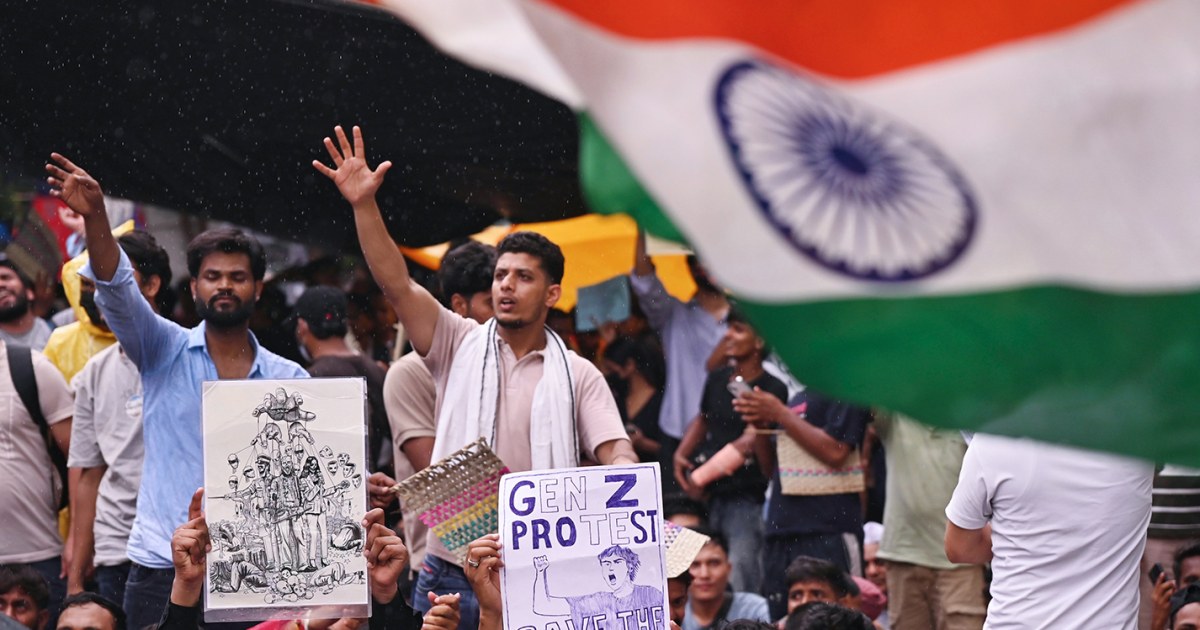
The India Cockroach protests pushed beyond New Delhi on Friday after activist Sonam Wangchuk ended a 26-day hunger strike that had become a rallying point for a youth-led movement challenging Prime Minister Narendra Modi’s government, NBC News reported.
Demonstrations have spread to Mumbai, Hyderabad, Bengaluru and Ahmedabad, according to NBC News. Protest leaders said they would not stand down despite Wangchuk ending his fast, and Cockroach Janata Party founder Abhijeet Dipke told supporters the movement would continue until Education Minister Dharmendra Pradhan resigns.
“After all of this, we don’t accept anything less than a resignation,” Dipke said Friday, according to NBC News.
What are the India Cockroach protests about?
The protests began around anger over education reforms after alleged leaks in highly competitive university entrance exams, NBC News reported. They have since widened into a broader burst of frustration over education, economic inequality and Modi’s leadership.
The Cockroach Janata Party started as a satirical youth political movement after India’s Chief Justice Surya Kant compared unemployed young people to “cockroaches,” according to NBC News. The movement has since grown into one of the most sustained challenges to India’s leadership in years, the outlet reported.
Wangchuk said on X that he ended his fast after appeals from dozens of members of parliament and after “a long negotiation on various conditions and in view of possible violence in the country.” He acknowledged that not all of his demands had been met and said two federal lawmakers were present when he broke the fast.
CJP leaders have said they began talks with government officials at a neutral site, raising the possibility of a breakthrough in the standoff, NBC News reported.
How has Modi responded?
Modi made his first public comments on the protests Thursday night in an Instagram video, according to NBC News. Addressing exam paper leaks, he said, “I know the paper leak is not a trivial matter.”
Modi also defended his government’s decision to allow 2 million students to retake medical entrance exams and said fast-track courts would handle cases involving examination paper leaks, NBC News reported.
Protesters rejected that response as short of their demand for accountability. Hundreds returned to the streets of New Delhi on Friday as authorities closed 18 stations on the city’s metro system, disrupting a key transport network for the capital’s 23 million residents, according to NBC News.
Anger around the movement intensified after images showed Wangchuk looking frail during his fast. NBC News reported that police forced him into a hospital on Saturday.
The protesters’ demands have included compensation for families of medical students who died by suicide after the exam paper leaks, according to NBC News. On Monday, as CJP representatives held an initial round of talks with a senior government official, police used batons and tear gas to try to stop demonstrators from marching toward parliament. Dozens were injured and arrested, NBC News reported.
How are protesters organizing?
Protesters reported internet shutdowns in parts of New Delhi, especially around Jantar Mantar, an 18th-century observatory that has hosted major protests, according to NBC News. Organizers have used Signal to coordinate, while others have turned to Bitchat, an app that uses peer-to-peer Bluetooth connections to send messages without internet access.
Jack Dorsey, Bitchat’s founder and a co-founder of Twitter, said Thursday on X that India’s government had ordered the app’s takedown under an IT law that critics say is often used to curb online dissent, NBC News reported.
Dipke said larger crowds were expected over the weekend, according to NBC News.
This story draws on original reporting from NBC News.