Army detonates degraded lead azide at Iowa ammunition plant
The Army blasted about five tons of unstable lead azide in Middletown after a court cleared the plan, with early monitors reporting no lead.
By Sal Moretti · Money Reporter
3 min read
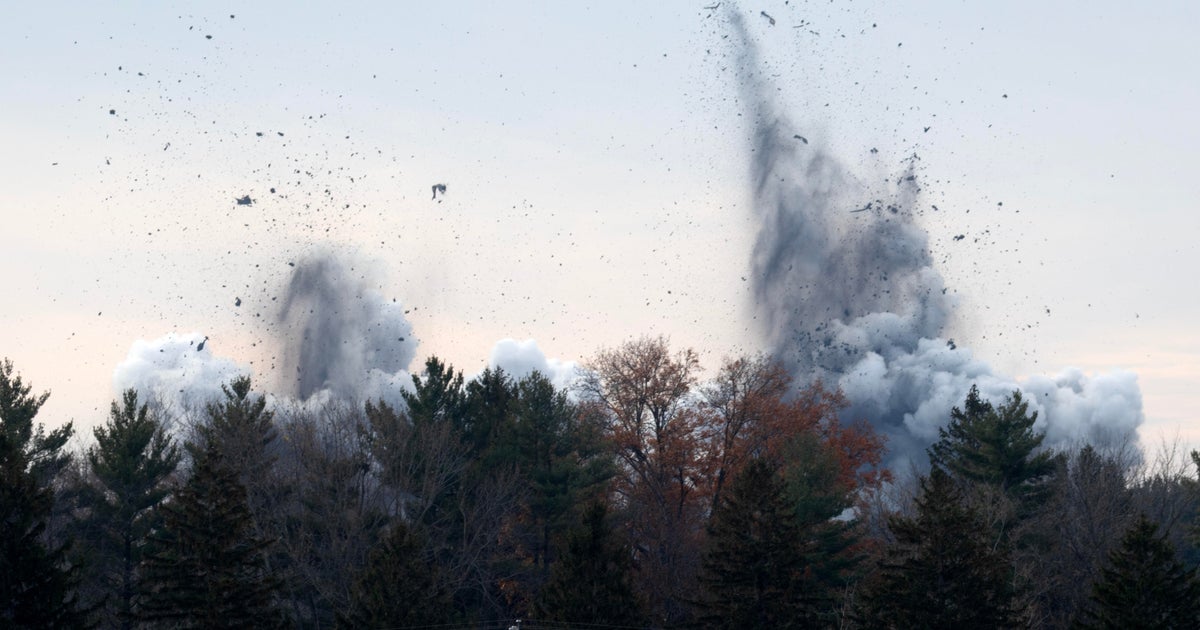
The Iowa Army Ammunition Plant detonation went ahead at 9 a.m. Wednesday in Middletown, where the Army destroyed about five tons of degraded lead azide after days of public concern and a court fight over the plan.
Early air-monitoring results were encouraging, but they were not a final finding on environmental effects. The Environmental Protection Agency reported zero lead readings at four nearby monitors 15 minutes after the blast, and CBS News said those readings remained unchanged two hours later.
Why did the Army detonate the Iowa explosives?
The Army said roughly 68 barrels, or about 10,000 pounds, of lead azide had deteriorated during about 20 years in storage. A process known as recrystallization made the material more likely to explode accidentally if it was moved or exposed to friction, according to CBS News.
Officials said colder weather was increasing that risk. The Army argued that leaving the cache in place could result in an uncontrolled explosion.
To limit what could become airborne, the Army said it placed concrete barriers around the bunkers and used water-tank walls, gel blocks and aqueous foam. Those measures were intended to absorb heat and reduce particulate emissions, not a guarantee that no material would escape.
Smoke rose after the controlled blast, which was seen in footage reported by the BBC and The Associated Press. Army Maj. Gen. Eric Shirley called the operation successful, while Bureau of Alcohol, Tobacco, Firearms and Explosives director Rob Cekada said it had gone as planned, CBS News reported.
Residents and environmental groups had opposed the blast
The detonation faced resistance from local residents and environmental groups, who feared lead dust could affect homes, playgrounds and farmland. Before the blast, the Army had warned of possible exposure to toxic lead dust and put in place an optional evacuation area and a shelter-in-place advisory, the BBC reported.
The legal challenge temporarily delayed the operation. Environmental groups had argued that an EPA emergency permit was issued without adequate notice to residents or sufficient evidence that detonation was the safest option, according to CBS News.
The 8th U.S. Circuit Court of Appeals lifted the halt Monday. It recognized the environmental and health concerns but concluded that the risk from an unplanned explosion was greater, CBS News and the BBC reported.
What do the early monitoring results mean?
They show that the four EPA monitors cited by CBS News had not detected lead shortly after the explosion. They do not settle whether there was any broader environmental effect. FEMA administrator Cameron Hamilton said further testing and resources would be deployed in the days and weeks ahead, according to the BBC.
Accounts from residents also varied by location. Middletown Mayor Rodney Johnson told the BBC that he neither felt nor saw effects from about eight miles away. A farmer about 20 miles from the site said he heard a rumble but did not see or smell anything, and expected officials to take more samples.
Governor-elect Rob Sand called for more testing and immediate transparency about the operation, the BBC reported.
This story draws on original reporting from CBS News.