Iran terror victims press Trump to put restitution in any deal
More than 100 victims and relatives are in Washington seeking payment of court judgments before Iranian assets or sanctions relief are released.
By Georgia Hale · Staff Writer
4 min read
More than 100 victims of Iran-backed terrorism and relatives of those killed are in Washington this week with a blunt demand for President Trump: make restitution part of any peace arrangement with Tehran.
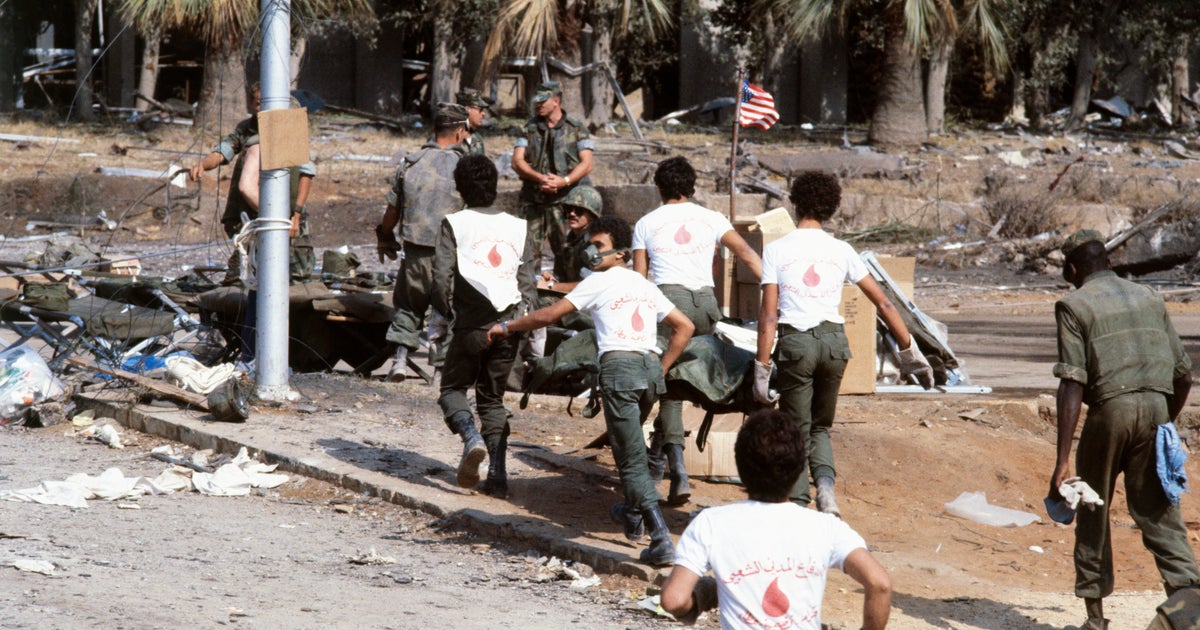
The group includes Americans who have won federal court judgments against the Islamic Republic worth tens of billions of dollars, according to CBS News. The cases accuse Iran of directing, funding or otherwise supporting attacks including the 1983 bombing of the U.S. Marine barracks in Beirut, which killed 241 U.S. service members, and suicide bombings that killed Americans in Israel.
In a letter to Trump obtained by CBS News, American Victims of State-Sponsored Terrorism United said victims have been left out of the publicly reported negotiating framework. The group urged the president not to release frozen Iranian money, transfer assets back to Tehran, or ease sanctions until terrorism judgments owed to Americans are addressed.
Angela Mistrulli, who organized the two-day Washington gathering, told CBS News the letter represents a coalition of more than 20,000 Americans affected by Iran-backed terrorism. She said she planned to give it to Trump during a White House meeting scheduled for Tuesday.
Mistrulli’s father, Joseph, was killed while working at the World Trade Center on Sept. 11, 2001. She told CBS News that cutting off money to terrorists would mean fewer Americans killed, and said funds should not go back to what she called a terrorism regime.
The push comes as the effort toward a broader agreement with Iran has slowed. CBS News reported that fighting with Iran has resumed and that the campaign is landing near the midpoint of a 60-day memorandum of understanding signed by Trump and Iranian leaders on June 17.
That memorandum, negotiated in large part by Vice President JD Vance, gave Iran the possibility of access to hundreds of billions of dollars in frozen assets and sanctions relief if it met terms including opening maritime traffic through the Strait of Hormuz and eliminating any nuclear threat, according to CBS News.
After signing it, Trump said the U.S. could return to bombing if a deal was not completed in 60 days, while also saying he did not want that outcome and would not allow Iran to obtain a nuclear weapon. Vance described the memorandum as good for Americans and said it offered Iran a path back into the world economy.
Mistrulli told CBS News that Iran and other governments, including Syria and North Korea, have been ordered to pay as much as $156 billion in judgments since Congress allowed victims to sue countries designated by the U.S. as state sponsors of terrorism. She said Iran has been ordered to pay more than any other country under that law.
The cases stretch across decades. CBS News cited claims tied to 9/11, after a federal judge in 2018 found Iran liable and said it had assisted the hijackers. In another recent case, a federal court in Washington awarded $573 million to plaintiffs representing U.S. service members killed or wounded by Iranian-supported insurgencies in Iraq from 2003 to 2015.
A pending case concerns Iran’s alleged role in the Hamas-led Oct. 7, 2023, attacks in Israel. Hamas is among the militant groups in the region backed by Iran, according to CBS News.
Winning a judgment has not meant getting paid. Congress created the U.S. Victims of State Sponsored Terrorism Fund to provide partial compensation through qualifying penalties, forfeitures and other authorized funding. The fund’s website says more than $10 billion has been paid since 2015, which CBS News reported is less than 10% of what has been awarded in terrorism cases.
Aryeh Portnoy, a lawyer who has represented thousands of terrorism victims and is litigating for Oct. 7 victims, told CBS News that even long-time fund participants have received only a fraction of their judgments. He cited limited enforcement, legal fights and persistent underfunding as reasons victims are still waiting.
Portnoy said Iran owes more than any other country in these cases and has repeatedly been accused in court of backing groups behind attacks. A spokesperson for the Iranian Embassy in Washington did not immediately respond to CBS News’ request for comment.
This story draws on original reporting from CBS News.