Iran war gas prices climb as tariffs add inflation pressure
Gas hit $4.10 a gallon as oil markets, tariffs and borrowing costs put fresh pressure on U.S. households, according to NBC News.
By Frankie Delgado · News Reporter
4 min read
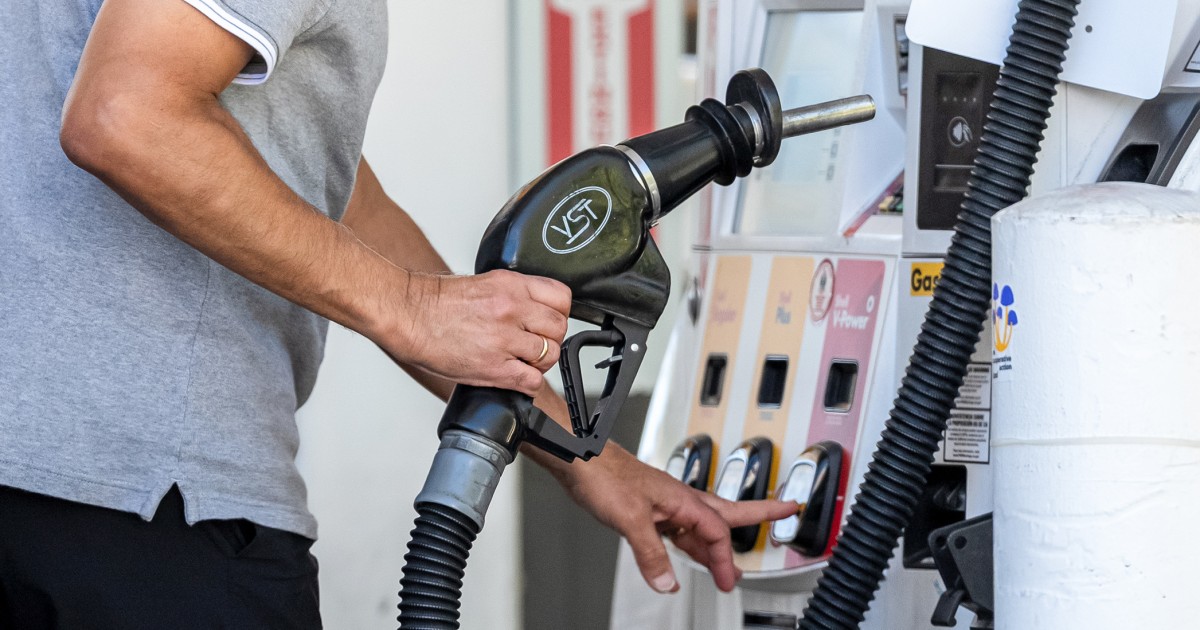
Iran war gas prices are squeezing Americans again, with the national average reaching $4.10 a gallon Friday as global oil prices jumped and President Donald Trump’s new tariff push added another inflation risk, NBC News reported.
Brent crude briefly moved above $100 a barrel this week for the first time in two months after a reported attack on at least two tankers in the Red Sea, according to NBC News. U.S. crude also rose, reaching as high as $92 a barrel during the week.
The pump pain is feeding wider market anxiety. Inflation eased last month to 3.5%, NBC News reported, but Treasury yields have started climbing again. The 10-year U.S. government bond yield was just under 4.7% Friday, its highest level since January 2025.
Those yields help shape what households pay to borrow. Mortgage News Daily data cited by NBC News showed the average 30-year U.S. mortgage rate rose to 6.85% Thursday, the highest since June 2025, before slipping to 6.81% Friday.
Why are gas prices rising now?
Gas prices are rising because crude oil has become more expensive as conflict disrupts key shipping routes and makes traders nervous about future supply. Tariffs can add to inflation by raising costs for importers, which can then show up in prices paid by consumers.
Mark Zandi, chief economist at Moody’s Analytics, told NBC News the war is already costing the average household more than $1,200. His estimate includes $360 more for gasoline, $240 more for groceries, $110 more for other transportation and $205 from higher interest rates.
Zandi wrote on LinkedIn that gasoline had been one regular purchase that had not risen much since the pandemic, with the national average below $3 before the war. He said the return to prewar prices would take time because insurance for oil tankers is likely to remain more expensive.
Patrick DeHaan, an analyst at GasBuddy, told NBC News that hurricane season could make fuel prices harder to forecast. He also wrote on X that, even after oil fell around 3% Friday, he still expected the national average for gasoline to eventually reach $4.20 to $4.30 a gallon.
Oil routes and reserves are under strain
Traffic through the Strait of Hormuz has stayed very low in recent weeks because of threats and attacks on ships by the Iranian regime, NBC News reported. More than 20% of the world’s energy supplies would usually pass through the waterway, but MarineTraffic data showed only six vessels crossed Thursday.
Countries announced in March that 400 million barrels of oil would be released into the world market to hold down prices, according to NBC News. Those stockpiles are thinning. The U.S. Strategic Petroleum Reserve still holds more than 300 million barrels, but NBC News reported it is at its lowest level since the 1980s.
Inventories at Cushing, Oklahoma, another key oil hub, fell to 20 million barrels in June, a level NBC News described as “operational stress.” Analysts cited by NBC News warned that releases from reserves cannot keep cushioning prices forever.
Tariffs add another pocketbook fight
The price pressure comes as the Trump administration tries to restore a broad tariff plan after a Supreme Court defeat in February, NBC News reported. A temporary 10% tariff on most trading partners expired Friday.
The U.S. Trade Representative then announced tariffs of 10% to 12.5% on 60 economies, including China, Canada, the European Union and Mexico, according to NBC News. The administration also said earlier in July that it would not renew the U.S.-Mexico-Canada trade agreement negotiated during Trump’s first term.
Trump has played down the effect of the war on household finances. Asked in May how much Americans’ financial situations were driving him to seek a deal with Iran, Trump said, “Not even a little bit,” according to NBC News. He said his focus was preventing Iran from obtaining a nuclear weapon.
The Federal Reserve is expected to keep rates unchanged when its Open Markets Committee meets next week, NBC News reported. European Central Bank President Christine Lagarde warned Thursday that a longer energy shock could push up other prices and wages.
This story draws on original reporting from NBC News.