James Comey seashells case challenged as attack on free speech
Comey’s lawyers asked a federal judge to dismiss the case, arguing it punishes protected speech and reflects selective prosecution.
By Georgia Hale · Staff Writer
3 min read
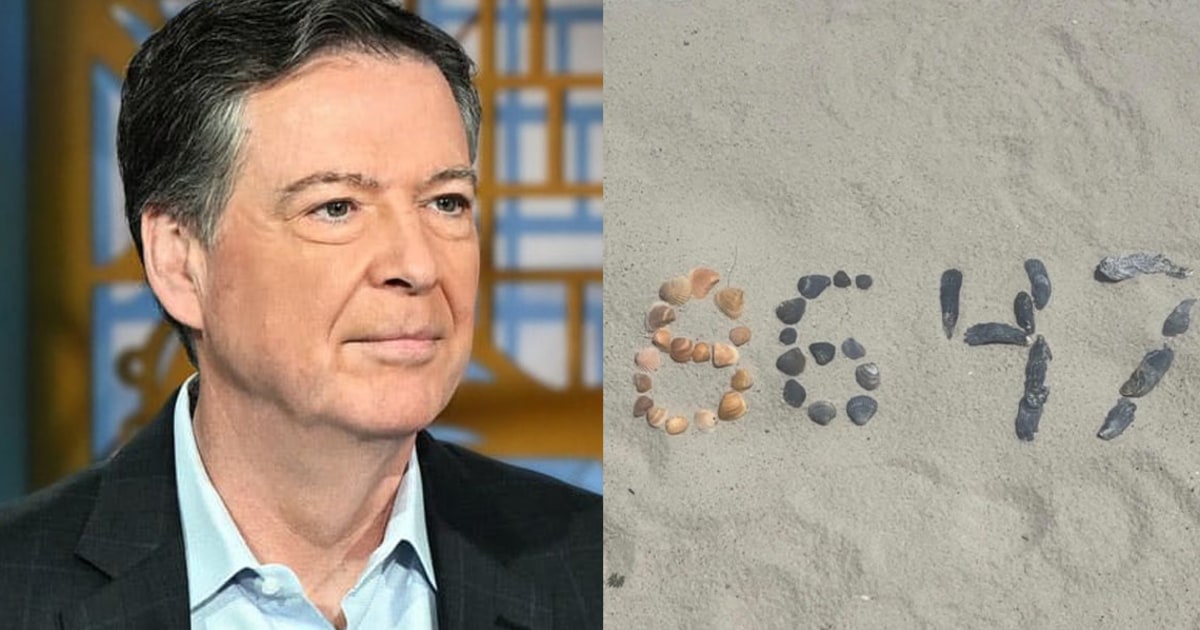
James Comey’s legal team is asking a federal judge in North Carolina to throw out the James Comey seashells case, arguing in new filings that the prosecution threatens core constitutional protections for political speech.
The former FBI director was indicted after posting an Instagram photo last year showing seashells arranged to spell out a message about President Donald Trump. Prosecutors say the post amounted to a threat against the president, according to NBC News.
In a motion filed Tuesday, Comey’s eight-lawyer defense team argued that the case was not a proper use of criminal law. They told U.S. District Judge Louise Flanagan that the prosecution was driven by Trump’s long-running hostility toward Comey and by Comey’s protected speech.
The lawyers asked the court to dismiss the indictment under two legal theories: vindictive prosecution and selective prosecution. They argued that criminal charges are rarely dismissed on those grounds because the Justice Department has historically acted as a guardrail against using prosecutions to punish political opponents.
What is the James Comey seashells case?
The case centers on an Instagram photo Comey posted of seashells arranged into a message involving Trump. The Justice Department charged Comey after interpreting the post as a threat, while Comey’s lawyers say the post was protected expression and did not meet the legal standard for a true threat.
Comey’s team had already filed a separate dismissal argument Monday focused on the meaning of the numbers “8647.” In that filing, the lawyers said dictionaries, context, case law and ordinary understanding all undercut the government’s interpretation, according to the court papers.
The defense also filed a second motion Tuesday seeking access to grand jury materials. Comey’s lawyers argued that grand jury proceedings are usually treated as regular and valid, but said the circumstances around this indictment were irregular enough to justify disclosure.
NBC News previously reported that a Justice Department official who was not authorized to discuss the matter called the prosecution a “complete loser” and a “waste of resources.” The official also said no reasonable person would think Comey intended to threaten Trump through seashells.
Judge Flanagan is handling the case in federal court. If it is not dismissed, Comey is scheduled to be arraigned Sept. 30, with trial set for Oct. 21 in New Bern, North Carolina, according to court records cited by NBC News.
The case was brought by Matthew Petracca, described by NBC News as a rookie federal prosecutor and former Republican official in New Jersey, under W. Ellis Boyle, the U.S. attorney for the Eastern District of North Carolina and a Trump administration appointee. Petracca left the case in late May.
Comey’s lawyers noted in their filing that Petracca became an assistant U.S. attorney on April 26, two days before the indictment was brought. They wrote that Petracca was professional with the defense team, but said it was unusual for a high-profile case to be assigned to a junior lawyer.
The defense filing said Petracca had a background in state Medicaid fraud and limited federal criminal experience, and that he later transferred to the Civil Division. Assistant U.S. Attorney Timothy Severo is now leading the prosecution, according to NBC News.
Comey’s team has made similar arguments before. In a separate case over testimony Comey gave in 2020, his lawyers claimed vindictive and selective prosecution and included a 60-page list of Trump statements about Comey dating from May 2017 to fall 2025. A judge did not rule on those arguments, instead finding that the case was invalid because former White House aide Lindsey Halligan could not legally hold the position she claimed.
This story draws on original reporting from NBC News.