Japan earthquake in Kumamoto kills at least 13 as rescue teams search rubble
Prime Minister Sanae Takaichi said crews are racing to find survivors after a powerful quake damaged malls, roads and historic sites.
By Georgia Hale · Staff Writer
3 min read
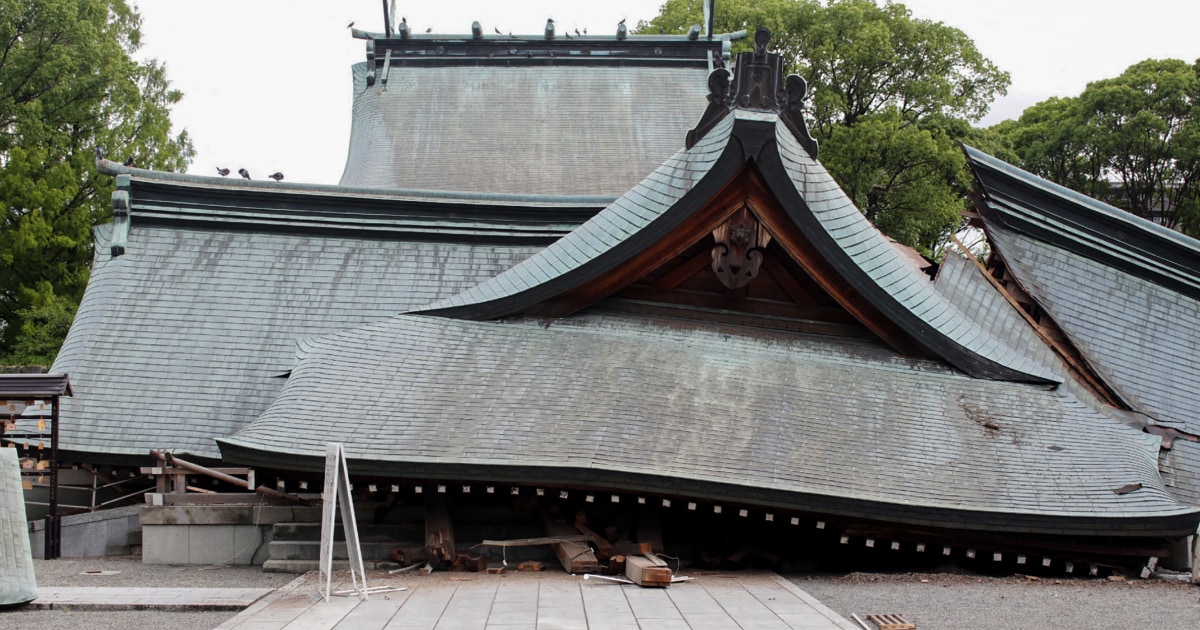
At least 13 people are dead after a Japan earthquake in Kumamoto prefecture tore through southwestern Japan, Prime Minister Sanae Takaichi said Wednesday, as crews searched collapsed sites including a shopping mall and a paper mill.
Takaichi told reporters in Tokyo that people were still awaiting rescue and called the effort “a race against time.” She said the government would use available resources on the ground to save as many people as possible.
The magnitude-7.1 quake hit Tuesday afternoon on Kyushu, Japan’s southern main island, at a depth of about 6 miles. Its epicenter was about 12 miles south of Kumamoto, a city of roughly 700,000 people.
Tsunami warnings were issued after the quake and coastal evacuations followed, though the warning was lifted a short time later. The shaking left roads split, damaged buildings across the prefecture and knocked out electricity to thousands of homes.
What happened in the Japan earthquake in Kumamoto?
Two women in their 20s died at the partially collapsed Aeon mall near Kumamoto, according to mall officials. The officials said eight people had been rescued from the debris, four remained missing and investigators were checking whether a gas leak caused an explosion there.
Reuters reported, citing a local government official, that seven people were missing after a chimney fell at a Nippon Paper Industries factory in Yatsushiro.
Thousands of soldiers were sent to help rescue workers in the disaster zone, while hospitals treated dozens of injured people. Officials also warned residents about heat stroke as temperatures climbed well into the 90s.
The quake damaged historic sites, including Kumamoto Castle, a major tourist attraction still being repaired after another deadly earthquake struck the area in 2016. Photos also showed damage at Yatsushiro Shrine and the Shohinken gardens compound.
Travel and power were hit across Kyushu
Train operators said some injured people were passengers on Japan’s high-speed rail system, and all train service on Kyushu was stopped immediately after the earthquake.
Japanese broadcaster NHK reported, citing JR Freight Railway Company, that the shaking derailed a freight train at Yatsushiro station. NHK aerial footage showed overturned rail cars beside the track and collapsed pillars at Yatsushiro Shrine.
Bullet train service and some airport operations were still suspended Wednesday. Kyushu Electric Power said on its website that about 35,000 households remained without electricity.
Could more earthquakes hit Japan after this quake?
Japan’s meteorological agency warned that more quakes of similar strength could follow. According to NHK, the agency told residents to be alert for about a week, with the greatest concern over the next two to three days.
The International Atomic Energy Agency said Japan’s nuclear authority reported no damage at the Sendai nuclear power plant. The U.N. watchdog said it would keep monitoring the situation.
Nuclear safety becomes a major concern after strong earthquakes in Japan. In 2011, a magnitude-9.1 earthquake and tsunami led to meltdowns at three reactors at the Fukushima Daiichi nuclear power plant.
Japan is highly exposed to seismic activity because it sits on the Ring of Fire, the zone where several tectonic plates meet and many of the world’s earthquakes and volcanic eruptions occur.
This story draws on original reporting from NBC News.