Jon Batiste explains how “social music” brings people together
The self-described introvert says improvisation, genre-mixing and subway “love riots” are his route to connection.
By Deshawn Carter · Sports Writer
3 min read
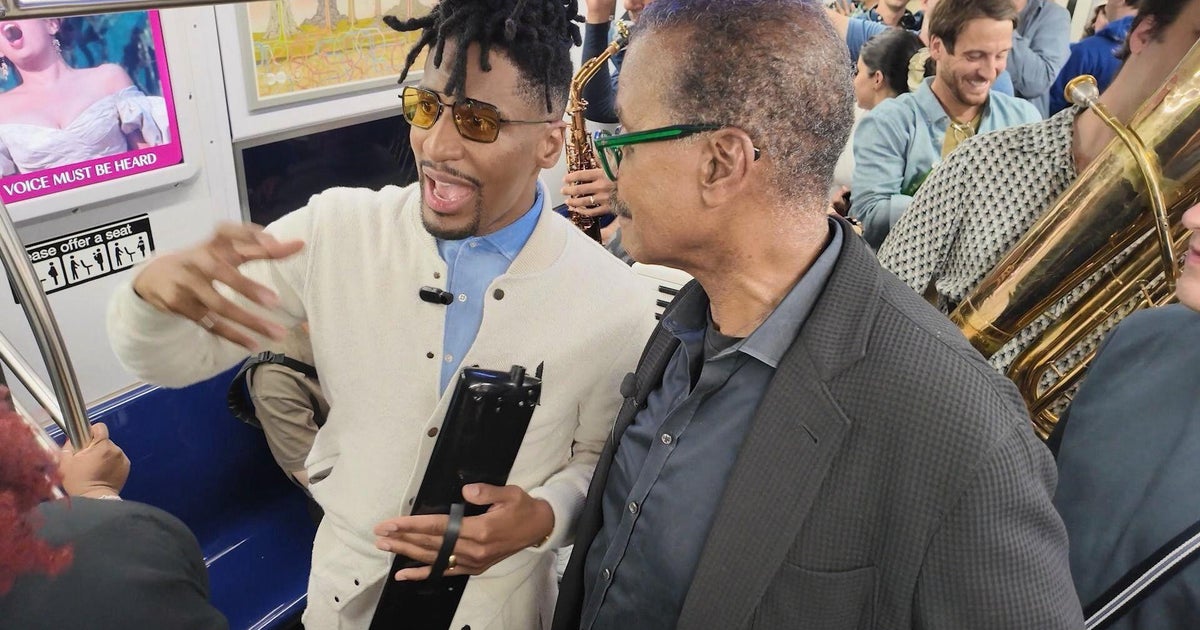
Jon Batiste’s social music has a clear goal: get people feeling connected. The singer, composer and pianist told CBS News’ 60 Minutes that he is “deeply, deeply introverted,” even as he makes high-energy public performances central to his work.
For Batiste, music is the way out of that private inner world. He said that, in his early teens, music and the sense of possibility he found in stillness helped bring him out of his shell.
What does Jon Batiste mean by social music?
“Social music” is Batiste’s name for his own artistic approach, not a formal new genre. As described in the 60 Minutes report, it pulls from different eras, places and styles with the aim of bringing listeners together.
That can mean rhythm and blues, pop, classical music and Beethoven sharing the same performance. Improvisation is at the center of the process: Batiste told 60 Minutes that while he is playing, he is focused on the feeling and flow, and may only fully hear what he made when he listens back.
He described himself as a conduit for people finding one another through sound. “I just enjoy the idea of being this vessel that unites people, brings people together, against all odds,” Batiste said. “That’s a form of faith, for me.”
A subway ride becomes a “love riot”
The most visible version of that idea may be Batiste’s “love riots.” He devised the gatherings while studying at Juilliard, using the New York City subway as a testing ground for collective, participatory music, according to the 60 Minutes transcript.
In a subway outing documented by the program, Batiste led musicians through stations and platforms and onto trains. The group played as riders gathered around them.
Batiste called the event a party with a serious purpose, describing it as “a mass revival of the soul.” He said he likes seeing how individual songs land differently with different people.
His stated hope is more intimate than a crowd singalong: that a performance can give somebody an unexpected sense of belonging and make them feel less alone.
From Kenner to the piano
Batiste grew up in a musical family in Kenner, Louisiana, and told CBS News he barely spoke until he was about 10. He later took up piano at his mother’s urging, played gigs around New Orleans after high school and enrolled at Juilliard.
He became bandleader of The Late Show for seven years while continuing to make his own music. The point of his “social music,” he says, remains the same whether it is played in a studio, a concert hall or a subway car: make room for people to feel they belong.
This story draws on original reporting from CBS News.