Lawmakers push AI shield against alleged Chinese copycat models
A bipartisan bill would let U.S. AI firms coordinate on security risks tied to alleged foreign model copying, with limits meant to preserve competition.
By Sal Moretti · Money Reporter
4 min read
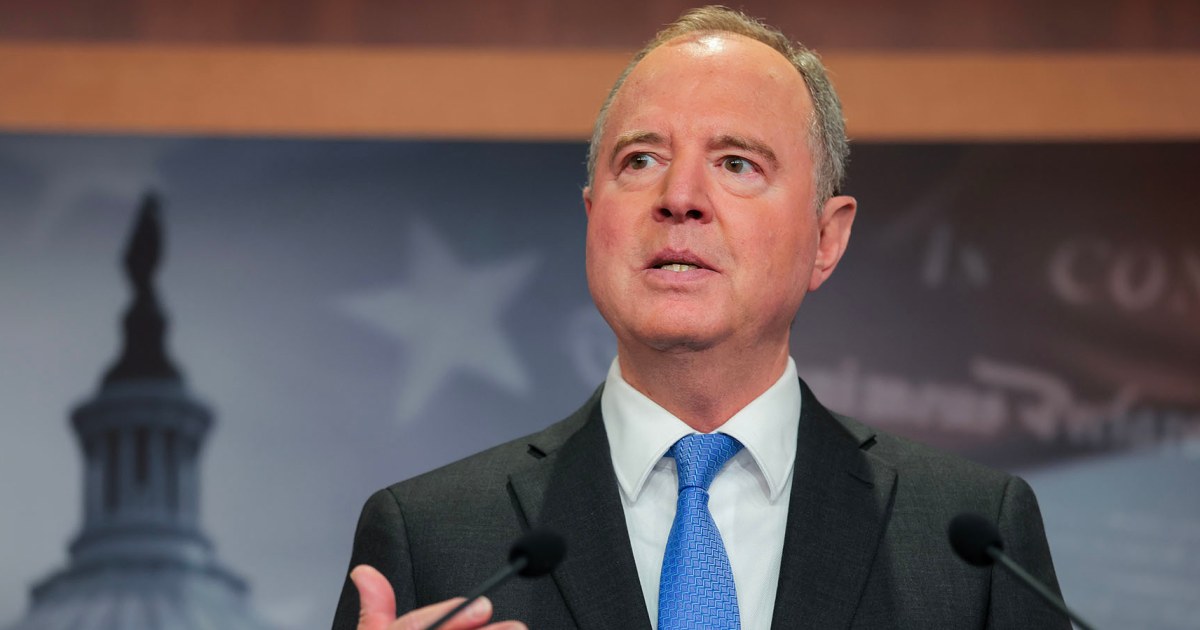
American AI companies could get a rare pass to coordinate with rivals under a new bipartisan bill aimed at alleged Chinese efforts to copy U.S. technology.
The proposal, called the Collaboration on Adversarial Threats and Security Risks Act, is being introduced by Sens. Adam Schiff, D-Calif., and Jim Banks, R-Ind., along with Reps. Bob Latta, R-Ohio, and George Whitesides, D-Calif., according to the lawmakers.
A summary from their offices says the bill would treat alleged Chinese copycat activity as a U.S. security threat and create a limited exemption from antitrust rules. Those laws usually restrict competitors from coordinating because such cooperation can be used to raise prices or limit competition.
Under the measure, AI companies and industry groups could share information about certain security risks if they act in good faith and only to prevent, investigate or reduce those risks, according to the summary.
The bill would also allow coordination to delay or limit the rollout of high-risk AI models, but only for the purpose of reducing AI security risks. The summary says written notice would be required before companies take that kind of action.
The lawmakers said the exemption would come with guardrails designed to keep the AI industry competitive. Their summary also says the attorney general could seek an injunction against organizations accused of abusing the exemption.
Washington turns up pressure
The bill arrives as U.S. officials sharpen their criticism of Chinese AI companies. Several Chinese firms, including Moonshot and Z.ai, have recently released AI systems that appear to rival leading U.S. capabilities, NBC News reported.
Treasury Secretary Scott Bessent told Fox Business on Tuesday that sanctions could be used against “overseas models” accused of “stealing from our great companies.” On Wednesday, he wrote on X that sanctions were “on the table.”
Michael Kratsios, director of the White House Office of Science and Technology Policy, accused Moonshot on X of “stealing proprietary U.S. technology.” NBC News reported that Moonshot did not respond to a request for comment.
The flashpoint is a practice known in the tech industry as distillation. Companies including Anthropic, Google and OpenAI have raised concerns about competitors sending large numbers of prompts to advanced AI models, then using the answers to improve cheaper or weaker systems, according to NBC News.
China has denied U.S. allegations that it is stealing American trade secrets.
“China has consistently attached great importance to the protection of intellectual property and is committed to safeguarding, in a fair and impartial manner, the lawful rights and interests of both domestic and foreign IP holders,” Liu Chang, a spokesperson for the Chinese Embassy in Washington, said in a statement Wednesday.
Liu said China’s AI progress comes from its own work and international cooperation, and said U.S. figures should “respect the facts” and stop discrediting China’s AI industry.
A fight over security and competition
Schiff said in a statement that the U.S. cannot allow China or another foreign adversary to steal American AI advances and use them against national security. He also said Democrats and Republicans must work together on potential misuse of AI by hostile actors at home and abroad.
Latta compared AI models to critical infrastructure, saying systems used by hospitals, water systems and the electric grid must remain safe, secure and reliable.
Congress has created antitrust exemptions before in national security-related areas, including a 2015 cybersecurity information-sharing exception. The Justice Department’s Antitrust Division also used its authority in 2020 to let vaccine makers share information early in the Covid-19 pandemic.
The debate is not one-sided inside tech. Venture capitalist Nic Carter argued on X this week that lower-cost Chinese models could benefit American consumers and businesses through cheaper digital services. Venture capitalist Bill Gurley wrote on X that AI firms should sue if they believe their work is being unlawfully copied, rather than seek government intervention.
Hugging Face CEO Clement Delangue has defended distillation, writing on X in April that the practice is common and should be covered by fair use in some cases, especially for open-source models. Elon Musk testified in April that xAI researchers used distillation techniques on OpenAI models to train Grok, according to TechCrunch.
This story draws on original reporting from NBC News.