Michigan Senate Democratic debate turns sharp over super PAC cash
Haley Stevens and Abdul El-Sayed battled over outside spending, Israel and electability ahead of Michigan’s Aug. 4 Senate primary.
By Frankie Delgado · News Reporter
4 min read
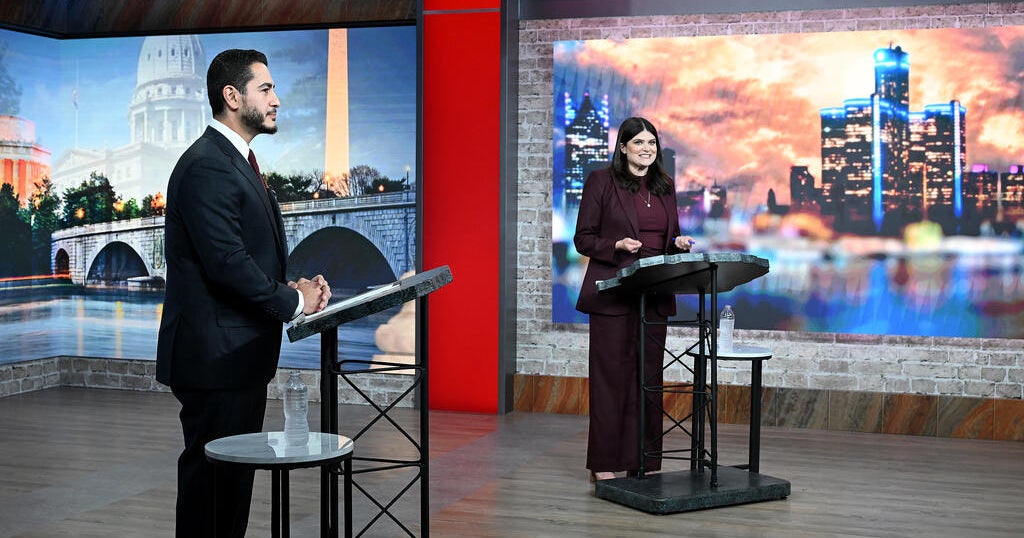
The Michigan Senate Democratic debate turned into a money fight Monday night, with Rep. Haley Stevens and Abdul El-Sayed trading attacks over super PAC spending, Israel policy and which Democrat is safer for a tough November race.
The final televised debate before the Aug. 4 primary came as Democrats prepare to choose a nominee for the seat being vacated by Sen. Gary Peters. The winner is expected to face former Republican Rep. Mike Rogers, who appeared with President Trump at a General Motors plant in Milford, Michigan, on Monday.
What happened in the Michigan Senate Democratic debate?
El-Sayed, a doctor and former health official in Detroit and Wayne County, pressed Stevens over outside groups backing her campaign, especially organizations tied to the American Israel Public Affairs Committee. Stevens, who has represented parts of the Detroit area in the House since 2019, argued that El-Sayed also benefits from super PAC spending.
El-Sayed pointed to Stevens’ July vote against an amendment that would have cut $3.3 billion in yearly U.S. military aid to Israel, calling that aid the “worst use of our tax dollars.” Stevens said outside spending would not shape her views as a senator, said she supports a two-state solution, and cited her criticism of Israeli Prime Minister Benjamin Netanyahu.
Stevens also noted that Fighting for Michigan PAC, a super PAC supporting El-Sayed, received $300,000 from his father-in-law, Jukaku Tayeb. Campaign finance filings show the group has spent more than $2.3 million to support El-Sayed.
By contrast, federal records show AIPAC’s United Democracy Project has spent more than $19.9 million supporting Stevens through July 20. Another pro-Stevens group, A Stronger Michigan, has spent $16.8 million and has not disclosed its donors.
AdImpact, an ad-tracking firm, reported that Stevens’ campaign and six supportive super PACs have spent more than $61 million on ads in the primary. El-Sayed’s campaign and outside groups have spent more than $15.3 million combined, according to FEC reports.
Why is this primary getting national attention?
The race has become a test of a bigger Democratic argument: whether progressive candidates backing policies such as Medicare for All and abolishing Immigration and Customs Enforcement can win competitive statewide contests. El-Sayed has support from Sen. Bernie Sanders and Sen. Elizabeth Warren, while Stevens is backed by Peters and Michigan Gov. Gretchen Whitmer.
El-Sayed said Monday he does not identify as a socialist, describing himself as “a capitalist who understands how capitalism works.” Stevens said supporters of El-Sayed are missing an understanding of Michigan, and argued the state does not need a “celebrity senator.”
Rogers told CBS News he has no preference between the two Democrats, saying they “talk the same way” and “vote the same way.” Trump won Michigan in 2024 by 1.4 percentage points, while Republicans have not held a Michigan Senate seat in 25 years.
What did El-Sayed say about the “ogre on a pike” comment?
El-Sayed was also questioned about Politico reporting on audio from a donor meeting in which he said a primary win could help progressives challenge incumbents such as Sen. John Fetterman. In the recording, El-Sayed said, “Ideally you put one ogre on a pike,” and others would “get the message.”
Asked about the tone of the race, El-Sayed said he had publicly told supporters not to attack Stevens’ character or personality. He said ads from pro-Stevens super PACs had driven the harsh tone by attacking his character.
El-Sayed also rejected accusations in a United Democracy Project ad that he has a history of disrespecting women. The ad cites a 2010 op-ed about Michelle Obama’s childhood obesity campaign and a 2018 comment calling Whitmer “bought and sold.” El-Sayed said during the debate that the claim was “inconsistent with the truth,” while Stevens said his comments were for him to answer.
What did the candidates say about financial disclosures?
El-Sayed released a personal financial disclosure Monday listing two rental properties, one in Bangalore, India, and one in Dubai, United Arab Emirates, each valued between $100,001 and $250,000. The disclosure lists them as owned by his spouse, psychiatrist Sarah Jukaku.
Stevens accused El-Sayed of lacking transparency and questioned $300,000 in “other” business income. El-Sayed said he had released financial disclosures and called the attack a distraction, telling reporters the properties were inherited through his wife’s family.
This story draws on original reporting from CBS News.