Mullin warns states of prison risk in voter-roll fight
The DHS secretary said states could lose grants or face penalties if they reject federal checks for noncitizens on voter rolls.
By Frankie Delgado · News Reporter
3 min read
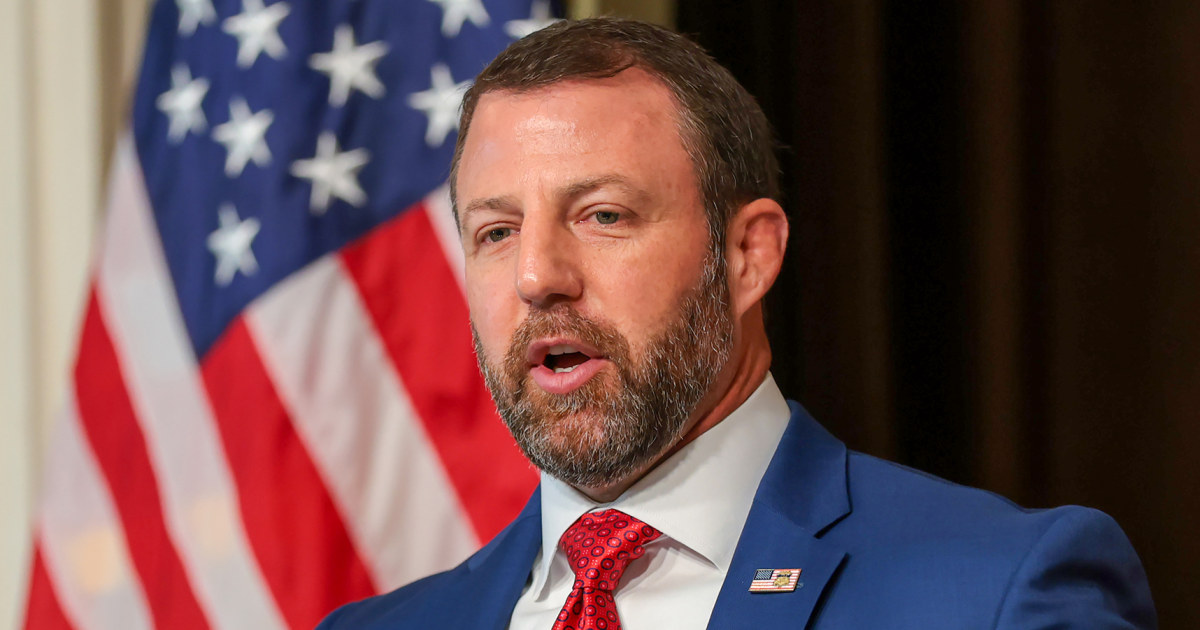
Homeland Security Secretary Markwayne Mullin warned state election officials Friday that they could face fines, penalties or even prison time if they refuse to work with the Trump administration on checking voter rolls for noncitizens.
Speaking at the Eisenhower Executive Office Building in Washington, Mullin said the Department of Homeland Security had made a preliminary finding of more than 250,000 noncitizens on voter lists in at least four states: California, New Jersey, Nevada and Pennsylvania.
Mullin said states should run their voter registration lists through a DHS database used to check citizenship and immigration status. He also said states that do not comply would lose access to federal grants.
“We need to make sure that individuals that are legally able to vote are voting,” Mullin said. He added that people who attempt to vote illegally would be found and charged.
The push follows remarks from President Donald Trump on Thursday night, when he again cast doubt on election integrity. Trump said the country could not “watch a stolen election again” and argued that elections had been left open to being “rigged and stolen.”
Trump continues to describe the 2020 election as “dirty” and “rigged,” despite members of his own Cabinet saying publicly that there was no widespread voter fraud and multiple reviews finding no widespread fraud.
The database at the center of Mullin’s demand has already drawn legal and practical challenges. A federal judge has blocked the Trump administration from using it for this voter-roll effort, ruling that the move violated rules governing disclosure of Social Security records.
The system, historically used to assess immigration benefits, has also been faulted as unreliable when applied to voter rolls. Voting rights experts say it can mistakenly flag newly naturalized citizens as noncitizens and could lead to eligible voters being removed from registration lists.
Election law expert Rick Hasen wrote that if the government had evidence of noncitizen voting, prosecutors would be bringing cases. He said Trump has pressed U.S. attorneys to pursue such cases, and the lack of indictments suggests the claims are weak.
Mullin said DHS will review election records both before and after the midterms to look for ineligible votes, including votes by noncitizens and dead people. Election officials regularly update voter lists, though deceased voters can remain on rolls for a time because registration systems are built for sign-ups as well as maintenance.
He said illegal voter registration and illegal voting can carry penalties of up to five years in prison and fines of up to $250,000.
Mullin also said Trump directed DHS cybersecurity officials to release an updated election infrastructure plan, which he said would be made public within 30 days. He said the effort was not about changing the 2020 result, but about public trust in voting.
According to DHS, Mullin sent letters to the secretaries of state before Friday’s announcement asking them to respond within two weeks and commit to working with the federal government.
DHS revamped its SAVE database last year to make it easier for state and local officials to check citizenship status in bulk. DHS officials say the tool does not itself declare someone a noncitizen, but searches government records for proof of citizenship and flags people for further review.
Voting rights groups argue that outdated records have led some eligible voters to be wrongly identified as noncitizens and removed from voter rolls.
This story draws on original reporting from NBC News.