Oil jumps past $95 as shipping fears spread to Red Sea route
Brent crude hit its highest level in nearly six weeks as U.S. diplomacy hopes dimmed and tanker traffic showed new signs of strain.
By Frankie Delgado · News Reporter
3 min read
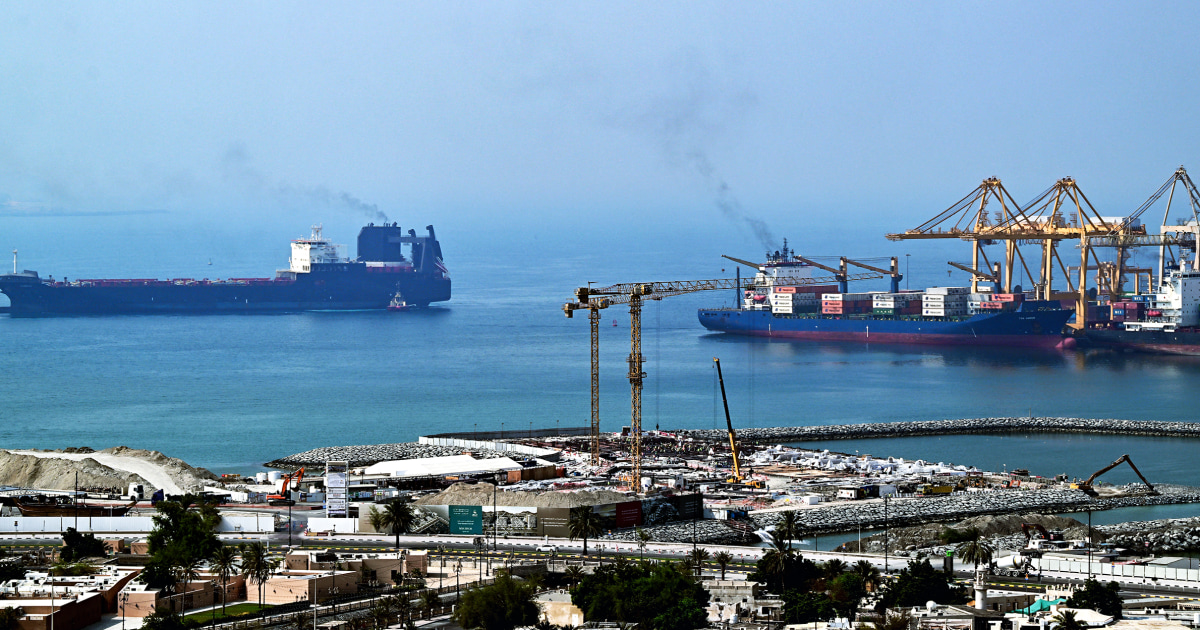
Oil prices shot higher Wednesday, with Brent crude climbing nearly 5% to above $95 a barrel for the first time in almost six weeks, according to NBC News.
U.S. crude also rose more than 4%, topping $88 a barrel, as traders reacted to fading hopes for quick U.S.-Iran diplomacy and fresh concern over shipping lanes that carry global energy supplies.
The pressure is already showing up at the pump. The national average for regular gasoline rose 5 cents from Tuesday to $4.06 a gallon, according to AAA data tracked by NBC News.
Brent is the main international oil benchmark, and NBC News noted that its moves can affect U.S. gasoline prices.
Rubio says Iran talks are going nowhere
The price jump came after Secretary of State Marco Rubio said overnight that Washington remained open to diplomacy with Iran, while casting doubt on the chances of talks.
Rubio said Iran did not appear serious about diplomacy at the moment. His remarks followed an 11th straight night of strikes on Iran, according to NBC News.
Rubio also said the U.S. would keep trying to protect commercial vessels. He accused Iran of targeting global shipping in an international waterway and trying to decide which ships can pass.
“That just is unacceptable. We’re not going to accept that,” Rubio said, according to NBC News.
The U.K.’s Maritime Trade Organization has reported multiple vessel attacks in the region over the past two days. In at least two cases, the Royal Navy-aligned monitoring group said crews abandoned their ships.
Hormuz traffic stays low
The Strait of Hormuz, one of the world’s most important oil chokepoints, remains under heavy pressure.
Only 13 ships crossed the waterway Monday, followed by just 9 on Tuesday, according to a MarineTraffic analysis of vessel movements cited by NBC News.
That disruption is now being joined by another risk farther west. Iranian-backed Houthi rebels in Yemen said they would try to impose a maritime blockade on Saudi Arabia, opening what NBC News described as a new front in the widening conflict.
MarineTraffic said Wednesday that the risk picture around Bab el-Mandeb, the strait leading into the Red Sea, is worsening. The passage is another key route for global oil supplies and had served as an alternate path for some exports, especially from Saudi Arabia, that could not move through Hormuz.
An NBC News review of MarineTraffic data found that several crude tankers turned around Tuesday in the Red Sea after the Houthi threat.
Traffic through Bab el-Mandeb had not collapsed. MarineTraffic said 73 ships passed through Tuesday, a slight drop from Monday.
MarineTraffic analyst Dimitris Ampatzidis said the traffic count should be viewed alongside signs that ships nearing the Gulf of Aden and Bab el-Mandeb are hesitating over routes.
ING commodities analysts said the Houthis’ announced blockade had made shippers nervous, with several tankers moving to avoid Bab el-Mandeb. ING said that would force vessels to use the Suez Canal to enter and leave the Red Sea, adding time and cost to trips to Asia.
ING added that risks to oil supply appear to be building again across both the Strait of Hormuz and Bab el-Mandeb.
This story draws on original reporting from NBC News.