Oil jumps as U.S. says Hormuz stays open after Iran strikes
Brent crude topped $95 as shippers weighed attacks in the Strait of Hormuz and Houthi threats against another key shipping lane.
By Sal Moretti · Money Reporter
3 min read
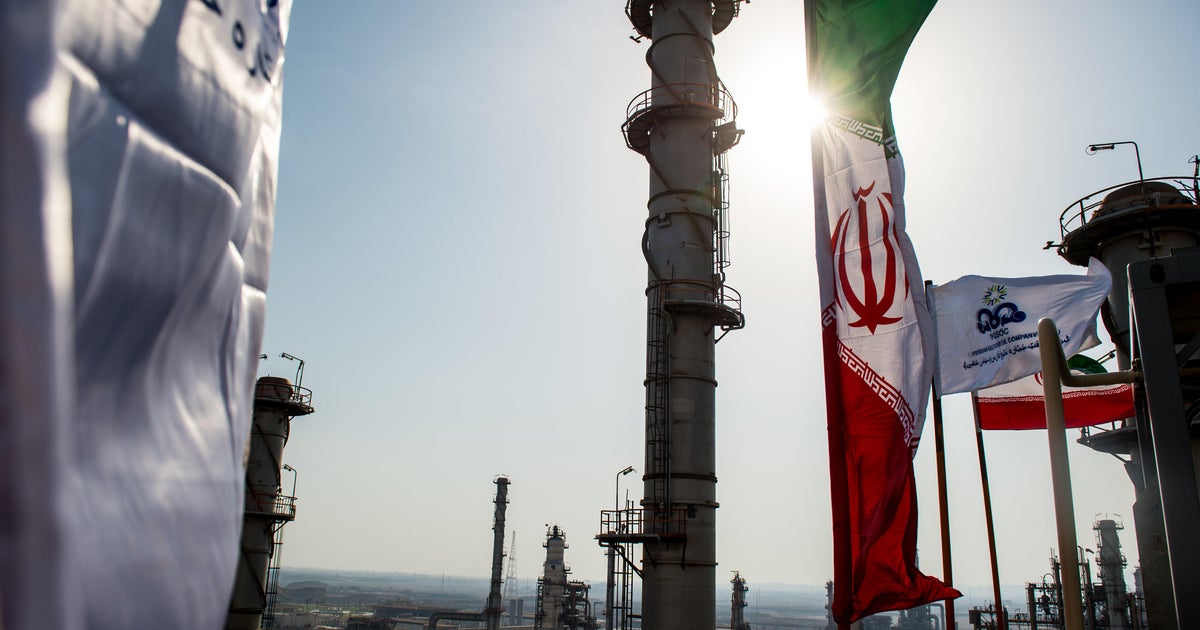
Oil prices climbed more than 4% Wednesday as the U.S. military said the Strait of Hormuz was still open after another night of American strikes on Iran, CBS News reported.
International benchmark Brent crude traded above $95 a barrel, up about $20 since the U.S. and Iran resumed fighting on July 7, according to CBS News and The Associated Press. Shippers have been wary of sending vessels through the Strait of Hormuz while attacks continue in the waterway.
U.S. Central Command said it finished an 11th straight night of strikes on Iran at about 8:15 p.m. ET Tuesday. In a social media post, CENTCOM said the operation lasted a little over an hour and targeted aircraft hangars, drone storage sites and operations centers.
The command said the strikes were intended to reduce Iran’s ability to threaten commercial shipping in the Strait of Hormuz. CENTCOM said Iran has attacked more than 30 commercial vessels in the waterway over the last three months, putting mariners at risk and disrupting freedom of navigation.
Even after saying attacks continued Tuesday, CENTCOM said the strait “remains open” for commercial transit.
President Trump said Tuesday the U.S. was “not finished” attacking Iran. The Pentagon said the latest strikes hit “military logistics infrastructure,” while Iranian state media reported strikes in several areas around the country, according to CBS News.
Iranian official claims control of key waterway
Ali Zeynivand, a spokesperson for Iran’s Ministry of Interior, said Wednesday that the Strait of Hormuz “belongs to us,” according to remarks carried by Iran’s state news agency IRNA.
Zeynivand called the strait “the heart of Iran” and said Iran would not look for another route. He added that those who fail to understand Iran’s hold on the waterway could “end up at the bottom” of it, according to IRNA.
The Strait of Hormuz is one of the world’s most closely watched energy chokepoints. A second pressure point is also in focus: the Bab el-Mandeb strait at the southern end of the Red Sea.
Trump said he would “take care of” Yemen’s Iranian-backed Houthi rebels if they follow through on threats to block access to Saudi Arabia’s Red Sea ports through Bab el-Mandeb, CBS News reported. The Houthis have previously tried to choke off Red Sea shipping through that route.
Jay Hatfield of Infrastructure Capital Management told Bloomberg that oil could remain in the $80 to $90 range depending on the news, while a closed Red Sea could push prices above $100.
U.S. military deaths and war costs
The Pentagon on Tuesday identified a third soldier believed to have been killed in an Iranian strike on an air base in Jordan. The Defense Department named him as 28-year-old Army Sgt. Angel S. Rampersad of Ozone Park, New York.
The military said Rampersad, previously listed as missing, had been moved to “Duty Status, Whereabouts Unknown” and is believed to be deceased. He was assigned to the 1st Battalion, 57th Air Defense Artillery Regiment, 52nd Air Defense Artillery Brigade, 10th Army Air Missile Defense Command, in Ansbach, Germany.
CBS News reported that 18 U.S. service members are believed to have been killed since the start of the war, including four in recent days. Three were killed in the Jordan attack, and one died during a controlled demolition of an Iranian drone in Iraq.
Defense Secretary Pete Hegseth told Democratic Sen. Dick Durbin during a Senate Appropriations Committee hearing that the war has cost about $37.5 billion. Two Democratic sources and another person familiar with the matter told CBS News the real cost is far higher because the estimate leaves out some expenses, including military construction for damaged U.S. bases.
This story draws on original reporting from CBS News.