Pancreatic cancer clinical trial gives Miami grandfather more time
Hernando Salcedo, 83, says a Miami trial using RenovoCath eased chemo side effects and helped keep his Stage III cancer stable.
By Deshawn Carter · Sports Writer
3 min read
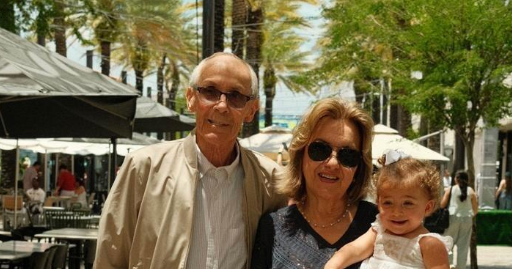
An 83-year-old grandfather with Stage III pancreatic cancer is living with stable disease after joining a pancreatic cancer clinical trial in Miami that delivered chemotherapy through a catheter placed near his tumor, CBS News reported.
Hernando Salcedo first noticed his abdomen swelling in May 2025. He had been active and healthy, according to CBS News, and initially thought recent hip pain might be tied to age. An endoscopic ultrasound did not identify the problem, and a gastroenterologist then ordered an MRI. Two days later, Salcedo learned he had Stage III pancreatic cancer.
The diagnosis carried grim stakes. The American Cancer Society says the five-year relative survival rate for Stage III pancreatic cancer is 15%. CBS News reported that surgery was not an option for Salcedo, leaving aggressive chemotherapy as the available treatment to try to extend his life.
He began chemotherapy at Miami Cancer Institute in July 2025, but the side effects hit hard. His son, Mauricio, told CBS News that his father went from walking 2 or 3 miles most mornings to barely being able to leave home. Salcedo said the diagnosis was “very hard,” and his family described a man worn down by treatment.
How does the pancreatic cancer clinical trial work?
Dr. Ripal Gandhi, the interventional radiologist and oncologist who treated Salcedo, told CBS News that Miami Cancer Institute’s expert panel reviewed the case and found Salcedo could join a RenovoRX trial using the company’s RenovoCath system.
Standard chemotherapy is typically given through an IV, which sends the drug through the body. Gandhi told CBS News that pancreatic tumors can be difficult to reach because the cancer has dense tissue and limited blood supply, meaning less chemotherapy gets to the tumor.
RenovoCath uses a catheter with two balloons placed in the artery closest to the tumor, according to CBS News. The device is designed to deliver chemotherapy near the cancer while the balloons isolate the blood flow in that area. A RenovoRX spokesperson told CBS News the device has been cleared by the Food and Drug Administration, and the system was first cleared for use in 2014.
Gandhi said trial data presented at the World Congress of GI Cancer Patients in 2023 showed 65% fewer adverse effects for patients who received chemotherapy through the catheter method compared with traditional chemotherapy. He also said patients in that group had a six-month increase in survival.
What happened to Hernando Salcedo?
Trial participants first received two months of standard chemotherapy, followed by radiation and another chemotherapy session, CBS News reported. After imaging showed Salcedo’s cancer had not progressed, he became eligible for the catheter treatment. He was randomized into the group that received chemotherapy through RenovoCath, Gandhi said.
Salcedo then had treatment every other week for four months. He told CBS News the catheter method felt very different from his earlier chemotherapy, saying he felt fine the next day and did not have nausea or pain. “This treatment fixed my life,” he said.
Gandhi cautioned that Stage III pancreatic cancer is generally not curable, but said the goal for Salcedo was to extend life while protecting quality of life. He told CBS News that Salcedo’s cancer has been stable since mid-April and has not spread to other organs.
More research is still underway. A RenovoRX spokesperson told CBS News that final trial data for RenovoCath in Stage III pancreatic cancer is expected in late 2027.
Salcedo has used the extra time to return to family life. CBS News reported that he traveled to Colombia for his nephew’s wedding and danced there. Mauricio said his father has gained weight, recovered energy and started thinking about future travel, while the family remains aware of the seriousness of his disease.
This story draws on original reporting from CBS News.