Spain Ceuta migrants sent back to Morocco as dozens reported dead
Spain says it has returned more than 25,000 migrants from Ceuta to Morocco after a border surge that local officials tied to at least 34 deaths.
By Sal Moretti · Money Reporter
4 min read
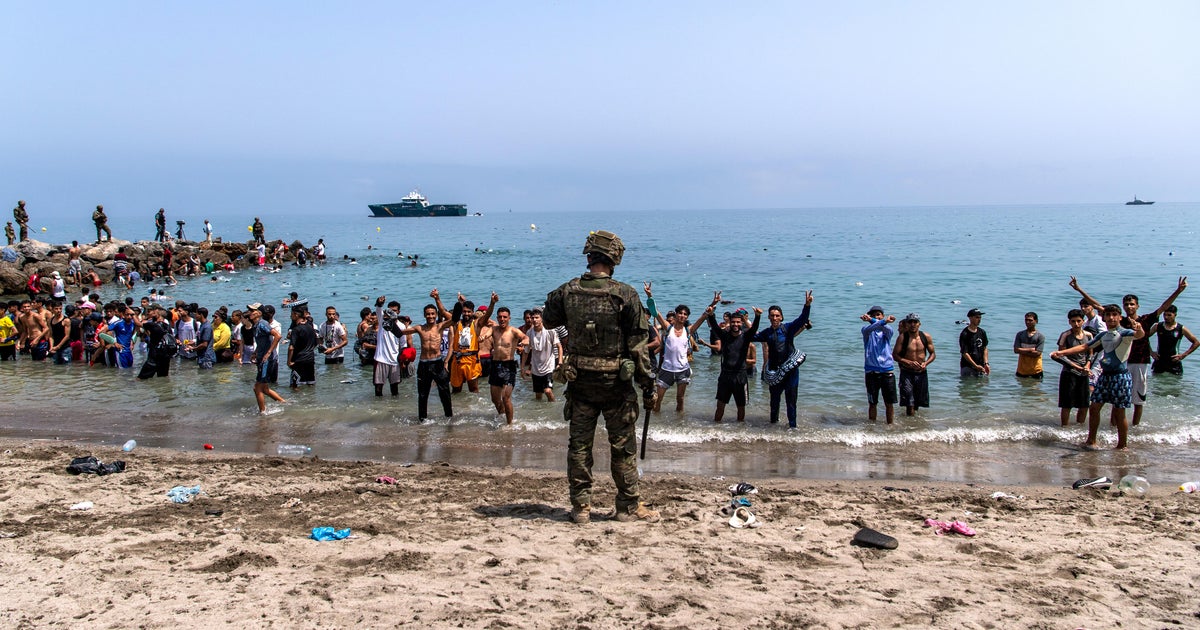
Spain Ceuta migrants are being returned to Morocco at a rapid clip after tens of thousands entered the Spanish enclave, with local leaders reporting at least 34 deaths during the surge.
Spain’s Ministry of the Interior said more than 25,000 migrants who reached the border area in Ceuta had been sent back to Morocco. The ministry said returns were happening at a rate of more than 150 people per minute.
Juan Jesús Vivas, the president of Ceuta, gave a higher estimate of the crossings, saying 60,000 migrants had entered the enclave. He said at least 34 people had died, including some who drowned while trying to swim to the territory.
Most of the people who tried to cross are Moroccans, according to the report. Images and video from Ceuta showed crowds moving around breakwaters near a border checkpoint and onto local roads. The crowds appeared to include mostly young men, along with families, women and children.
What is Ceuta and why is it at the center of the migrant surge?
Ceuta is a Spanish enclave on Morocco’s Mediterranean coast, separated from Morocco by fences and seawalls. Along with Melilla, another Spanish enclave farther east, it forms the European Union’s only land border with Africa.
Crossing into Ceuta does not give migrants open access to mainland Europe. People seeking to continue from North Africa to mainland Spain must pass additional border checks, and Ceuta has limited transport links to the rest of the European Union.
Local officials have connected the rise in crossings to a recent Spanish Supreme Court decision that makes it harder to turn away migrants arriving from Morocco by sea. Vivas called the situation “absolutely unsustainable” and said the government response came too late and did not go far enough.
Prime Minister Pedro Sánchez said at a Friday news conference that “all of Spain stands” with Ceuta. He described the rise in crossings as an “attack” and “a violation of Spain’s territorial integrity,” and he was expected to visit the city Friday.
Sánchez said Spain had increased troop numbers and asked for buoys to be deployed as a “physical barrier.” The government has also sent the army, extra security forces, diver teams and Maritime Service vessels to Ceuta.
Rachid Sbihi, a local workers association leader whose union represents Spanish Civil Guard officers, called the situation a “serious humanitarian crisis.” He said thousands of migrants, including unaccompanied children, had slept in parks and on sidewalks, and said some of the dead had been trampled while trying to cross a breakwater fence.
Why are migrants going to Ceuta?
Sánchez and others have pointed to the Supreme Court ruling, but the exact cause of the sudden movement toward Ceuta was not immediately clear.
Moroccan resident Fatima Zahra told AFP she joined people heading to Ceuta after hearing others had crossed successfully. She said she wanted to reach Europe because she worked in “appalling conditions” in Morocco. AFP reported that she was turned away at Fnideq, a Moroccan border town, and did not enter Ceuta.
Sánchez accused “human trafficking mafias” of exploiting the court ruling and said Morocco’s government was cooperating with Spain. He said lawmakers were finalizing a system to speed the repatriation of migrants who entered irregularly, and said legal changes could follow if needed.
Morocco’s ambassador to Spain, Karima Benyaich, said the current events had unfolded against the Moroccan government’s wishes. She said Morocco has prioritized “legal, orderly and safe migration for all.”
Morocco does not officially recognize Ceuta and Melilla as Spanish territory and often refers to them as occupied lands. Ceuta also saw a sudden influx in 2021, when 6,000 migrants entered in one day after Moroccan authorities relaxed border enforcement during a diplomatic dispute with Spain.
The crossings triggered reactions across Europe. Italian Prime Minister Giorgia Meloni called for the European Union to suspend the Schengen agreement, while Finland’s interior minister, Mari Rantanen, backed her proposal. European Commission President Ursula von der Leyen said the images from Ceuta were “unacceptable,” and French Interior Minister Laurent Nunez said he had ordered stronger controls at France’s border with Spain.
This story draws on original reporting from CBS News.