Stabbed Iranian journalist hails U.K. move against IRGC
Pouria Zeraati told CBS News the U.K. designation gave police new power to confront threats he links to Tehran.
By Georgia Hale · Staff Writer
4 min read
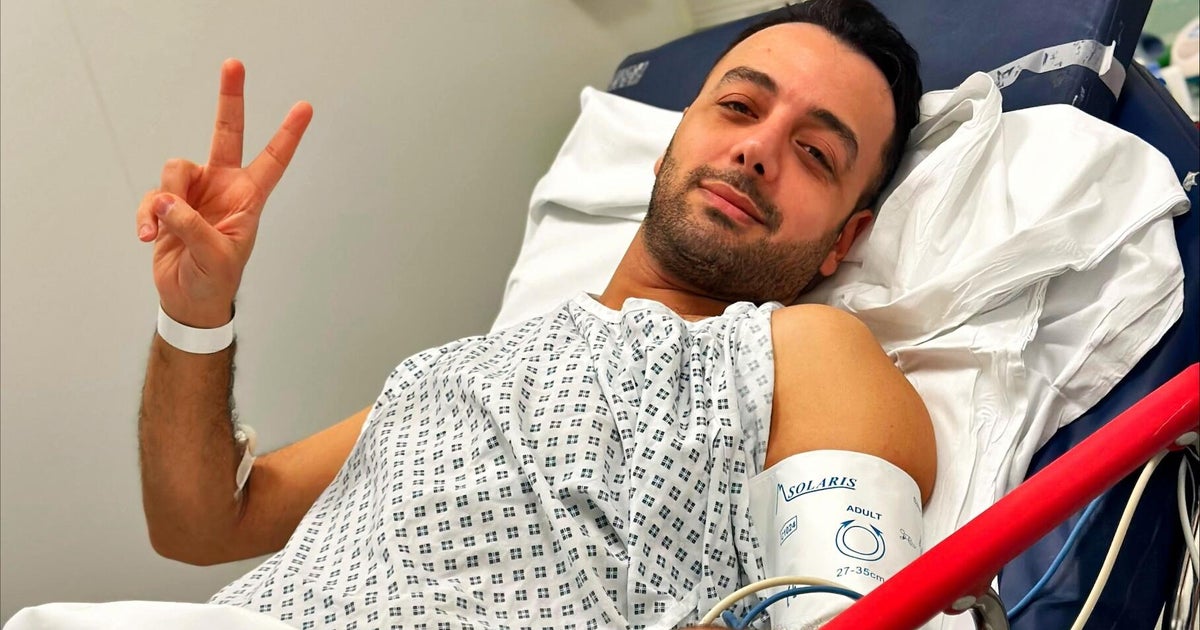
British Iranian journalist Pouria Zeraati says the U.K.’s new crackdown on Iran’s Islamic Revolutionary Guard Corps brought him a rare burst of relief after a knife attack that forced him to live outside Britain.
Zeraati told CBS News that learning of the formal plan to ban support for the IRGC was “the happiest day of my life since I was stabbed.” He said the prison terms given to the Romanian men convicted over the 2024 attack were less important to him than targeting those he sees as responsible for directing such threats.
“In order to counter this threat, we need to counter the main cause of it, the root of it, which is the Iranian regime and specifically the IRGC,” Zeraati told CBS News.
The IRGC was designated Friday as a “threat to national security” after approval by both houses of the U.K. Parliament, according to the British government. CBS News reported the move was fast-tracked by the outgoing administration of Prime Minister Keir Starmer.
Under the new powers, giving support or assistance to the IRGC is now a criminal offense in the U.K. punishable by up to 14 years in prison. Sabotage carried out on behalf of the group can bring a life sentence.
A journalist under threat
Zeraati is a prominent anchor for Iran International, a Persian-language network that criticizes the Islamic Republic and is sympathetic to pro-monarchy opposition, according to CBS News. The Iranian regime has designated the channel a terrorist organization.
CBS News reported that Zeraati and colleagues had been featured on billboards in Iran with hostile captions, including one poster labeling Iran International staff “Wanted: Dead or Alive.”
In February 2022, London’s Metropolitan Police placed concrete barriers outside Iran International’s London studios and kept armed officers at the site after what police described as “credible and immediate threats” to staff. The network later paused U.K. operations and temporarily moved to Washington, D.C.
The threat to Zeraati turned physical in March 2024. Prosecutors said two men approached him near his south London home as he walked toward his car. One held him from behind while another stabbed him three times in the thigh, CBS News reported.
The attackers fled in a waiting car driven by a third man, and all three left the U.K. immediately, according to the report. Zeraati was seriously hurt and needed emergency treatment, but returned to work at Iran International’s London studio within a week.
British prosecutors said the attack followed months of surveillance and planning. They cited hostile monitoring of Zeraati’s property, phone and communication records showing contact with a third party, and financial evidence that third-party accounts funded the defendants’ daily costs.
Earlier this month, Nandito Badea and George Stana, both Romanian men, were sentenced to 12 years and eight years respectively for their roles in the attack. CBS News reported that the judge accepted prosecutors’ argument that the stabbing was state-sponsored and that the evidence pointed overwhelmingly to it being carried out in the interests of the Iranian regime.
A third man remains in Romania and faces criminal proceedings there, according to British police.
Why Britain moved now
MI5 identified at least 20 Iran-linked plots against people in the U.K. in the year up to October 2025, CBS News reported. The report said those plots, along with attacks aimed at Jewish communities, helped drive the U.K. decision.
The U.K. also proscribed the Islamic Companions of the Right, or IMCR, a group CBS News said had claimed attacks on Jewish-linked sites in Europe, including an arson attack on four United Hatzalah ambulances in London. The British government now believes IMCR was almost certainly directed by members of the IRGC’s Quds Force.
The United States designated the IRGC as a foreign terrorist organization in 2019, followed by Canada in 2024 and the European Union in February, according to CBS News.
Neil Basu, a former head of U.K. Counter Terrorism Policing, told CBS News the British move is both politically symbolic and useful for law enforcement, especially against what he described as state-backed recruitment of petty criminals.
Zeraati said he believes the designation may make would-be proxies hesitate before working with the Iranian regime. He told CBS News he would return to Britain once he feels safer from transnational repression threats.
CBS News did not report a response from Iranian officials to the U.K. designation or the allegations tied to Zeraati’s attack.
This story draws on original reporting from CBS News.