Stacy Librandi’s Haiti 911 grew from a 2010 relief trip
Stacy Librandi arrived after Haiti’s 2010 earthquake intending to help for a week. Sixteen years later, she runs HERO’s emergency response operation.
By Deshawn Carter · Sports Writer
3 min read
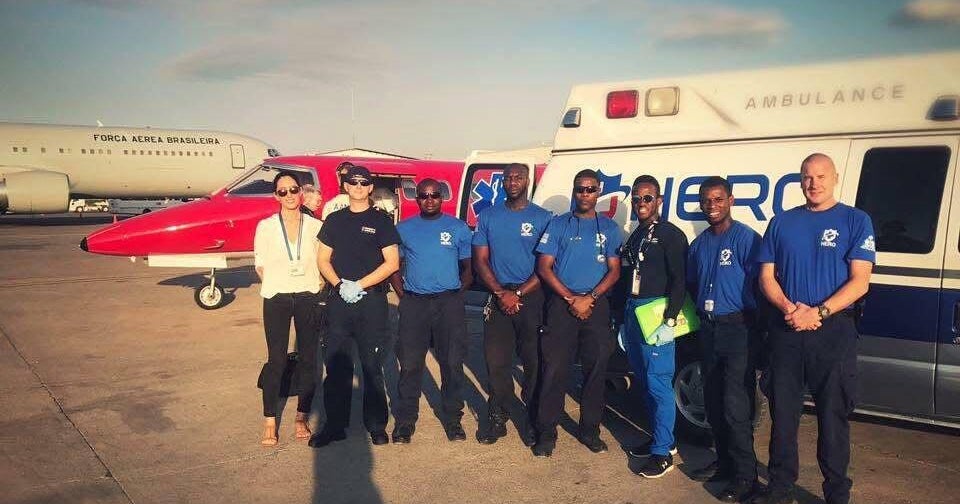
Stacy Librandi Haiti 911 is the short version of a 16-year story that began with a small backpack, camping supplies and a plan to volunteer for a week after Haiti’s January 2010 earthquake. CBS News reports that Librandi stayed, and now builds and runs the Humanitarian Emergency Response Organization, or HERO, an ambulance and medical-evacuation service based in Port-au-Prince.
Librandi arrived in late January 2010, new to disaster relief, as Haiti faced the aftermath of the magnitude 7 earthquake that struck on Jan. 12, according to CBS. Her first work was not in an ambulance. She saw relief supplies accumulating at the Port-au-Prince airfield and helped move aid by box truck to a nearby camp with the help of an English-to-Creole translator.
She told CBS that the group returned the next day after asking residents to line up for the next distribution, and the system held. In the years after the quake, CBS reports, Librandi consulted on and organized ambulance services while trying to connect international assistance with needs on the ground.
How did Stacy Librandi build a Haiti 911 service?
The first version of HERO operated from a house that served as both a base and dispatch center, CBS reports. Team members took EMT courses run by international charities and initially answered calls by motorcycle.
Librandi developed a membership idea: people would pay a low annual fee for ambulance and EMT coverage. CBS reports that people able to pay under the early model paid $100 a year, while many of those receiving care at the time were not members.
HERO received its first donated ambulance in 2012, a turning point in its expansion, according to CBS. Librandi then made emergency-response agreements with insurance companies, regional ports, local manufacturers and tourism boards for their employees. CBS reports that those institutional contracts enabled HERO to answer emergencies involving members and nonmembers.
That hybrid setup is the key to how the service was intended to work: membership revenue and organizational contracts supported a response system that was not limited to paying callers.
What does HERO provide in Haiti?
CBS describes HERO as Haiti’s largest and foremost emergency medical ambulance and medevac service. The network reports that HERO answers calls around the clock, serves all 10 Haitian states and functions as a local 911-style operation. Those are service descriptions reported by CBS; HERO’s own website also says it provides the Caribbean’s highest level of pre-hospital care, a claim not independently verified in the available reporting.
Coralie Caze, HERO’s general manager and Librandi’s business partner, joined the organization in 2018, CBS reports. Caze told the network the team’s job is to respond in the street when emergencies arise.
For Librandi, the operation grew far beyond the planned week of volunteering. Her improvised aid work after the earthquake became a dispatch desk, then motorcycles, then an ambulance service designed to keep answering the phone.
Read CBS News’ reporting on Librandi and HERO.
This story draws on original reporting from CBS News.