Strait of Hormuz pipelines get new push as Gulf oil route tightens
Gulf producers are advancing pipeline plans to move oil around Hormuz, but Red Sea attacks and tanker limits leave major risks.
By Frankie Delgado · News Reporter
4 min read
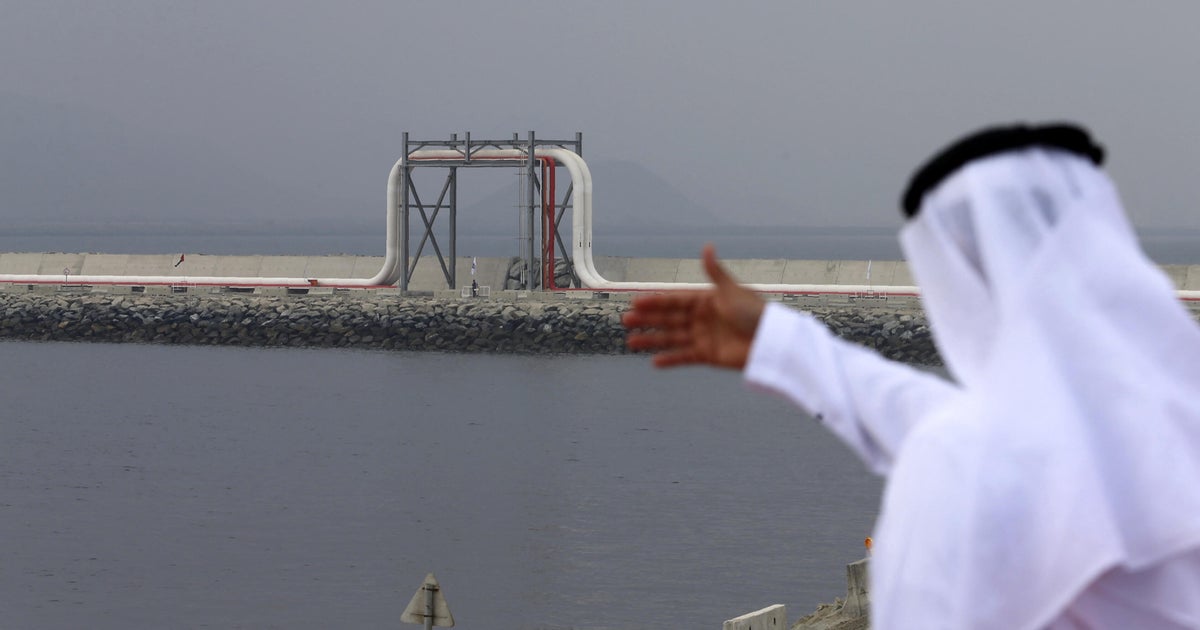
Strait of Hormuz pipelines are moving up the Gulf oil agenda as producers look for ways around the narrow waterway that carried roughly 15 million barrels of Persian Gulf crude a day before the war in Iran.
With Brent crude rising above $100 a barrel on Thursday, Gulf countries are preparing to spend billions on routes that would send more oil to ports on the Red Sea and the Gulf of Oman, according to government officials, oil companies and analysts cited by CBS News.
At least seven major pipeline projects are being built, planned or discussed, the report said. The aim is blunt: reduce dependence on a shipping lane that runs close to Iran’s coast.
Victoria Grabenwöger, a senior research analyst at Kpler, said relying so heavily on the Strait of Hormuz is no longer viewed as a sound long-term strategy by producers.
How would Strait of Hormuz pipelines work?
The pipelines would move crude over land from production areas near the Persian Gulf to ports outside the strait, where tankers could load it for export. That can keep some oil flowing if ships cannot safely pass through Hormuz, though it can add distance, cost and new security risks.
Saudi Arabia already has the East-West pipeline, built in the 1980s during fears that Iran could disrupt shipping in the Iran-Iraq war. It carries oil from Abqaiq across the country to Yanbu on the Red Sea, where tankers can head toward the Arabian Sea or the Suez Canal.
The United Arab Emirates has also been moving more crude to Fujairah, a Gulf of Oman port about 90 miles south of Hormuz. Before the war, the Saudi and UAE lines had combined spare capacity of about 3.5 million to 5.5 million barrels a day, according to the U.S. Energy Information Administration. They are now running near full capacity, CBS News reported.
Abu Dhabi’s state-owned oil company is speeding work on a $3 billion, 200-mile pipeline to Fujairah. Kpler said the line, which would run alongside an existing route, is intended to add more than 1.2 million barrels a day to Fujairah flows. The target is early 2027, though Kpler sees mid-2027 as more likely because the port also needs expansion.
Iraq looks north and west
Iraq is also pushing alternatives for oil produced around Basra. The country depends heavily on Hormuz and has had to cut production, while oil sales provide about 90% of government revenue.
One plan involving U.S. companies would move oil from Basra to Ceyhan in Turkey on the Mediterranean. A branch could extend to Baniyas in Syria, with as much as 2 million barrels a day eventually flowing there. The U.S. State Department has described that route as a critical energy corridor.
Iraqi officials have also discussed a long-running proposal with Jordan for a Basra-to-Aqaba pipeline. Oil reaching Aqaba could move through the Red Sea or the Suez Canal toward Asia and other markets.
Goldman Sachs analysts said the new bypass projects could add 3.8 million barrels a day of capacity by the end of next year and 7.3 million barrels a day by the end of 2028. That would allow about 60% of the Gulf’s prewar exports of 23 million barrels a day to avoid Hormuz if needed, according to the analysts.
The detours have their own dangers
The alternatives are exposed, too. Yemen’s Iran-backed Houthi rebels said Thursday they had attacked two Saudi oil tankers in the Red Sea, and they previously struck a Saudi pipeline linking eastern production areas to Red Sea ports.
Red Sea shipments also face the Bab el-Mandeb Strait, where Houthi attacks have disrupted traffic before. Sending oil to the Mediterranean through the Suez Canal avoids that choke point for some cargoes, but the canal cannot handle the largest oil tankers, which can carry up to 2 million barrels.
Pipelines do not solve every energy problem. Liquefied natural gas still moves by ship, and about one-fifth of global LNG, much of it from Qatar to Asian buyers, passed through Hormuz before the war.
This story draws on original reporting from CBS News.