Texas Ten Commandments lawsuit brings state-law challenge to classroom displays
Three Houston-area mothers are challenging Texas classroom Ten Commandments displays under state religious-freedom and parental-rights laws.
By Georgia Hale · Staff Writer
3 min read
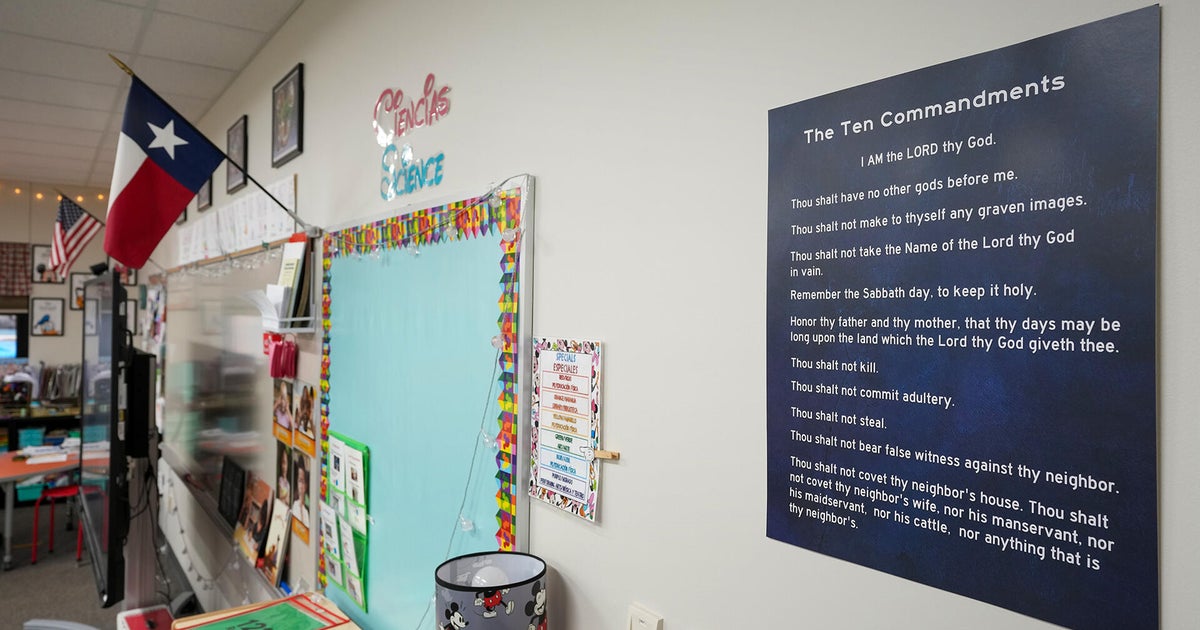
Three Houston-area mothers have filed a Texas Ten Commandments lawsuit seeking to stop the required displays in their children’s public-school classrooms, opening a new state-law front in the fight over Senate Bill 10.
Audrey Rosa Nath, Sanjam Kaur Sohal and Emily Roth filed in Harris County against the state and the Cypress-Fairbanks, Houston and Spring Branch school districts, according to KVUE and CBS News. The mothers’ children attend those districts’ schools.
The case asks a Texas court to remove or block the classroom postings. The Texas Tribune reported July 31 that the mothers’ request for a temporary hold had been denied, though the report did not describe the ruling’s scope or reasoning.
What does Texas Senate Bill 10 require in classrooms?
Senate Bill 10 requires public elementary and secondary classrooms to have a durable poster or framed copy of a specified Protestant, or King James Version, text of the Ten Commandments. The display must be at least 16 by 20 inches, placed conspicuously and readable from anywhere in the room, KVUE reported.
A classroom without one must accept a privately donated poster or framed copy that meets the statute’s requirements, according to KVUE. The law permits no additional text on the display beyond the prescribed wording.
A different legal route from the earlier federal case
Nath, Sohal and Roth are relying on the Texas Religious Freedom Restoration Act and the state’s parental-rights amendment. The religious-freedom law says a government agency may not substantially burden someone’s free exercise of religion, while the amendment protects parents’ authority to make decisions about a child’s upbringing, according to KVUE, CBS News and the Texas Tribune.
The parents contend that the mandated religious message conflicts with their beliefs and their choices about religious upbringing. The Texas Tribune reported that Roth is raising her children without religion, Nath’s family includes several religious traditions, and Sohal is Sikh.
This is separate from Rabbi Nathan v. Alamo Heights Independent School District, a 2025 federal challenge filed by 16 multifaith and nonreligious families. That suit argued the mandate violated First Amendment protections involving government establishment of religion and free exercise, the ACLU of Texas said.
A federal district judge initially blocked the law in the districts targeted by that case, but the Fifth U.S. Circuit Court of Appeals later allowed Senate Bill 10 to be enforced, the Texas Tribune reported. CBS News said a separate federal case could still be appealed to the U.S. Supreme Court.
Supporters say posters are historical, not coercive
Texas Attorney General Ken Paxton has argued that the Ten Commandments are part of U.S. heritage and history. Lawyers in his office have maintained that a posted display is not coercive because students can ignore it, according to the Texas Tribune.
Jonathan Covey of the Christian advocacy group Texas Values told CBS News that parental rights do not allow one family to determine what every Texas public-school student learns. CBS reported that Paxton and Texas Education Commissioner Mike Morath are named in the mothers’ suit and that it sought comment from their offices.
This story draws on original reporting from CBS News.