Trump birthright citizenship rehearing request never reached Supreme Court
The Supreme Court docket shows no rehearing petition after Trump vowed to challenge the ruling blocking his birthright citizenship limits.
By Georgia Hale · Staff Writer
2 min read
A Trump birthright citizenship rehearing request never reached the Supreme Court docket by the deadline, despite President Donald Trump’s public vow to seek another look at the case, NBC News reported.
The 25-day period for asking the justices to rehear the case ended Monday night, according to NBC News, which reported that the court docket showed no filing from the administration.
Trump had said in a July 8 Truth Social post that he would ask the Supreme Court for a rehearing “IMMEDIATELY.” In the same post, he called the ruling a “miscarriage of justice” and said it would “destroy America” unless the court changed course.
NBC News reported that the White House and the Justice Department did not respond to multiple requests for comment.
Did Trump ask the Supreme Court to rehear the birthright citizenship case?
As of the deadline, the Supreme Court docket did not show a rehearing petition, according to NBC News. Supreme Court rules give a losing party 25 days after a decision to ask for rehearing.
Those requests almost never work. Steve Vladeck, a professor at Georgetown University’s law school, has written that the Supreme Court last granted a rehearing petition in 1965.
The missed deadline followed a June 30 Supreme Court decision that blocked Trump’s proposal to narrow birthright citizenship. NBC News reported that the court ruled 6-3 against allowing the plan to go forward, with five justices concluding that it conflicted with the citizenship clause of the 14th Amendment.
The decision was among several recent Supreme Court setbacks for major Trump policies, according to NBC News.
What was Trump’s birthright citizenship plan?
Trump’s proposal would have limited automatic citizenship at birth to babies with at least one parent who is a U.S. citizen or a permanent resident, NBC News reported.
Under the plan, children born in the United States to temporary visitors or to people who entered the country illegally would not have received citizenship at birth, according to NBC News.
Birthright citizenship refers to citizenship granted by birth on U.S. soil. The 14th Amendment says: “All persons born or naturalized in the United States, and subject to the jurisdiction thereof, are citizens of the United States.”
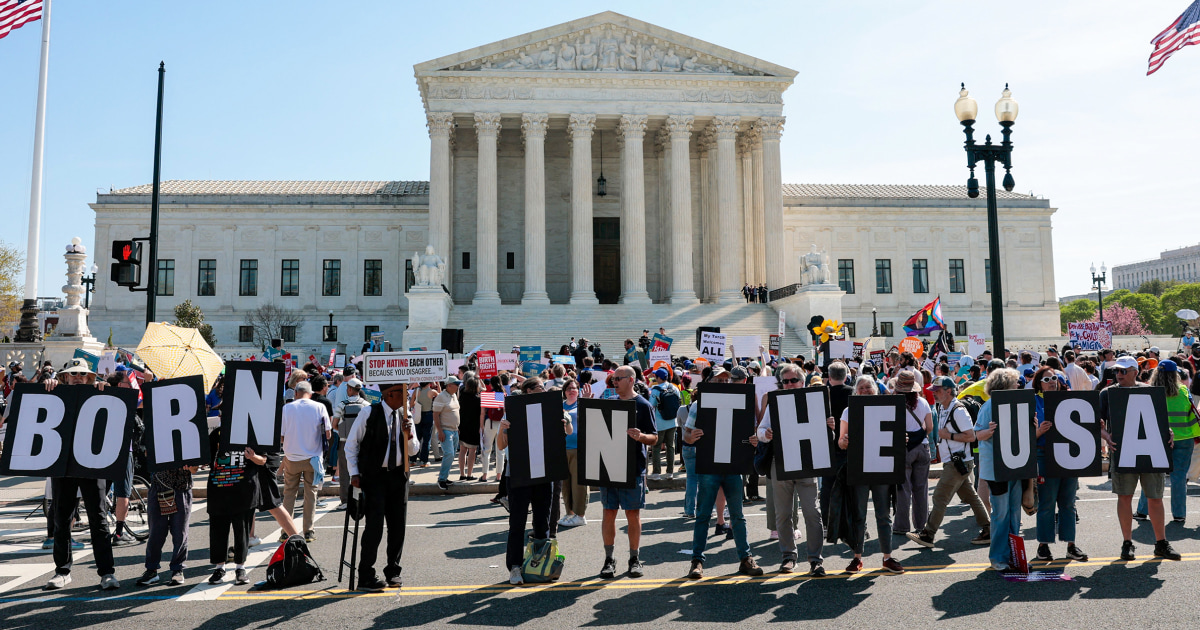
The case drew public attention before the ruling. A file photo cited by NBC News showed demonstrators rallying in support of birthright citizenship outside the Supreme Court during oral arguments on April 1.
For now, the court’s June 30 ruling remains in place, and Trump’s promised rehearing bid did not appear on the docket before the filing window closed.
This story draws on original reporting from NBC News.