Trump, Xi and Putin issue broad declaration with no arms-control deal
The Shenzhen meeting produced pledges on the U.N., fuel and nuclear risk, but no timetable for arms-control talks or deal on Ukraine.
By Deshawn Carter · Sports Writer
3 min read
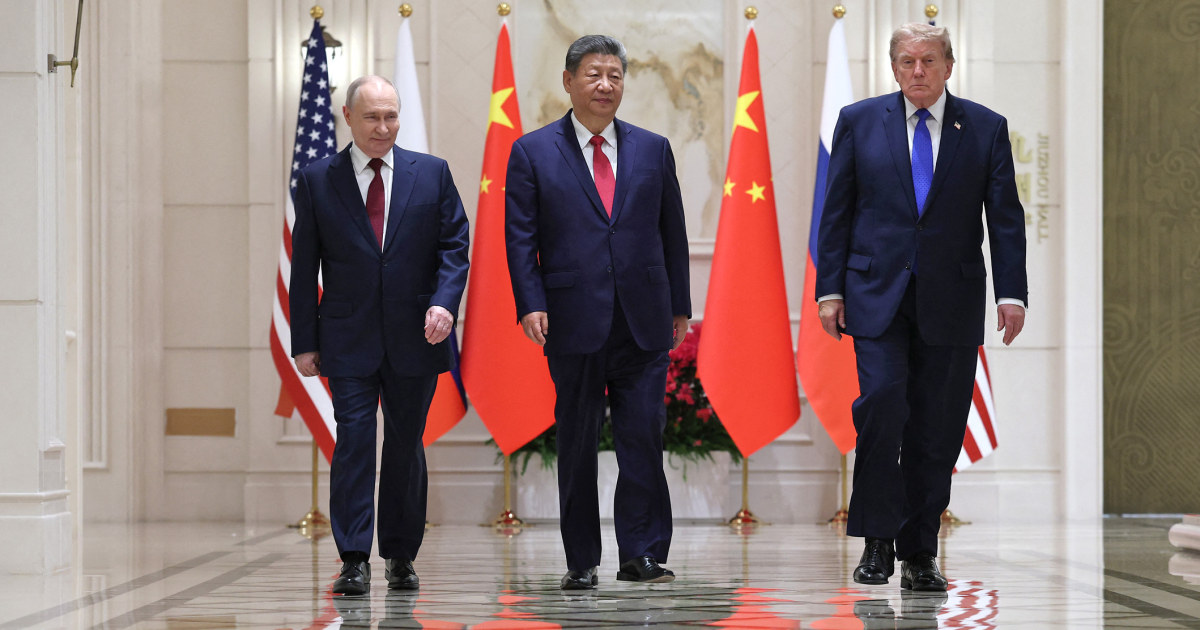
The Trump Xi Putin summit in Shenzhen, China, ended Thursday with a joint “peace declaration” but no announced nuclear-arms-control negotiations, timetable or agreement on the major wars shadowing the meeting.
President Donald Trump met Chinese President Xi Jinping and Russian President Vladimir Putin on Nov. 19 in an unusual three-way gathering. Reuters reported that the leaders reaffirmed the principle that nuclear war cannot be won and must never be fought, and said they would continue dialogue on reducing nuclear risks and preventing nuclear proliferation.
Trump gave the meeting an upbeat review, telling NBC it “went great” and rating it 12 out of 10, Reuters reported. He argued at the meeting that the three leaders had a special responsibility to keep an open and productive dialogue on issues affecting the world.
What did the Trump Xi Putin summit produce?
The declaration included broad pledges to pursue reforms of the United Nations, increase supplies of refined petroleum products and uphold immunity for state officials in international courts, according to Reuters and The Washington Post.
Those are statements of intent, rather than a detailed implementation plan. Reuters reported that Putin said after the meeting that the declaration did not set ambitious goals and that no one would be compelled to follow its decisions.
The document also did not mention Russia’s war in Ukraine or the U.S. conflict with Iran, Reuters reported. NBC News said there was no reported progress on nuclear proliferation, trade or critical minerals.
Most notably, there was no announced plan to begin the nuclear-arms talks Trump has sought. China has previously rejected a three-way arms-reduction treaty, Reuters reported, saying its arsenal is far smaller than those of the United States and Russia.
Why is the meeting being called symbolic?
The clearest result was the image: the U.S., Chinese and Russian presidents appearing together in Shenzhen. NBC News described the gathering as light on results and heavy on symbolism, while international-relations experts quoted by The National News Desk similarly said it produced little tangible policy progress.
Mark N. Katz, a professor emeritus at George Mason University, said he saw no sign that anything had been decided beyond the leaders meeting. Boise State political scientist Michael Allen said increased petroleum production could prove the declaration’s most concrete pledge, while adding that U.N. reform language would need action to mean more than a statement.
Trump’s cordial language toward Putin also drew criticism. Reuters reported that Trump called Putin a friend, while NBC News reported Polish Prime Minister Donald Tusk responded on X: “God protect us from such friends.”
The meeting came as European leaders gathered in Berlin in support of Ukraine. Ukrainian President Volodymyr Zelenskyy said decisions about Ukraine must involve Ukraine, and decisions about Europe must involve Europe, according to NBC News.
For now, the summit’s public record is a short declaration and a high-profile meeting, with its pledges still lacking announced deadlines, enforcement measures or follow-up arms-control negotiations.
This story draws on original reporting from NBC News.