Trump, Putin and Xi meeting draws Yalta comparisons
A historian and the Kremlin offer sharply different views on why the planned Shenzhen meeting evokes, but differs from, Yalta.
By Frankie Delgado · News Reporter
3 min read
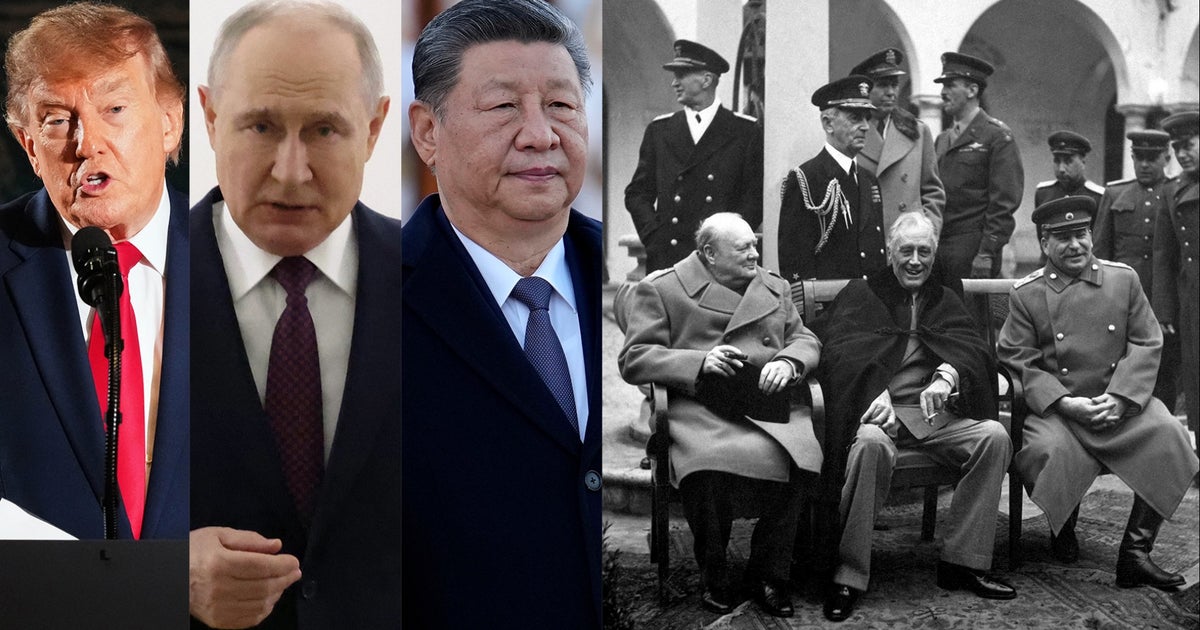
The Trump Putin Xi Yalta comparison is gathering pace before the three leaders’ planned meeting in Shenzhen, China, on the sidelines of the APEC summit. China’s Foreign Ministry has described it as the first face-to-face meeting of the Chinese, Russian and U.S. heads of state, Reuters reported.
The parallel is about the image of three major powers meeting during a period of war and international strain. It is not evidence that they will decide Ukraine’s future, divide territory or strike any particular deal. The public agenda remains unsettled.
Why is the Trump-Putin-Xi meeting compared with Yalta?
At the Yalta Conference in February 1945, U.S. President Franklin D. Roosevelt, British Prime Minister Winston Churchill and Soviet leader Joseph Stalin met near the end of World War II. Historian Catherine Grace Katz told CBS News that they discussed postwar Germany, bringing the Soviet Union into the war against Japan, support for the proposed United Nations, and Poland and democratic rights in Eastern Europe.
Yalta has since become linked to great-power spheres of influence and to the belief, especially in parts of Eastern Europe, that Poland and other countries’ sovereignty was sacrificed for postwar cooperation. That legacy makes the Ukraine war central to concerns around the Shenzhen meeting, even though it has not been confirmed as a main subject of the three-way talks.
Ukraine is not among the participants. ABC News reported that Ukraine, much of Eastern Europe, the Baltic states, Taiwan and Iran were also absent from the planned gathering, and quoted analysts who said smaller countries fear a return to decisions being made by major powers.
Where does the Yalta analogy break down?
The differences are as important as the echoes. Yalta brought together wartime allies with a shared goal of defeating Nazi Germany. The planned Shenzhen meeting involves governments with competing interests, and China has taken Britain’s place at the table.
Katz said the comparison only goes so far because the earlier conference was held among allies, while the coming three-way meeting is among adversaries. ABC also noted that Russia is not the Soviet Union of 1945. Carnegie Europe senior fellow Thomas de Waal told the broadcaster that Russia is weaker than the former Soviet superpower and is not a global economic power.
There is also no settled agenda. CNBC reported that the White House had signaled nuclear non-proliferation and the Middle East war as priorities, while Russian officials presented the Shenzhen talks as part of diplomacy aimed at a negotiated settlement in Ukraine. China has not publicly provided detailed topics for discussion.
The Kremlin rejects the Yalta label altogether. Spokesman Dmitry Peskov called the comparison “games of political scientists,” Reuters reported, and said Russia and China supported a multipolar order rather than decisions imposed on other countries.
For now, the strongest case for invoking Yalta is symbolic: a rare meeting of three powerful leaders while countries affected by the era’s conflicts are outside the room. Whether the gathering produces substantive decisions remains unknown.
This story draws on original reporting from CBS News.