Trump-Xi visit ends with trade truce extension but few public details
Trump and Xi called their meeting productive, but officials announced only a short trade extension and no new AI deal.
By Frankie Delgado · News Reporter
3 min read
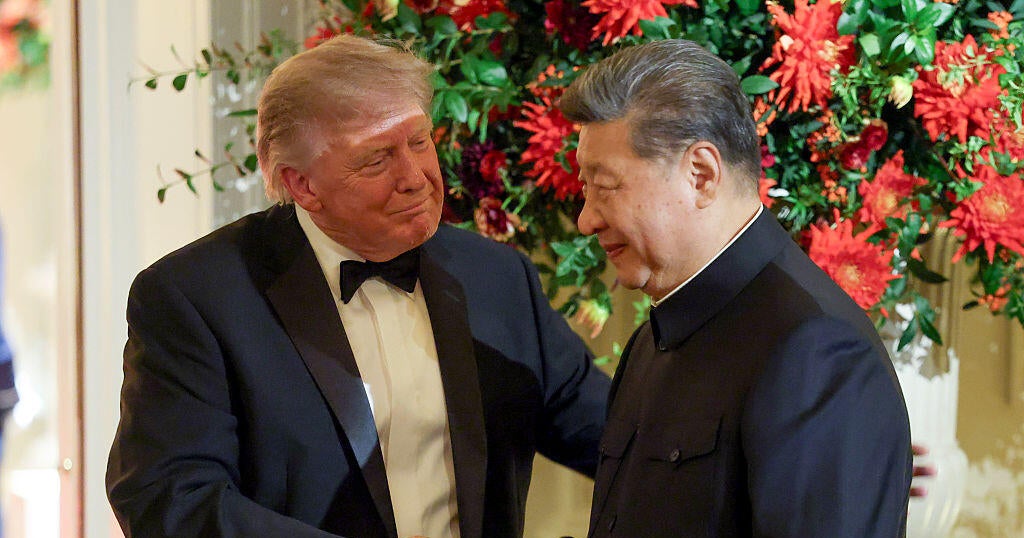
The Trump-Xi visit outcomes remained thinly defined as Chinese President Xi Jinping concluded his White House trip Friday. President Donald Trump called the visit “very, very productive,” while Xi said the two sides had reached common understanding on many issues. Neither leader publicly set out a detailed list of new agreements, according to CBS News.
The clearest reported step was a two-month extension of the existing U.S.-China trade agreement, which had been due to expire in November. Treasury Secretary Scott Bessent said the extension would give both governments more time to work on economic issues, Reuters reported.
That leaves the harder items for later talks: tariffs, Chinese purchases, rare-earth supplies and technology restrictions. Reuters reported that Bessent said China was meeting a requirement to buy 25 million tons of soybeans under the earlier deal, but was behind on a separate $17 billion commitment for other agricultural products. U.S. officials also said rare-earth deliveries were falling short, Reuters reported.
What did Trump and Xi announce after their meeting?
On artificial intelligence, the answer was no new agreement. U.S. Trade Representative Jamieson Greer told CBS News he would not say the leaders had produced anything new on AI. He said the countries had already established an AI dialogue, meant to provide a channel for discussing risks or other concerns.
Greer said another AI meeting was expected within about a month, though its agenda had not been set. The dialogue is a forum for talks, not a new AI deal.
Taiwan also produced no announced shift in U.S. policy. U.S. Ambassador to China David Perdue said Washington’s position had not changed, citing the One China policy, the Taiwan Relations Act, the three communiques and the six assurances, CBS reported.
Xi pressed the United States to handle the Taiwan question “with prudence,” Reuters reported, and China’s state news agency said he wanted Washington to oppose Taiwan independence. Reuters said there was no immediate White House account of that exchange and no sign the administration intended to alter its language.
What remains for future U.S.-China talks?
Perdue said Trump told Xi that Chinese assistance to Iran in the war was unacceptable. Perdue also said China had expressed a commitment not to help Iran, but that was the ambassador’s account rather than a published bilateral agreement or an independently documented Chinese pledge.
The leaders are expected to have more chances to revisit the unresolved issues. Xi said he anticipated seeing Trump at the APEC summit in Shenzhen and at the G20 summit in the United States later this year, CBS reported. Xi also invited Trump to make a state visit to Beijing in May.
For now, the public scorecard is short: a temporary trade extension, an existing AI channel with another meeting planned, and broad statements of goodwill. The White House had not released a detailed public readout or joint statement in the reporting available Friday.
This story draws on original reporting from CBS News.