U.S. strikes Iran for 13th night as Trump threatens larger attack
CENTCOM said new U.S. strikes hit Iranian military sites as Trump warned of a possible escalation and oil prices climbed.
By Frankie Delgado · News Reporter
3 min read
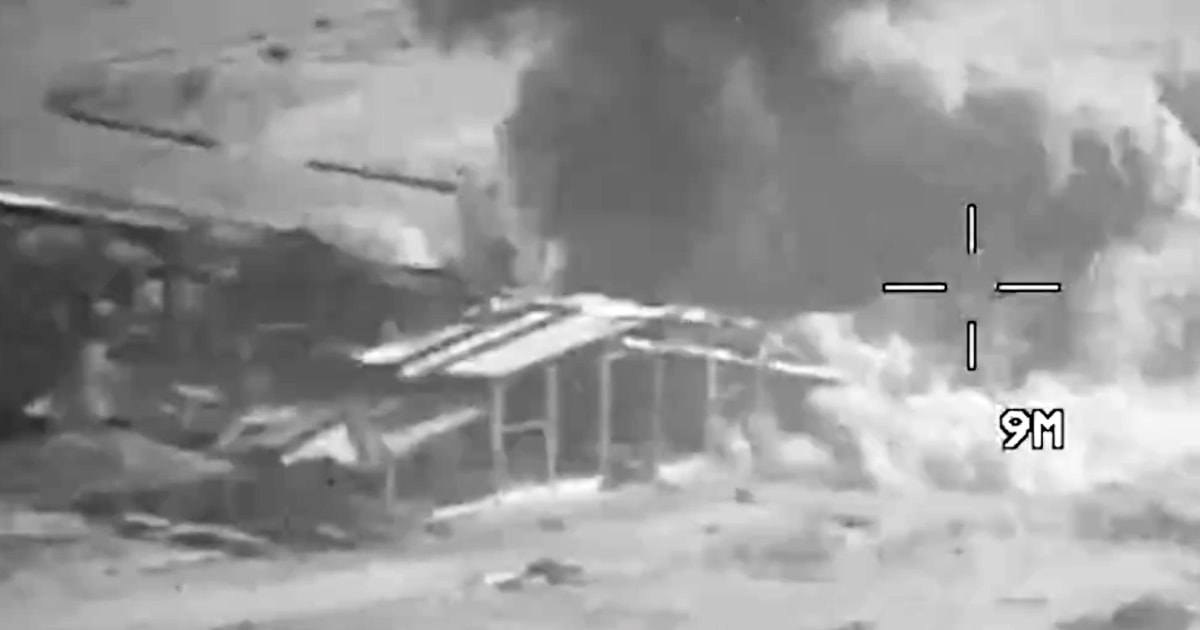
The U.S. strikes on Iran entered a 13th straight night Thursday as President Donald Trump warned he was considering a far larger assault, according to NBC News and U.S. Central Command.
Trump told Axios on Thursday that he was weighing a “massive attack” on Iran that would be “bigger than ever before.” Hours later, CENTCOM said American forces had carried out another round of strikes on Iranian targets.
The new U.S. action came as the conflict spread across key shipping routes. NBC News reported that Iran had launched attacks on shipping, U.S. bases and American allies in the Middle East, while Tehran-backed Houthi rebels in Yemen struck two Saudi oil tankers in the Red Sea.
Oil markets felt the squeeze fast. Brent crude, the international benchmark, climbed above $100 a barrel Thursday for the first time since May before easing back. NBC News reported it was near $97 a barrel Friday morning.
What happened in the U.S. strikes on Iran?
CENTCOM said the latest strikes were completed at 9 p.m. ET Thursday and targeted Iranian military command centers, drone storage facilities, communications networks, coastal surveillance sites and maritime capabilities. The command said the aim was to reduce threats to civilian mariners and commercial ships moving through the Strait of Hormuz.
Iran’s state-run IRNA news agency reported that four people were killed and five were wounded in the Ahvaz area after impacts were reported across the country.
Tehran also launched new attacks, NBC News reported, including strikes on U.S. bases in Kuwait. Bahrain activated sirens, and explosions were reported near a military base in northern Iraq that hosts U.S. forces.
Why are the Strait of Hormuz and Red Sea in focus?
The Strait of Hormuz is one of the world’s most important oil shipping chokepoints, linking the Persian Gulf with global markets. Disruption there can quickly raise fears about energy supplies and prices.
NBC News reported that traffic through the Strait of Hormuz had slowed to a near-standstill during the Iranian attacks. The New Giant oil tanker, bound for Rizhao, China, was the only vessel to fully cross the strait Thursday, according to the report.
The Red Sea picture was more mixed. Some ships turned around after the Houthi threat, but traffic did not appear to have fallen overall, according to an NBC News analysis of MarineTraffic data. In the Bab el-Mandeb Strait on Thursday, eight tankers traveled north into the Red Sea and 14 traveled south into the Gulf of Aden, though NBC News noted the true count could be higher if some ships had turned off transmitters.
Trump wrote on Truth Social that the U.S. would hold Iran responsible if the Houthis attacked again, calling the group a “Surrogate and/or Proxy of Iran.” He also said Washington would use Iranian assets held by the U.S. to pay for damage to ships, cargo or related losses.
Iranian Foreign Minister Abbas Araghchi denounced that threat on X as an “incendiary precedent,” warning that normalizing government confiscation would put assets at risk.
Regional unease is also rising. Senior Arab officials told NBC News they were frustrated by the threats, daily escalations and lack of diplomatic progress. One senior Arab official with direct knowledge of regional developments said, “We have no clue where this is going.” Another senior Arab official directly involved in diplomacy said, “It’s only getting crazier.”
Iraqi Prime Minister Ali al-Zaidi visited Iran on Thursday for the first time since taking office in May, a notable trip given Iraq’s ties to both Washington and Tehran. Trump told Axios that Iranian officials “want to negotiate” but were not ready to make a deal, adding, “They haven’t received enough pain yet.”
This story draws on original reporting from NBC News.