U.S. tariffs on 60 countries set at 10% to 12.5%
The U.S. Trade Representative said new duties will replace Trump’s expiring 10% tariff and start early Friday.
By Frankie Delgado · News Reporter
3 min read
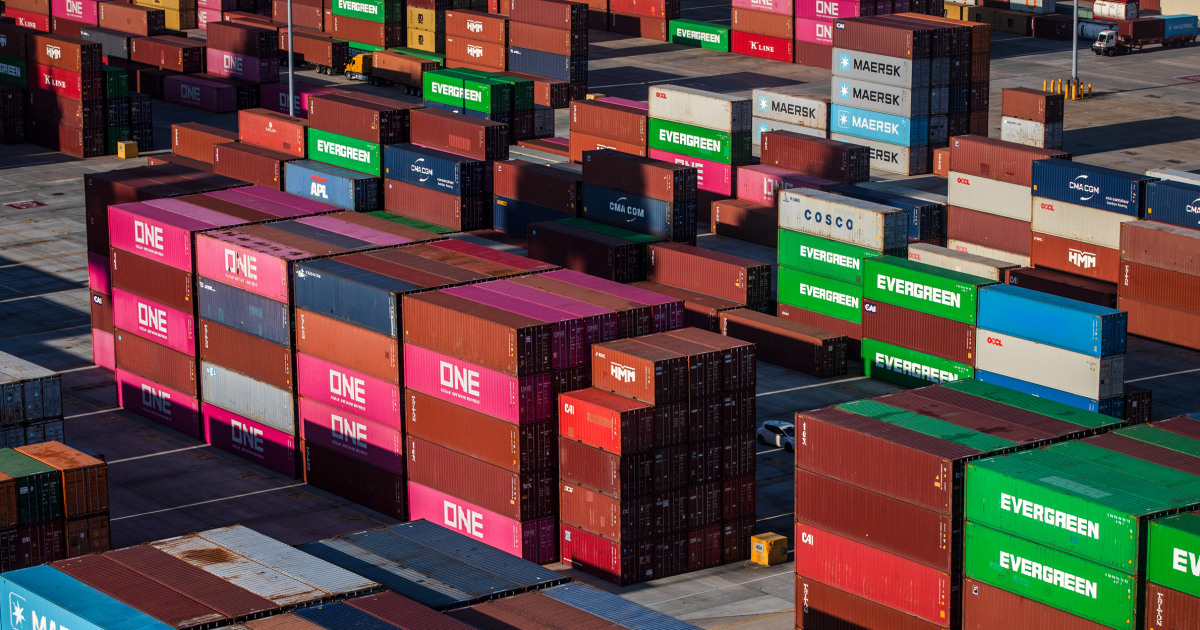
The U.S. tariffs on 60 countries will run from 10% to 12.5% under a new trade action announced Thursday by the U.S. Trade Representative, replacing President Donald Trump’s temporary 10% tariff as it expires at midnight Eastern time.
The new duties take effect at 12:01 a.m. ET Friday, according to a USTR fact sheet. The affected trading partners include what the agency described as 60 economies, including America’s most important trading partners.
Canada, Mexico, India and the United Kingdom are among the economies facing a 10% tariff, according to the fact sheet. Taiwan and the European Union will be hit with a 12.5% rate.
The U.K. rate resembles a deal Trump reached last year with then-Prime Minister Keir Starmer to bring tariffs on British imports into the United States down to 10%.
For the European Union, which NBC News identified as the largest single U.S. trading partner, the 12.5% rate appears to come in below the 15% cap Trump and European Commission President Ursula von der Leyen agreed to in 2025.
What are the new U.S. tariffs on 60 countries?
The tariffs are import taxes set under Section 301 of the Trade Act of 1974, a law that lets the United States respond to certain foreign trade practices after an investigation. USTR said the new rates are tied to investigations into whether other economies have imposed and enforced bans on goods made with forced labor.
The agency said the investigations took months and found that the 60 economies failed “to impose and effectively enforce a prohibition on the importation of goods produced with forced labor.”
USTR Ambassador Jamieson Greer said in a news release that the United States has had a forced labor import ban “for nearly a century” and enforces it rigorously, adding that trading partners should do the same.
Key trading partners, including the European Union, rejected the forced-labor accusation before the final determination was issued Thursday, according to NBC News.
Why is the administration using Section 301?
The new tariffs are being imposed under a different legal authority than most of Trump’s earlier duties. In February, the Supreme Court struck down most of the tariffs the administration had imposed under the International Emergency Economic Powers Act, ruling that the administration had gone beyond its authority.
Greer’s probe of the 60 economies has been underway since mid-March as the administration considered which tariff statute to use next, NBC News reported.
The tariff package includes a broad set of exemptions. USTR’s action leaves out fertilizers and some fuels, according to NBC News, with both categories rising in price during the ongoing war in Iran.
Other exemptions include some foods, autos, certain metals and pharmaceuticals. On Tuesday, Trump said on social media that all generic drugs imported into the United States would keep a tariff rate of zero percent for two years.
This story draws on original reporting from NBC News.