Wildfire smoke spreads as Canada and U.S. face extreme fire season
Climate researchers say heat, drought and thin snowpack have helped set up severe fires across Canada and the western U.S.
By Georgia Hale · Staff Writer
4 min read
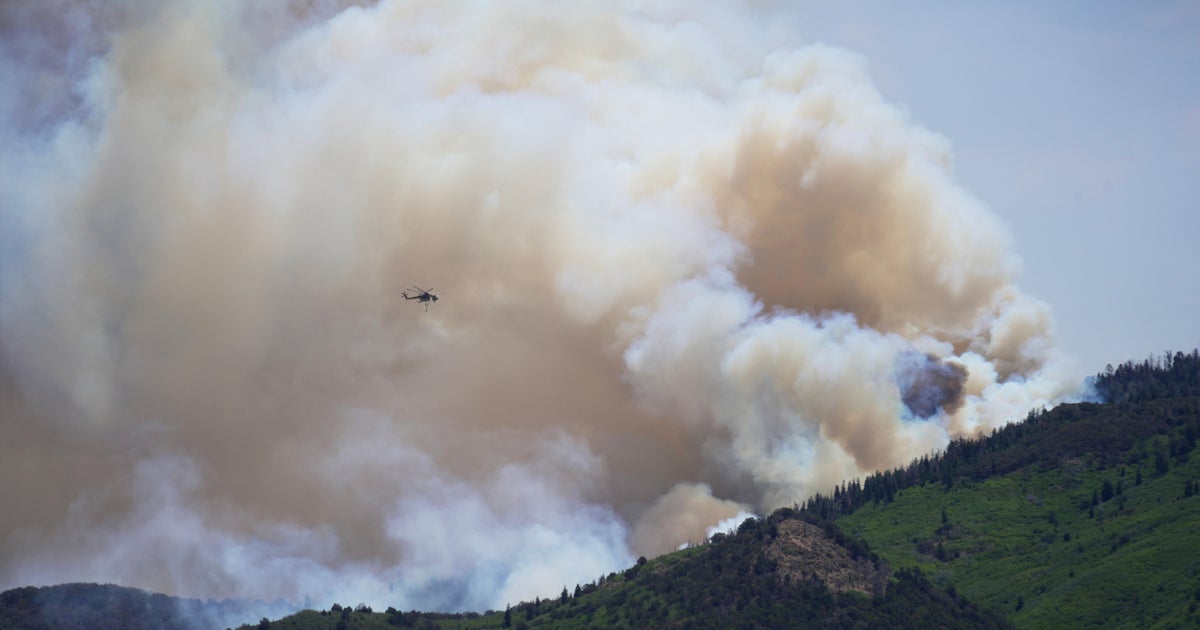
Smoke from more than 100 active wildfires in Canada was drifting into the Upper Midwest and the Northeast on Thursday, joined by smoke from several large fires in Minnesota and leaving millions exposed to unhealthy air, according to Canadian fire data and CBS News reporting.
The fires are chewing through land on both sides of the border. Canada has recorded about 3,500 wildfires so far this year, burning roughly 2.3 million acres, according to the Canadian Wildland Fire Information System. That acreage is near the country’s 10-year average for mid-July and below its five-year average, which was pushed higher by recent severe seasons.
In the United States, the pace is running hotter than usual. The U.S. National Interagency Fire Center says nearly 40,000 fires have burned more than 3.6 million acres in 2026, including about 500,000 acres in the past two weeks. That is close to 10,000 more fires and nearly 1 million more acres than the 10-year average for this point in July.
In a new advisory, the fire center said activity is already resembling conditions usually seen later in the season.
Western states take a hard hit
The American West has been hit especially hard, with Colorado and Utah among the states facing the worst damage. At the end of June, three firefighters were killed and two others were injured in the Knowles Fire near the Colorado-Utah border, according to CBS News.
Of 48 large wildfires still burning across the country, 10 are in Colorado or Utah. Others are burning in Arizona, California, Idaho, Nevada, New Mexico, Oregon and Washington state.
Jon Meyer, Utah’s assistant state climatologist, told CBS News that fuels, terrain, weather and climate have all lined up. He described the mix of long drought, record heat and extremely low snowpack in the West as a setup for one of the region’s worst fire seasons in a decade.
Nick Nausler of the National Weather Service’s Storm Prediction Center told CBS News the fire intensity was not entirely unexpected given the conditions that came before it.
Thin snowpack leaves land ready to burn
Researchers cited unusually poor snow conditions as a major driver. Dan McEvoy, a researcher at the Western Regional Climate Center in Nevada, told CBS News that snowpack in parts of Colorado and Utah was the worst seen in 50 to 75 years in some cases.
Snowpack matters because its runoff feeds moisture into soils and vegetation. McEvoy said early snowmelt caused by high temperatures gave the ground about an extra month to dry before the fire season began.
Canada has seen a long-term decline in snow cover across its northern region, according to the Canadian government. The Canadian Climate Institute has said climate change is making wildfire threats worse and can increase the odds of extreme fire weather several times over in some cases. It has also noted that fire seasons are starting earlier, lasting longer and becoming harder to control, including through winter-smoldering “zombie fires.”
Climate signal grows louder
Canadian officials attribute shifting heat, snowpack and drought patterns tied to wildfires to human-caused climate change. U.S. experts told CBS News that climate change is not the only factor in any fire season, with forest management also playing a role, but they said its influence this year is clear.
Noah Diffenbaugh, a Stanford University climate scientist, cited research attributing about half of the long-term increase in burned area across the western U.S. to climate change. He told CBS News that warming affects wildfire risk through snowpack and atmospheric demand, both of which are trending in a more dangerous direction for the West.
Tim Brown, a climate researcher at the Western Regional Climate Center, told CBS News that warmer temperatures are producing “hotter droughts” in the West. He said climate helps make fire possible, while weather determines how it behaves.
The National Interagency Fire Center’s latest seasonal outlook keeps much of the West at above-normal wildfire risk into fall. McEvoy said elevated fire potential is expected to shift north in August and September toward Northern California, Oregon, Washington and the Northern Rockies. Diffenbaugh also warned that the West has not yet reached the autumn wind season, when Diablo and Santa Ana winds can drive some of its most dangerous fires.
This story draws on original reporting from CBS News.