DJI Osmo Pocket 4 review finds a sharper creator camera with a catch
Mashable says DJI’s new pocket gimbal improves controls, storage and low-light video, but U.S. buyers face a tougher hunt.
By Bianca Rossi · Entertainment Editor
3 min read
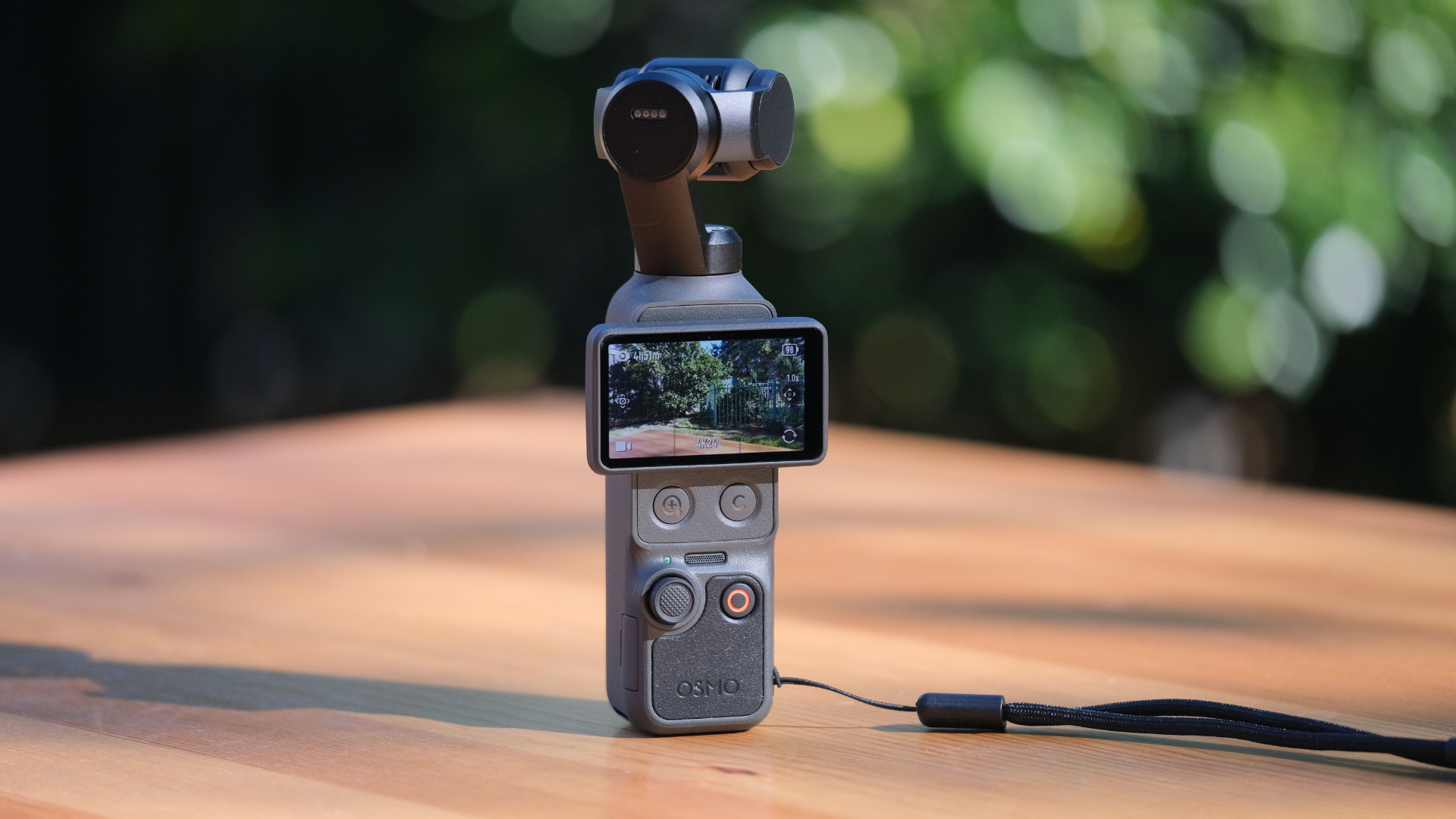
A new DJI Osmo Pocket 4 review from Mashable says the creator-favorite handheld camera has gained the kind of upgrades vloggers actually feel: better low-light video, more responsive tracking, extra physical controls and built-in storage.
DJI’s follow-up to the Osmo Pocket 3 keeps the familiar tiny gimbal-camera shape, according to Mashable, but changes several day-to-day details. The old hard protective cover has been replaced by a smaller gimbal clamp and a soft carrying pouch, which the review says makes the kit easier to carry with accessories.
The Pocket 4 is slightly larger than the Pocket 3, though Mashable says the difference is mainly noticeable side by side. It keeps the rotating 2-inch touchscreen and USB-C port, while the screen brightness rises to 1000 nits from the Pocket 3’s 700 nits.
What changed on the DJI Osmo Pocket 4?
The big handling change is under the screen. Mashable notes that DJI added two buttons that appear when the display is turned into landscape mode: a zoom button that jumps to 2x or 4x, and a customizable button that defaults to switching the joystick between zoom and gimbal control.
DJI also added a magnetic accessory point. Mashable tested the company’s pocket fill light, which attaches magnetically and offers three brightness and temperature settings. The review says the light improved detail and subject separation in dim scenes, while drawing power from the camera instead of needing its own charge.
On specs, the Pocket 4 does not look wildly different at first. Mashable reports that the Pocket 3 and Pocket 4 use sensors of the same size, have identical gimbal movement ranges, and both top out at 4K video at 60 frames per second. The Pocket 4 adds 8K photos, but drops 2.7K video and 1:1 aspect-ratio recording.
The more obvious win is storage. The Pocket 3 depends on microSD cards, while Mashable says the Pocket 4 adds 107GB of internal memory and still supports microSD. DJI also rates the Pocket 4 battery at up to 240 minutes at its lowest video settings, compared with 166 minutes for the Pocket 3.
Should you buy the DJI Osmo Pocket 4?
Mashable’s verdict is clearest on image quality. The review says DJI doubled the ISO range for photos, video and slow motion, producing footage with more detail and less noise in darker settings. The Pocket 4 also handled automatic exposure changes more smoothly in Mashable’s tests and delivered more accurate skin tones out of the box.
There is one trade-off for video nerds: Mashable notes that the Pocket 4 does not offer HDR video, while the Pocket 3 supports 10-bit HLG. Even so, the review found the Pocket 4’s overall image quality to be better.
The gimbal and tracking also get a lift. Mashable says the Pocket 4 moves faster and more smoothly than the Pocket 3, and its subject tracking held on in situations where the older model lost the subject, especially in lower light.
U.S. availability is the awkward bit. Mashable reports that DJI products have become harder to buy in the country amid U.S. government pressure on the company, and that the Osmo Pocket 4 is not available through DJI’s U.S. website. Buyers there would need to use an unofficial third party, according to the review.
DJI has no official U.S. price for the camera, Mashable says. In Australia, the Standard Combo costs AU$769, the Creator Combo costs AU$959, and the Creator Combo Plus costs AU$1058. DJI says the Battery Handle in the top bundle adds 150 minutes, bringing total rated recording time to 390 minutes.
Mashable’s bottom line: Pocket 3 owners may not need to rush, but new buyers choosing between the two get meaningful upgrades with the Pocket 4. Filmmakers who want HDR may want to wait, since DJI announced an Osmo Pocket 4P in May for cinematic productions.
This story draws on original reporting from Mashable.