Dog ate gummy worms, then regurgitated 2.4 pounds at Australian clinic
Scooter, a 3-year-old beagle, was treated after eating jelly snakes, with vets concerned by the candy’s sugar content.
By Georgia Hale · Staff Writer
2 min read
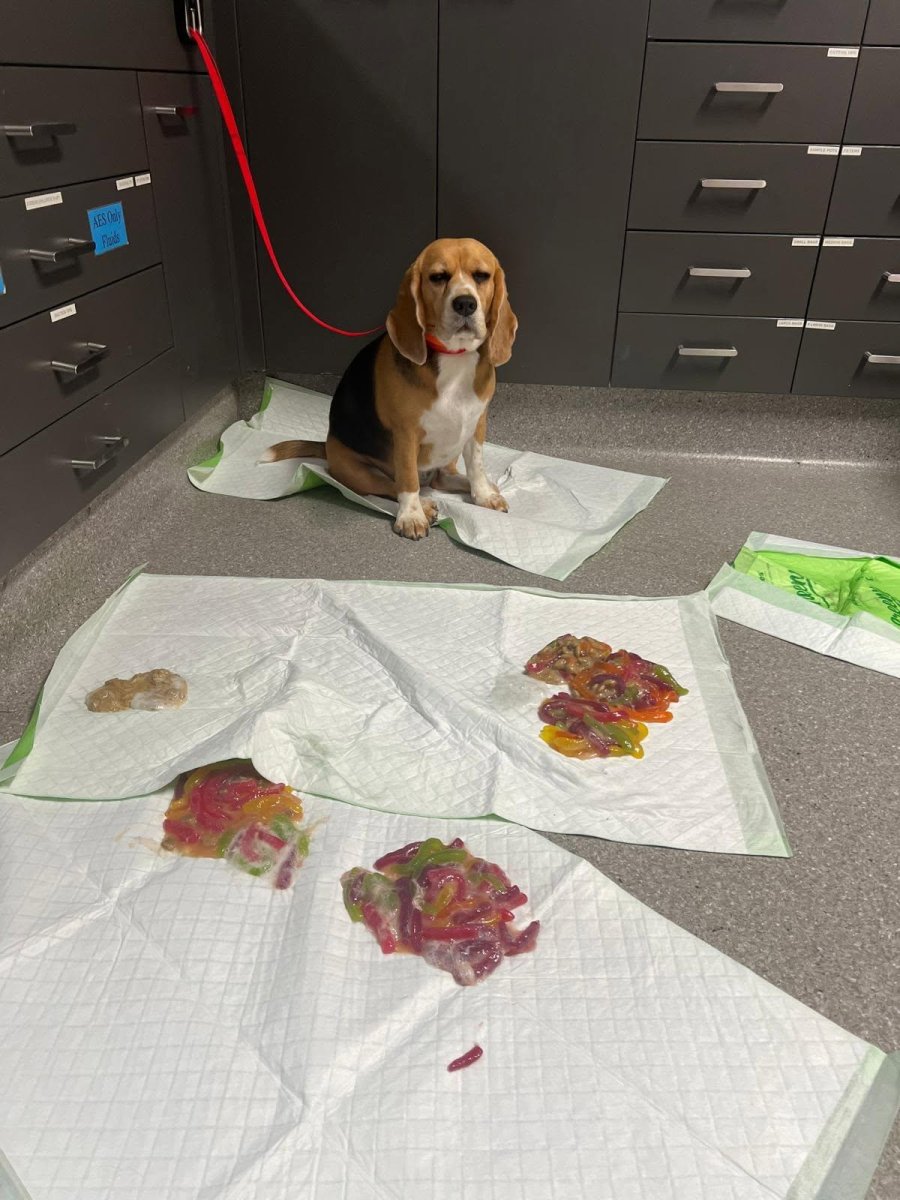
A dog ate gummy worms by the bagful in Australia, sending 3-year-old beagle Scooter to emergency veterinary care and ending with 2.4 pounds of candy brought back up after treatment.
UPI reported that Scooter’s owners took her to Animal Emergency Service Jindalee after she consumed a full bag of the sweets, known in Australia as jelly snakes. The 2.4-pound figure refers to the amount Scooter regurgitated after veterinarians induced vomiting, rather than an independently measured amount eaten.
Why did Scooter need treatment after eating gummy worms?
Veterinary nurse manager Kate Wesche said the product Scooter ate did not contain xylitol, a sweetener that can be toxic to dogs. But the clinic decided to induce vomiting because of concern about the quantity of sugar Scooter had consumed, UPI reported.
Wesche told 1News, as cited by the New York Post, that a large intake of natural sugar can cause severe gastrointestinal upset. That was the reported concern in Scooter’s case.
Scooter was not the only beagle brought in. Her canine sibling, Jada, was also treated as a precaution and regurgitated one jelly snake, according to UPI.
What happened to Scooter and Jada?
Both dogs were given clean bills of health and sent home, according to UPI.
The clinic later made light of the episode in a social-media post, saying Scooter rated the experience highly and would repeat it. Wesche told 1News that Scooter appeared to have no regrets.
For pet owners, the episode draws a clear line between the comic aftermath and the clinic’s stated medical concern: these candies reportedly had no xylitol, but Scooter still required treatment after eating a very large amount.
This story draws on original reporting from UPI.