Mark Carney Canada tariffs showdown puts sovereignty to the test
Canada’s tariff fight with the U.S. has raised Mark Carney’s global profile, but the economic risks remain steep.
By Poppy Nakagawa · Culture Writer
3 min read
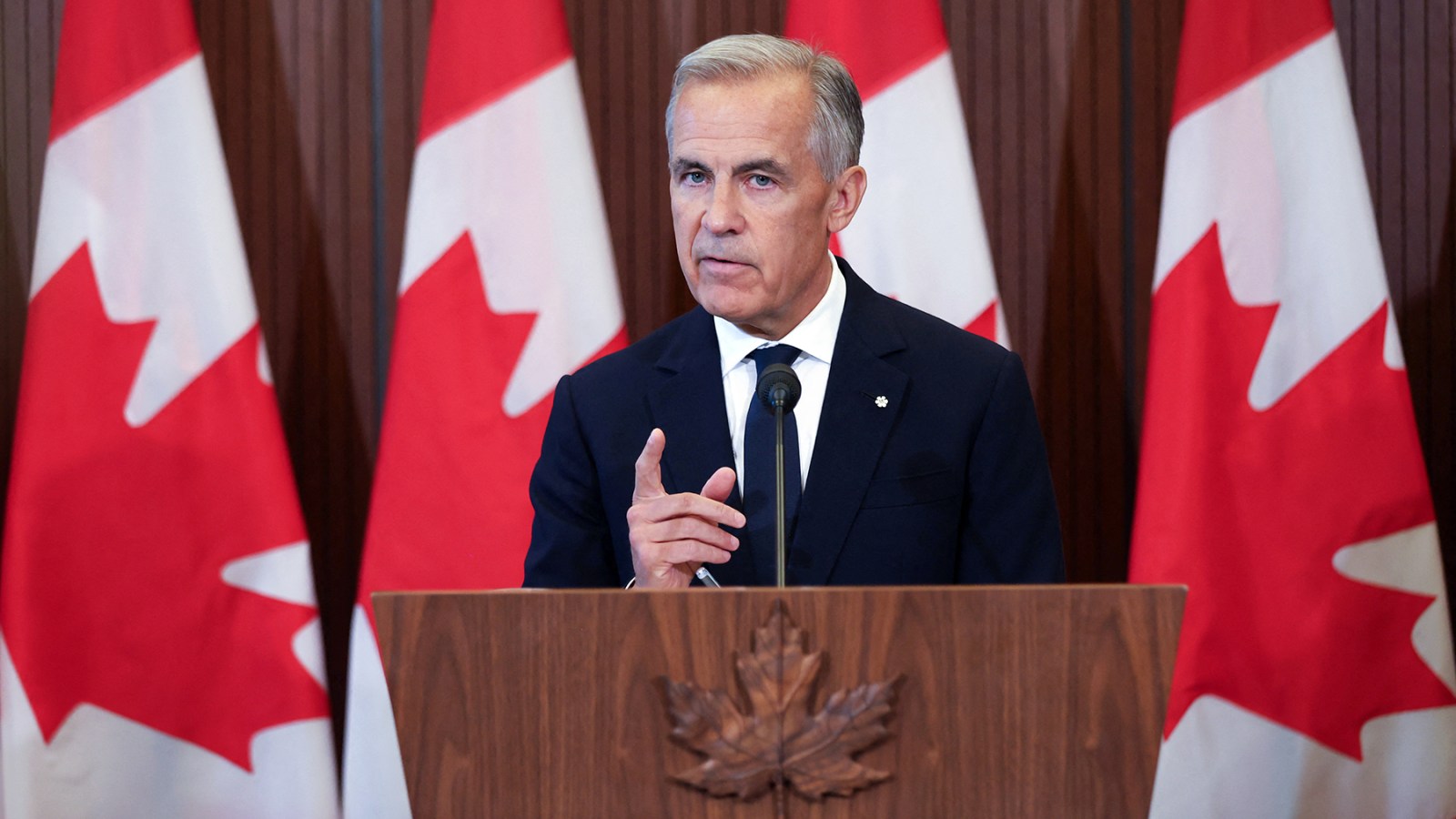
The Mark Carney Canada tariffs dispute has moved from difficult trade talks to a direct clash over sovereignty. After negotiations with Washington collapsed, the United States imposed 50% duties on about $20 billion in Canadian goods, according to an Associated Press report published by PBS. Carney said Canada would answer with dollar-for-dollar retaliation beginning Sept. 8.
That confrontation has prompted commentary casting the Canadian prime minister as a leading Western voice against President Donald Trump. Rolling Stone used the phrase “leader of the free world” in a Sept. 9 opinion headline, but it is political rhetoric, not a formal position or a proven measure of Carney’s influence.
Why did Mark Carney reject the U.S. trade terms?
Carney said the U.S. added language in the final hours of the negotiations that would limit Canada’s ability to strike trade agreements with other countries. He called that condition unacceptable and said it raised a question of Canadian sovereignty, AP reported.
The Trump administration disputes Canada’s account of the breakdown. U.S. Trade Representative Jamieson Greer said Ottawa introduced new demands and moved away from prior commitments after Washington offered to lower tariffs on steel, autos, lumber and other products.
Canada’s planned countermeasures were later described by ABC News as tariffs of 15% to 50% on roughly 700 U.S. imports. Carney acknowledged, according to AP, that retaliation would raise costs and reduce choices for Canadians.
What has Carney said about economic pressure?
The fight follows Carney’s January speech at the World Economic Forum in Davos, where he argued that the old international order had suffered “a rupture, not a transition.” He said middle powers needed to withstand pressure from larger countries and warned that negotiating alone with great powers leaves them weaker.
His argument was not framed as a call to pick a fight with the United States. In a BBC News discussion, CBC host Jayme Poisson described Carney’s message as one of building domestic strength, diversifying economic ties and working with other middle powers.
Trump responded to Carney’s Davos remarks by emphasizing Canada’s economic dependence on the United States, saying: “Canada lives because of the United States. Remember that, Mark, the next time you make your statements,” AP reported.
Why is Canada especially exposed in a trade war?
Nearly three-quarters of Canadian exports go to the United States, while the U.S. economy is about 10 times Canada’s size, according to AP. That imbalance makes a prolonged trade confrontation a serious risk for Canada even as it resists U.S. demands.
At home, the hockey phrase “elbows up” has become a rallying cry for Canadians opposing tariffs and defending sovereignty, ABC News reported. Abroad, former Italian Prime Minister Paolo Gentiloni shared video of Carney’s remarks and wrote that it was the kind of speech he wanted to hear in Europe.
Those signs show Carney’s stance has drawn attention. They do not establish that he leads Europe or the West, and AP reported that the wider economic and diplomatic outcome remains uncertain. Carney’s central-bank background, including terms leading the Bank of Canada and Bank of England, is part of the economic experience cited in ABC’s account of his political profile.
This story draws on original reporting from Rolling Stone.